Eden Valley
How to say it
A cool, high-altitude Barossa region just east of the Barossa Valley, known for Riesling and Shiraz, where Joseph Gilbert planted the first vines at Pewsey Vale in 1847.
Eden Valley is a cool-climate Geographical Indication within the Barossa Zone of South Australia. It lies just east of the Barossa Valley, and its overall growing season temperatures are significantly lower than the Barossa Valley's, with the final stages of ripening and harvesting taking place in much cooler conditions. Riesling is its most important white grape and Shiraz its most important red. Joseph Gilbert planted the region's first vines at Pewsey Vale in 1847, and Henschke's Mount Edelstone and Hill of Grace, first made by Cyril Henschke from the 1952 and 1958 vintages, both come from Eden Valley vineyards.
Learn Eden Valley one short lesson at a time. Free in WineSchool.
Open WineSchoolHistory and Settlement
In 1847 Englishman Joseph Gilbert planted Eden Valley's first vines at Pewsey Vale. Gilbert sourced the vines from William Macarthur, who imported German cuttings from the Rheingau, and these formed Eden Valley's first Riesling vineyard. Ebenezer Ward, writing in the South Australian Advertiser in 1861, described Pewsey Vale's Riesling as 'fragrant, delicate and pure'. The Gilberts sold up in 1927 and the vineyard was pulled up in 1929; owner Geoffrey Angas Parsons and Yalumba's Wyndham Hill-Smith replanted it to Riesling in 1961, and the first commercial release was the 1969 vintage. Yalumba revived the historic Pewsey Vale vineyard in the 1960s. Johann Christian Henschke immigrated from Kutschlau, Silesia to South Australia in 1841 and planted a small vineyard in the Eden Valley in the early 1860s; the first recorded sale of Henschke wine was in 1868. In 1891 Paul Gotthard Henschke bought land near the Gnadenberg Church that became the Hill of Grace Vineyard, where Nicolaus Stanitzki had planted the original vines circa 1860. Cyril Henschke took over the family winery in 1950; the first Mount Edelstone bottled as a single-vineyard wine was the 1952 vintage, and Cyril created the first Hill of Grace in 1958. Barossa Australia's history records that in the 1960s John Vickery crafted some of Australia's most celebrated Eden Valley Rieslings at Leo Buring. David Wynn established Mountadam in 1972 on a site high above the township of Eden Valley, in the sub-region now known as High Eden.
- 1847: Joseph Gilbert plants Eden Valley's first vines at Pewsey Vale
- 1868: first recorded sale of Henschke wine
- 1952 and 1958: Cyril Henschke's first Mount Edelstone and first Hill of Grace
- 1961: Pewsey Vale replanted to Riesling; first commercial release the 1969 vintage
- Eden Valley GI entered in the Register of Protected Names on 15 August 1997, located within the zone Barossa in South Australia
- High Eden, entered on the register on 28 August 2001, is Barossa's only officially declared sub-region
- GI region of 591 square kilometres, with 2,169 hectares of vineyards in the National Vineyard Scan 2020
- Estimated 7,289 tonnes crushed in 2026: Riesling 28%, Shiraz 25%, Cabernet Sauvignon 15%, Chardonnay 12%
- Higher elevations of 380 to 500 metres, with daytime temperatures 2 to 3°C lower and nighttime temperatures up to 7°C cooler than the Barossa Valley
- First vines planted at Pewsey Vale in 1847 by Joseph Gilbert
- Cyril Henschke made the first Mount Edelstone from the 1952 vintage and the first Hill of Grace in 1958
Geography and Climate
Eden Valley lies north-east of the city of Adelaide and just east of the Barossa Valley, within the zone Barossa in the State of South Australia. The Eden Valley GI was entered in the Register of Protected Names on 15 August 1997, and High Eden, located within the region Eden Valley, followed on 28 August 2001. The Barossa zone was officially recognised in 1997 and is made up of two regions, Barossa Valley and Eden Valley, and High Eden is Barossa's only officially declared sub-region. The GI region is 591 square kilometres in size; Wine Australia counts 2,169 hectares of vineyards from the National Vineyard Scan 2020, while Barossa Australia reports 2,292 hectares under vine from the SA Winegrape Crush Survey 2024. The region's elevation spans 219 to 632 metres, measured as the highest and lowest points in the region regardless of whether there is a vineyard there. Altitude, aspect and slope are all important in determining mesoclimate in this hilly region: at around 500 metres, the Pewsey Vale, Heggies and High Eden vineyards at the southern end are considerably cooler than the more northerly Henschke vineyards at 380 to 400 metres around Keyneton. In the higher elevations of Eden Valley, ranging from 380 to 500 metres, daytime temperatures are 2 to 3°C lower than in the Barossa Valley, while nighttime temperatures can be up to 7°C cooler. Eden Valley receives more rainfall, autumn rain can delay harvest, and frost is a risk in spring. For the 1961-1990 period, the mean January temperature was 20.3°C and annual rainfall 587 mm.
- GI entered in the Register of Protected Names on 15 August 1997, within the zone Barossa
- High Eden sub-region entered on 28 August 2001
- 591 square kilometres; 2,169 ha of vineyards in the National Vineyard Scan 2020 and 2,292 ha under vine in the SA Winegrape Crush Survey 2024
- Daytime temperatures 2 to 3°C lower and nighttime temperatures up to 7°C cooler than the Barossa Valley

Every concept in this article fits on a card.
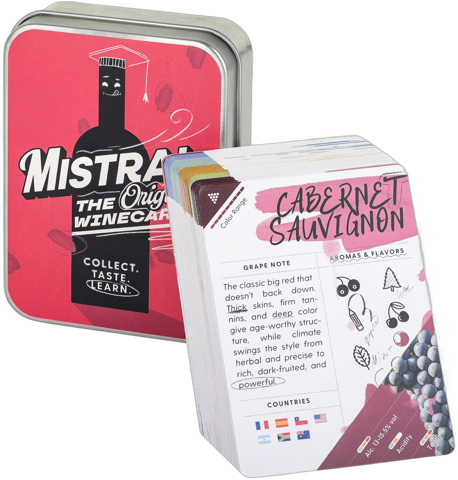
Mistral WineCards. Deck ONE: Global. 55 wine education cards covering grapes, regions, terroir, and winemaking. $35.
Get the DeckSoils and Terroir
Rolling, exposed hills with moderately steep gradients are commonplace, and the correct match of site and variety is critical. The most common soils range from grey to brown in colour and from loamy sand to clay loams, with ironstone gravels, quartz gravels and rock fragments in the surface and subsurface; these are well suited to dry land viticulture, but there are also patches of weaker sandy soils on the slopes, underlain by weathered mica-schists with reduced water-holding capacity. At Hill of Grace, thick, red, clay-rich loams are overlain by a veneer of brown, fine, sandy-to-silty loam, with an additional layer of alluvial silty loam near Parrot Hill Creek. Mount Edelstone is underlain by laminated siltstones of the Tapley Hill Formation, with fine sandy loams over deep, gravelly, medium-red clays. Decanter describes Pewsey Vale as a 66ha vineyard of 29 predominantly north-facing parcels at 450 to 500 metres, on shallow rocky, sandy soils of decomposed white quartz, gneiss and schist. All vines at Hill of Grace are planted on their own roots, and Mount Edelstone's shiraz is on own roots and dry grown. The average yield for Eden Valley in 2026 was 3.4 tonnes per hectare.
- Grey to brown loamy sands to clay loams, with ironstone gravels, quartz gravels and rock fragments
- Patches of weaker sandy soils over weathered mica-schists on the slopes
- Hill of Grace: red clay-rich loams under fine sandy-to-silty loam; Mount Edelstone: fine sandy loams over gravelly medium-red clays on Tapley Hill Formation siltstones
- Average yield 3.4 tonnes per hectare in 2026
Grapes and Wine Styles
The main varieties grown in the region are Riesling, Shiraz, Chardonnay and Cabernet Sauvignon, and an estimated 7,289 tonnes were crushed in 2026, with Riesling at 28% of the regional crush, Shiraz 25%, Cabernet Sauvignon 15%, Chardonnay 12% and Pinot Gris/Grigio 5%. Riesling is the most important white grape of the region. Eden Valley Riesling tends to show strong lime juice aromas with great intensity of flavour on the palate, and marmalade and toasty nuances appear as the wines age. Eden Valley's signature style is dry, mineral-driven and built to age, and Decanter calls its soft yet persistent acidity and chalky mouthfeel a hallmark of Eden Valley's low pH. Winemakers typically hand-harvest, press gently and ferment cool in stainless steel with no oak; Eden Valley was a pioneer in adopting screw caps, the region introduced its own proprietary Riesling bottle in 2011, and late-harvest and botrytis-affected styles are also made. Shiraz ranks as the most important red grape; the wines rarely show the spicy and peppery characters of cool climate Shiraz from other parts of southern Australia, tending instead to plum and blackberry fruit with touches of liquorice and gamey, forest characters, with smooth, ripe, integrated tannins. Cabernet Sauvignon from vineyards around the Eden Valley village shows cassis-accented fruit flavours, while wine from higher, cooler sites has undertones of green leaf and dark berry; Chardonnay flavours range through melon, fig and cashew. Decanter's 2023 Eden Valley Riesling report names Pewsey Vale, Henschke, Hutton Vale, Thorn-Clarke and Chaffey Bros among the producers making more than one style of Riesling.
- Main varieties: Riesling, Shiraz, Chardonnay, Cabernet Sauvignon
- 2026 crush: 7,289 tonnes; Riesling 28%, Shiraz 25%, Cabernet Sauvignon 15%, Chardonnay 12%
- Riesling: strong lime juice aromas, marmalade and toasty nuances with age; dry, mineral-driven, no oak
- Shiraz: plum, blackberry and liquorice, rarely the spice and pepper of cool climate Shiraz elsewhere in southern Australia
The map that explains this region.
The World Atlas of Wine, now in its 9th edition, is the book I open before any trip and after any bottle I could not place. Every region on this page has a map in it.$70.
See the AtlasProducers and Single Vineyards
Henschke, established in 1868, describes itself as one of Australia's oldest family-owned wineries, with six generations of family grapegrowing and winemaking in the Eden Valley, Barossa Valley and Adelaide Hills. Its Hill of Grace Vineyard is an 8 hectare single-vineyard shiraz planting at the historic village of Parrot Hill, 4km north-west of the Henschke winery, and Mount Edelstone lies 4km west of the winery at Keyneton, planted in 1912 by Ronald Angas; Cyril Henschke purchased Mount Edelstone from Colin Angas in 1974. Pewsey Vale gives its vineyard an altitude of 485 to 500 metres, 250 metres above the Barossa Valley floor. Louisa Rose has been making Pewsey Vale Vineyard wines since 1995, and the vineyard's Contours block received formal organic certification in 2013. Mountadam, established in 1972 by David Wynn and named after his son Adam, was purchased by David and Jenni Brown in 2005. Decanter's 2023 Eden Valley Riesling report names Rieslingfreak, whose John and Belinda Hughes produce a dozen styles each vintage from two regions, and Eden Hall, for which Phil Lehmann makes Riesling.
- Henschke: established 1868; Hill of Grace (8 hectares, Parrot Hill) and Mount Edelstone (planted 1912)
- Pewsey Vale: first vines 1847; vineyard at 485 to 500 metres by the estate's own figure
- Mountadam: established 1972 by David Wynn; purchased by David and Jenni Brown in 2005
- Producers making more than one Riesling style in Decanter's 2023 report include Pewsey Vale, Henschke, Hutton Vale, Thorn-Clarke and Chaffey Bros
Sources and last verified
Primary sources (Wine Australia and its GI register, Barossa Australia at barossa.com, and the Henschke, Pewsey Vale and Mountadam websites for their own vineyards and wines): https://www.wineaustralia.com/labelling/geographical-indicators/labelling-gi-eden-valley, https://www.wineaustralia.com/labelling/geographical-indicators/labelling-gi-high-eden, https://www.wineaustralia.com/market-insights/regions-and-varieties/south-australia-wines/eden-valley, https://www.wineaustralia.com/getmedia/faaf2f6c-aa64-475e-a247-9ac7370bceae/MI_Eden-Valley-Region-Snapshot-2025-26.pdf, https://www.wineaustralia.com/market-insights/regions-and-varieties/south-australia-wines/barossa, https://www.wineaustralia.com/labelling/register-of-protected-gis-and-other-terms/geographical-indications, https://www.barossa.com/about/geographical-indication-zone/, https://www.barossa.com/about/climate-seasons/, https://www.barossa.com/wine/varieties/riesling/, https://www.barossa.com/about/history/, https://www.barossa.com/about/organisation/, https://www.barossa.com/visit/regions/eden-valley/, https://www.henschke.com.au/pages/henschke-family-history, https://www.henschke.com.au/pages/hill-of-grace-vineyard, https://www.henschke.com.au/pages/mount-edelstone-vineyard, https://www.henschke.com.au/collections/riesling, https://www.pewseyvale.com.au/en/pewsey-vale-vineyard/, https://www.pewseyvale.com.au/en/our-obsession/, https://www.mountadam.com.au/about/about-mountadam/, https://www.mountadam.com.au/about/family-story/. Secondary sources: https://www.decanter.com/premium/pewsey-vale-eden-valley-riesling-393442/, https://www.decanter.com/premium/eden-valley-riesling-2023-vintage-report-and-15-wines-to-buy-517611/. Last verified 2026-10-05
The glasses, tools, and cards I stand behind.
A short list. Nothing I would not recommend to a friend.
Browse the WineShopEden Valley Riesling tends to show bright acidity, delicate floral aromatics and a distinct slate-like minerality, with intense citrus and green apple notes developing over the long, slow ripening, and time brings layers of honey, toast and spice. It also tends to show strong lime juice aromas, with marmalade and toasty nuances as the wines age. Decanter describes entry-level Pewsey Vale as typifying Eden Valley's fresh, floral, citrus-driven style with mineral inflections, and Pewsey Vale The Contours is released with five years' bottle age, once lime cordial, lemon curd and toast notes have developed. Eden Valley Shiraz tends to plum and blackberry fruit with touches of liquorice and gamey, forest characters and smooth, ripe tannins.
- Pewsey Vale RieslingThe entry-level Pewsey Vale, released in the year of vintage; Decanter says it typifies Eden Valley's fresh, floral, citrus-driven style of Riesling with mineral inflections.
- Pewsey Vale The Contours RieslingFrom Pewsey Vale's coolest spot, the only south-facing vines, planted in 1964; it is released with five years' bottle age.
- Henschke Julius Eden Valley RieslingA$56 (2026 vintage, henschke.com.au)Henschke lists the 2026 Julius as an Eden Valley Riesling in its current range.
- Henschke Mount Edelstone ShirazFrom own-rooted, dry-grown shiraz planted in 1912 by Ronald Angas, 4km west of the Henschke winery at Keyneton; the first single-vineyard bottling was the 1952 vintage (Henschke).
New to Wine.com? $25 off $350+ with codeJOVIAL25
Wine with Seth may earn a commission on Wine.com purchases at no cost to you. Wine links are for adults 21 and over.
- Eden Valley GI entered in the Register of Protected Names on 15 August 1997 within the zone Barossa; High Eden sub-region entered 28 August 2001
- 591 square kilometres and 2,169 ha of vineyards in the National Vineyard Scan 2020; main varieties Riesling, Shiraz, Chardonnay, Cabernet Sauvignon
- Cooler than the Barossa Valley: daytime temperatures 2 to 3°C lower and nighttime temperatures up to 7°C cooler; the final stages of ripening and harvesting take place in much cooler conditions
- Riesling first planted 1847 by Joseph Gilbert at Pewsey Vale; the vineyard was replanted to Riesling in 1961
- Riesling style: strong lime juice aromas, marmalade and toasty nuances with age; Eden Valley was a pioneer in adopting screw caps and introduced its own proprietary Riesling bottle in 2011