Marl (Clay + Limestone: Champagne, Burgundy, Alsace)
In Champagne's Côte des Bar marl is a clay-limestone blend; in Champagne it is credited with retaining moisture, and in Alsace it is linked with weight and a long acidity.
In Champagne's Côte des Bar the soil is a clay-limestone (marl) blend, and the gray marl of Chablis is a lime-rich mudstone. Marl sits alongside chalk and limestone proper among Champagne's sedimentary outcrops, where it is credited with retaining just the right amount of moisture and heat from the sun. In Burgundy, marly soils appear in the southern sector of Nuits-Saint-Georges and on the hill of Corton, and in Alsace marl terroirs are associated with weight and a long, complex acidity.
Take Marl (Clay + Limestone: Champagne, Burgundy, Alsace) into the app. Flashcards, trivia and label lookup.
Open the appWhat It Is: Clay Meets Limestone
In Champagne's Côte des Bar the soil is a clay-limestone (marl) blend, and the region's soils, mostly Jurassic or Kimmeridgian, are a clay-chalk marl like those of Chablis and Sancerre. The gray marl in the Chablis subsoil is a lime-rich mudstone. In Alsace the word covers thick clay deposits: the marl-calcareous terroirs are composed of thick clay deposits (marl) and calcareous pebbles. In Champagne, marl is one of the three rock types, with chalk and limestone proper, that make up the region's limestone outcrops.
- Côte des Bar: marl as a clay-limestone blend
- Chablis: gray marl is a lime-rich mudstone
- Alsace: marl as thick clay deposits in the marl-calcareous terroirs
- Champagne: marl sits alongside chalk and limestone proper in the sedimentary outcrops
- The soil of Champagne's Côte des Bar is a clay-limestone (marl) blend, and its soils, mostly Jurassic or Kimmeridgian, are a clay-chalk marl like those of Chablis and Sancerre
- The gray marl of the Chablis subsoil is a lime-rich mudstone, combined with limestone banks of fossilised Exogyra virgula oyster shells; Professor Georges Chappaz, who noted the fossils in 1904, classified the soil as Kimmeridgean, a stratum from the Upper Jurassic around 145 million years ago
- Champagne's outcrops of sedimentary rock are 75% limestone, made up of chalk, marl and limestone proper, and this subsoil is porous, allowing good drainage
- In the Champagne subsoil, marl is credited with retaining just the right amount of moisture and heat from the sun, while heavy clay holds water and acts as a nutrient reserve
- The Nuits-Saint-Georges appellation has 41 Premiers Crus Climats and deep marly-limestone soils in its southern sector, where the alluvia at the foot of the slope originate in the combe of Vallerots
- Chardonnay thrives on limestone and marls with a lot of clay, as in Puligny-Montrachet, Meursault and Corton-Charlemagne, and the Corton-Charlemagne Grand Cru vineyard's soil is marly and clay-rich
- Alsace's marl-calcareous terroirs are thick clay deposits (marl) with calcareous pebbles, and the marl influence there is linked with a long and complex acidity
How It Forms: Geological Origins in Wine Regions
Ninety million years ago, oceans covered every surface of land and sediments settled on the seabed, piling up to as much as 200 metres, before the Paris Basin gradually sank and various types of rock surfaced in successive layers. Today Champagne's sedimentary outcrops are 75% limestone, made up of chalk, marl and limestone proper. In Chablis, on the edges of the Paris basin, fossilised Jurassic shellfish combine with gray marl in the soil Chappaz classified as Kimmeridgean, around 145 million years old. In Alsace, 150 million years ago the sea rolled over what is now the Rhine Rift Valley, and sedimentary rocks such as sandstone, limestone and marl settled atop the granite platform. On the Côte de Nuits and Côte de Beaune, a fault rupture during the Tertiary era laid bare Jurassic strata, leaving subsoils that are clay-limestone in nature.
- Champagne: sediments laid down on a seabed 90 million years ago, surfacing in layers as the Paris Basin sank
- Chablis: gray marl combined with Jurassic fossil limestone banks in the Kimmeridgean stratum, around 145 million years old
- Alsace: sandstone, limestone and marl settled 150 million years ago when the sea covered today's Rhine Rift Valley
- Alsace today: the Rhine alluvial plain is marl and alluvial
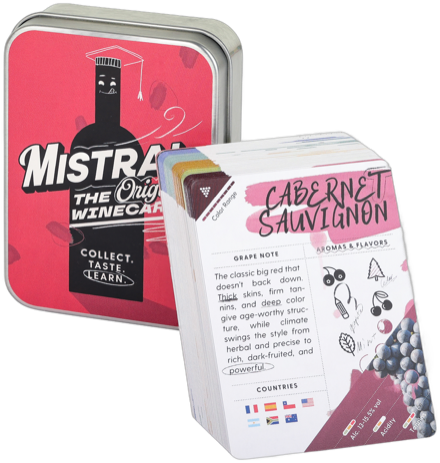
Every concept in this article fits on a card.
Mistral WineCards. Deck ONE: Global. 55 wine education cards covering grapes, regions, terroir, and winemaking. $35.
Get the DeckEffect on Wine: Weight, Roundness and Acidity
In Alsace's marl-calcareous terroirs, the region's wine trade body links the marl influence with a long and complex acidity, with wines that are generous and long in their youth and that become finer the more limestone is present. In the sandstone variant, marl is credited with giving the wine weight while sandstone lightens it up. In the Côte des Bar, one wine writer finds that the clay-limestone (marl) blend tends to make rounder, fuller styles of Champagne than the stricter north. In Burgundy, Chardonnay thrives on limestone and marls with a lot of clay, giving dry white wines such as Puligny-Montrachet, Meursault and Corton-Charlemagne.
- Alsace marl-calcareous terroirs: linked with a long, complex acidity; the more limestone, the finer the wines
- Alsace marl-sandstone terroirs: marl gives weight, sandstone lightens
- Côte des Bar Champagne: tends toward rounder, fuller styles than the stricter north
- Burgundy Chardonnay: thrives on limestone and marls with a lot of clay
Where You'll Find It: Key Marl Terroirs
In Champagne, the choice of grape variety depends on whether the soil is marl, chalk or hard limestone: Chardonnay is mainly grown in the Côte des Blancs and Côte de Sézanne, Pinot Noir in the Montagne de Reims, the eastern part of the Marne Valley and the Côte des Bar, and Meunier in the western part of the Marne Valley. In Burgundy, the Nuits-Saint-Georges appellation, which includes the commune of Premeaux-Prissey, has deep marly-limestone soils in its southern sector, while soils in the northern sector derive from pebbly alluvium; on the hill of Corton, the Corton-Charlemagne Grand Cru vineyard has marly, clay-rich soil; and farther south, more marly soils emerge in the Côte Chalonnaise and the Couchois. Alsace has marl-calcareous, marl-sandstone and marl-limestone-sandstone terroirs, and its Rhine alluvial plain is marl and alluvial. In Rioja, the soils of Rioja Alta are a mixture of clay-limestone, clay-ferrous and alluvial, and those of Rioja Alavesa are 95% clay-limestone; the Rioja Alta and Rioja Alavesa area profiles use the term clay-limestone rather than marl.
- Champagne: marl, chalk or hard limestone guides the choice between Chardonnay, Pinot Noir and Meunier
- Nuits-Saint-Georges: deep marly-limestone soils in the southern sector; AOC dating from September 1936, with 41 Premiers Crus Climats
- Corton-Charlemagne Grand Cru: marly, clay-rich soil; granted AOC Grand Cru in 1937
- Alsace: marl-calcareous, marl-sandstone and marl-limestone-sandstone terroirs
- Rioja: clay-limestone soils in Rioja Alta and Rioja Alavesa
The reference I check before I say it.
The Oxford Companion to Wine, by Jancis Robinson and Julia Harding, is where I look before I say anything with confidence, from malolactic conversion to what a cru means.$65.
See the CompanionThe Science Behind It: Water, Drainage and Weight
Marl works alongside its neighbours in the soil. Champagne's subsoil of chalk, marl and limestone proper is porous, allowing good drainage, so vine roots stay dry, which helps to increase grape quality. Each component plays its own part: marl is credited with retaining just the right amount of moisture and heat from the sun, heavy clay is able to hold water and acts as a nutrient reserve, and chalk acts as a water reservoir and temperature regulator. In Alsace, the sub-Vosges hills, with clay, limestone and sandstone soils, are very fertile and boast great water-storing capacity, with the limestone and sandstone lightening up the soil where the marl brings its weight. In the Côte de Nuits and Côte de Beaune, a vine's roots can reach down as far as 10 yards into the soil.
- Drainage: Champagne's porous subsoil of chalk, marl and limestone proper
- Moisture and warmth: marl is credited with retaining just the right amount of moisture and heat from the sun
- Water and nutrients: heavy clay holds water and acts as a nutrient reserve
- Weight: marl brings weight to sub-Vosges soils, lightened by limestone and sandstone
Sources and last verified
Primary sources: https://www.champagne.fr/en/about-champagne/the-champagne-terroir/champagne-and-its-soil, https://www.champagne.fr/en/champagne-frequently-asked-questions?nid=608, https://www.bourgogne-wines.com/wine-and-terroir/bourgogne-and-its-appellations/nuits-saint-georges,2458,9253.html?args=Y29tcF9pZD0yMjc4JmFjdGlvbj12aWV3RmljaGUmaWQ9MzYxJnw%3D, https://www.bourgogne-wines.com/wine-and-terroir/our-natural-assets/geology/the-collapse-of-the-bressan-rift/the-cote-de-nuits-cote-de-beaune-and-cote-chalonnaise-created-from-a-major-geological-upheaval,2481,9403.html, https://www.bourgogne-wines.com/wine-and-terroir/our-natural-assets/geology/the-heritage-of-the-paris-basin/chablis-the-grand-auxerrois-and-the-cha-tillonnais-on-the-edges-of-the-paris-basin,2480,9402.html, https://www.vinsalsace.com/en/terroirs/remarkable-geology/, https://riojawine.com/en-us/production-areas/rioja-alta/, https://riojawine.com/en-gb/production-areas/rioja-alavesa/. Secondary: https://www.decanter.com/premium/regional-profile-champagnes-cote-des-bar-489173/. Last verified 2026-10-04
The World Atlas of Wine, 9th edition.
When I need to see why a slope in the Mosel matters, this is the book I open. $70.
See the AtlasMarl's imprint shows in structure more than flavours. Wines from Alsace's marl-calcareous terroirs are generous and long in their youth, with a long and complex acidity, and marl is linked with weight. One wine writer finds Côte des Bar Champagnes from the clay-limestone (marl) blend rounder and fuller than those of the stricter north. Young red Nuits-Saint-Georges shows aromas of cherry, strawberry and blackcurrant, turning to leather, truffle, fur and game when matured.
- Marl = clay-limestone blend, as in the Côte des Bar; Chablis gray marl = a lime-rich mudstone.
- Champagne: sedimentary outcrops are 75% limestone, made up of chalk, marl and limestone proper, and porous for good drainage; marl is credited with retaining just the right amount of moisture and heat from the sun.
- Chablis Kimmeridgean soil: Exogyra virgula fossil limestone banks combined with gray marl; noted by Professor Georges Chappaz in 1904; Upper Jurassic, around 145 million years ago.
- Nuits-Saint-Georges: deep marly-limestone soils in the southern sector; AOC dating from September 1936, including Premeaux-Prissey; 41 Premiers Crus Climats.
- Alsace: in marl-calcareous terroirs the marl influence is linked with a long and complex acidity; in marl-sandstone terroirs marl provides weight while sandstone lightens.
Put this into practice
Blind tastings, flashcards, and trivia in the Wine with Seth app.
Try the app free