The One Wine Glass I Recommend
You do not need a cabinet of stemware. You need one glass that does the job for everything, and it exists.
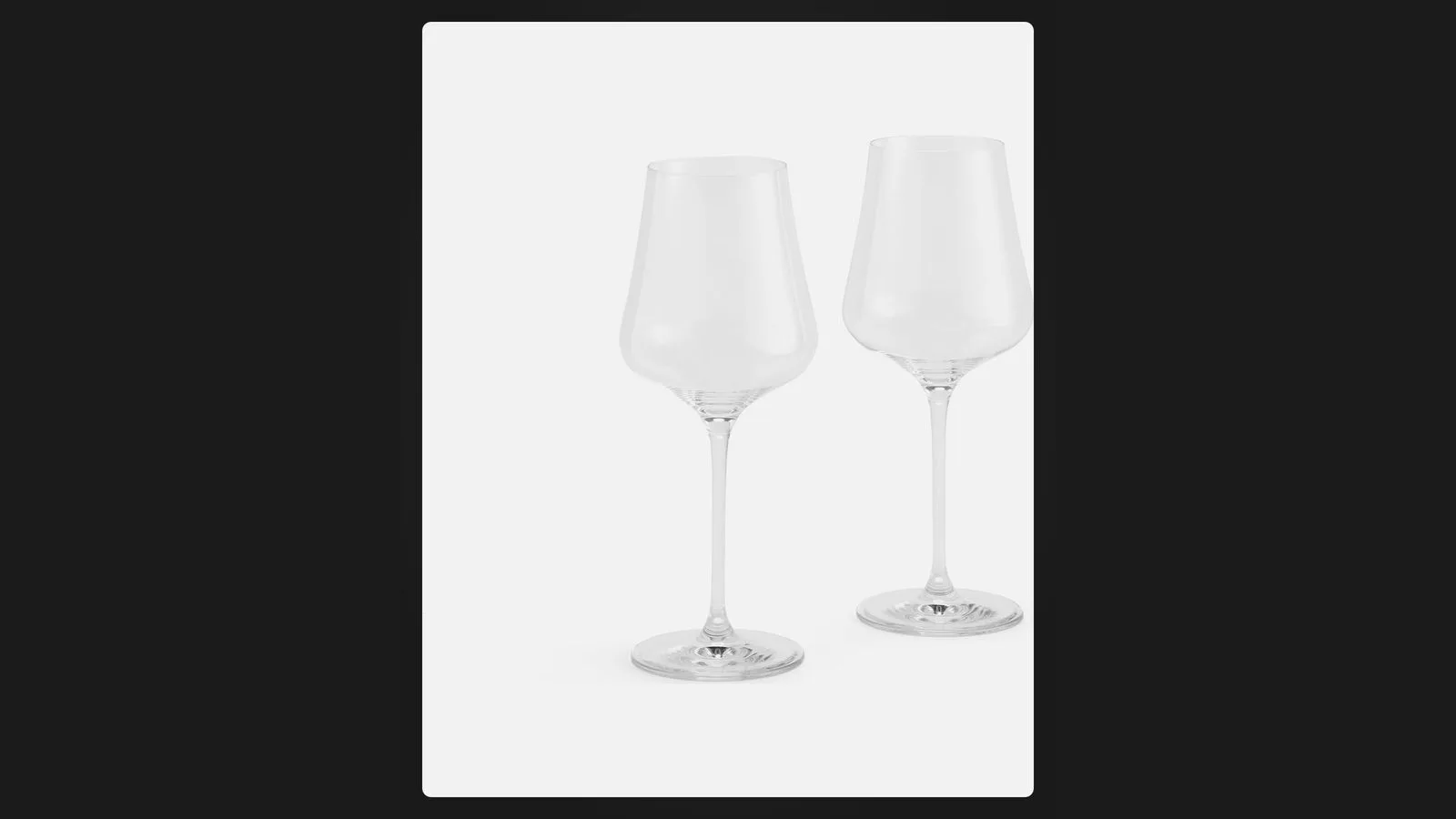
Someone at a tasting asked me which wine glass to buy. Not which set, not which brand. Which glass, singular, if they could only own one. I gave the same answer I always give, and I have not changed it in years.
Why one glass is enough
The stemware industry would like you to own a Bordeaux glass, a Burgundy glass, a Riesling glass, a Champagne flute, and something for dessert wine. Riedel built a business on grape-specific shapes, and some of that work is real. A wide Burgundy bowl does soften Pinot Noir’s aromatics into something rounder. A tall Bordeaux glass does frame Cabernet’s structure.
Here is what that argument leaves out. The difference between a good universal glass and a grape-specific glass is small. The difference between a good universal glass and a bad glass is enormous. Most people are drinking out of the second category and worrying about the first.
Get the shape right once and you have solved ninety percent of the problem for every wine you will ever pour.
What the shape has to do
A wine glass has three jobs. It has to hold enough wine to swirl without spilling, which means a bowl with real volume and a pour that fills it a third of the way. It has to concentrate aromatics, which means the rim is narrower than the widest point of the bowl so the smell has somewhere to gather. And it has to deliver the wine cleanly, which means a thin, unrolled rim.
That last one matters more than people expect. A thick rolled lip, the kind on most restaurant glasses and nearly every glass under ten dollars, changes how the wine hits your palate. Thin rims feel like the glass disappears. Once you have used one, going back feels like drinking through a jar.
Everything else, the stem length, the weight, whether it was mouth-blown, is preference or price.
The glass
The Gabriel-Glas StandArt is the one I name every time. It is a single shape designed to work across red, white, sparkling, and rosé, and it does. The bowl is wide enough at the base to give a young Nebbiolo room and narrow enough at the top to keep a Sancerre’s aromatics from wandering off. The rim is thin. The stem is long enough to hold without warming the wine and short enough to fit a dishwasher rack.
It is machine-made crystal, which is the right call for a glass you will use every day. The mouth-blown Gold Edition exists and it is beautiful, and it is also three times the price. If thirty dollars a stem is the budget, buy the StandArt.
What you are paying for, at roughly thirty dollars a stem, is the shape and the rim. Cheaper universal glasses get the silhouette roughly right and then ruin it with a rolled lip. More expensive glasses add thinness, and at the top of the range that thinness is worth every dollar.
The glass I actually drink from
Full disclosure: the glass in my hand most nights is not the StandArt. It is the Zalto Denk’Art Universal. Same idea, one shape for everything, taken as far as a glass can go. Mouth-blown, weightless, a rim so thin it disappears. It is the best glass I have ever used and I do not expect that to change.
The knock on Zalto is that it is fragile. Mine have gone through the dishwasher on the lower rack nearly every night for ten years, and I have not broken one. They are far tougher than they look. What they are is expensive, about four times the StandArt, which is why the StandArt is still the glass I name first. If the price does not bother you, skip straight to the Zalto.
The one other glass worth owning
The other glass is for Champagne, and it is not a flute. A flute looks like a celebration and smells like nothing. The narrow bore keeps the bubbles pretty and keeps the aromatics locked in the glass where you cannot reach them. Good Champagne is a wine first, and it wants a small white wine glass. The Riedel Veritas Champagne glass is shaped like one, with a little tulip at the top to hold the mousse. Pour a grower Champagne into a flute and then into one of these and you will not go back.
That is the whole cabinet. One universal glass for everything that matters, StandArt or Zalto depending on budget, and one glass for bubbles. Two shapes, not twelve.
How to take care of them
Wash by hand if you can, in hot water, no soap. Soap leaves a film that kills the bead in sparkling wine and flattens aromatics in everything else. If you use a dishwasher, skip the rinse aid and give the glasses room so nothing knocks them. Top rack if they fit, lower rack if they do not; my Zaltos have lived on the lower rack for a decade.
Dry with a lint-free cloth, holding the bowl, never twisting from the stem. Most stems break in the drying, not the drinking.
Store them upright. Upside down on a shelf traps stale air in the bowl and you will smell it in the first pour.
The takeaway
Buy one good universal glass before you buy anything else. If you want to see the three I keep on the shelf, they are in the WineShop, along with a short note on why each one earned its place.
Questions people ask
Do I really need different glasses for red and white wine? No. A well-shaped universal glass serves both. The traditional split (bigger for reds, smaller for whites) came from an era of heavy oaked whites and tannic reds that needed more air. Most modern wines do fine in one shape.
Is a more expensive wine glass worth it? Up to a point. The jump from a five-dollar glass to a thirty-dollar glass is the biggest improvement you can make, mostly because of the rim. Above that you are paying for mouth-blown thinness, and at the Zalto level it is a real difference you can feel on every sip.
Should I drink Champagne from a flute? Only if you care more about how it looks than how it smells. A small white wine glass or a tulip-shaped Champagne glass shows far more of the wine.
What size pour fits a universal glass? About five ounces, which fills the bowl to its widest point. That leaves room to swirl and concentrates the aromatics where the glass narrows.
Can I put crystal wine glasses in the dishwasher? Modern machine-made crystal like the Gabriel-Glas StandArt is designed for it. Run them on the top rack, without rinse aid, and let them air dry. Mouth-blown glasses are tougher than their reputation; mine have survived ten years of dishwashers. Give them space and skip the rinse aid.