How to Open an Old Bottle Without Losing the Cork
The cork in a twenty-year-old bottle is not the cork you are used to. Here is the tool and the method that get it out in one piece.
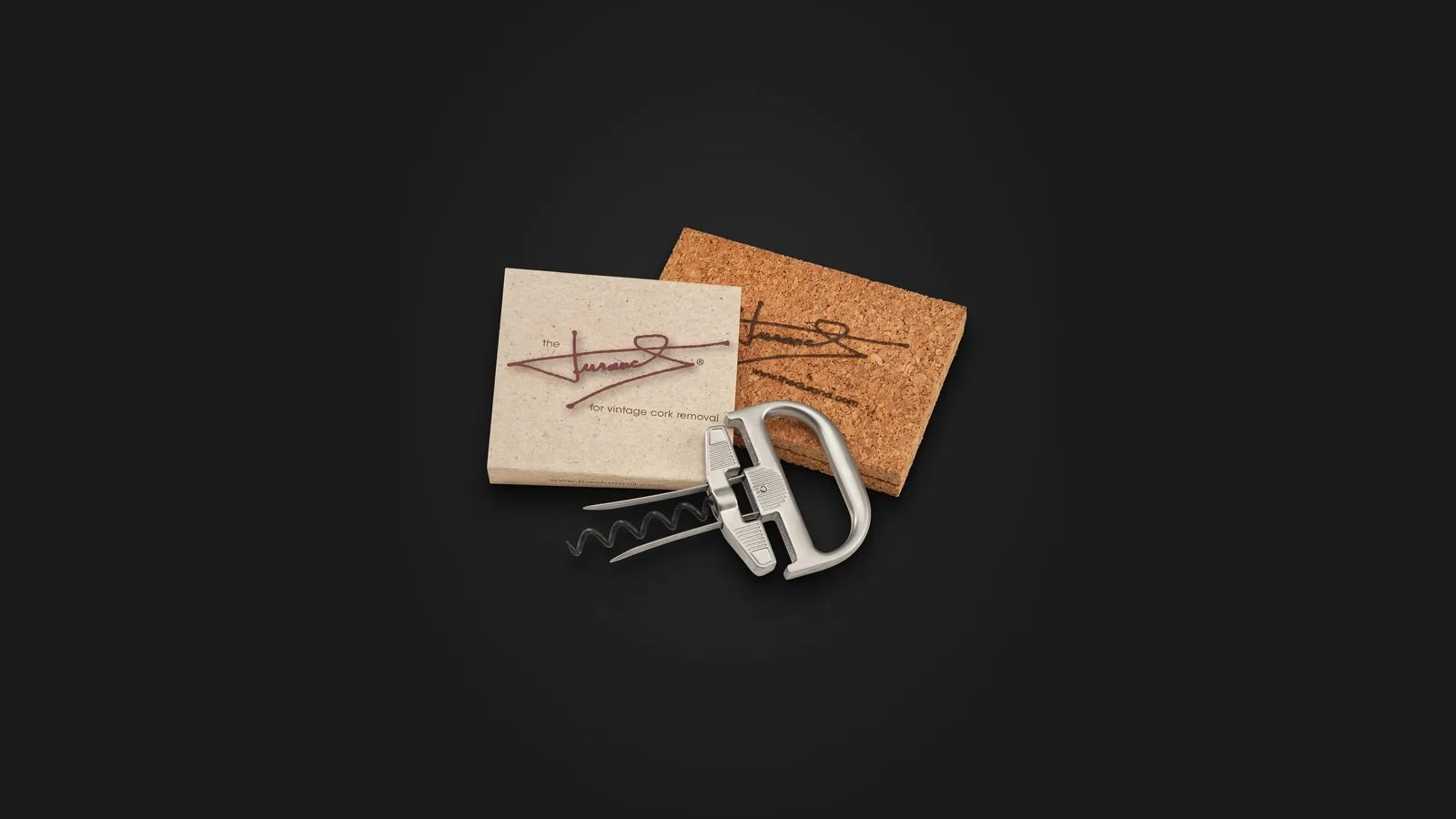
The worst moment in wine is not a corked bottle. It is the sound a twenty-year-old cork makes when a normal corkscrew twists straight through it and you realize the rest is staying in the neck.
Old bottles are opened wrong all the time, and the fix is simple. It is not technique so much as the right tool and a little patience.
Why old corks fail
Cork is bark. In a young bottle it is springy and dense, and a waiter’s key pulls it clean because the worm has something to grip. Give it fifteen or twenty years in a cellar and two things happen. The cork dries out and loses elasticity, and the wine slowly soaks into the bottom third and softens it into something closer to wet cardboard.
So you have a cork that is brittle at the top and mushy at the bottom, held in place by a decade of friction. A worm alone will grip the brittle part and tear through the soft part. An ah-so alone, the two-pronged puller, will slide down the sides and then push the whole cork into the bottle when you try to twist it out.
Neither tool can do the job by itself. The trick is using both at once.
The tool
The Durand is a worm and an ah-so built to work together. You screw the worm into the center of the cork first, so the cork cannot be pushed down into the bottle. Then you slide the two prongs down the sides, so the cork cannot tear. Then you lift both together, and the cork comes out whole because it is being supported from the inside and the outside at the same time.
It costs more than a corkscrew should. The first time it pulls a crumbling cork out in one piece from a bottle you have been saving for a decade, the price stops mattering. If you open anything with real age on it more than a couple of times a year, own one.
If you do not have a Durand, the next best option is a plain ah-so used slowly, rocking the prongs down one side at a time and twisting as you lift. It works on corks that are soft but not yet crumbling. Once the cork is crumbling, only the Durand gets it out clean.
The method
Stand the bottle upright a day before you open it. Old wine throws sediment, and you want it settled at the bottom of the bottle, not swirling through the wine. Twenty-four hours is ideal. A few hours is better than nothing.
Cut the foil below the lower lip of the bottle, not above it. Old foil is often brittle or lead, and you want a clean pour surface. Wipe the top of the cork with a damp cloth. There is usually mold under the capsule. It is harmless and it comes off.
Screw the worm in slowly and straight, all the way to the last turn. Then slide the prongs down, the longer one first, working them in with a gentle rocking motion until the handle sits on the lip. Lift and twist together in one steady motion. Do not rush the lift. The cork will follow.
Pour slowly against a light source, a candle or a phone flashlight under the neck, and stop when you see sediment reach the shoulder. That last inch is not wine you want in the glass.
When the cork crumbles anyway
Sometimes the cork is gone before you touch it. Push what remains into the bottle, then decant through a fine mesh strainer or a piece of clean cheesecloth into a clean vessel. You will lose nothing but the cork.
Decant old wine gently and briefly. Young wine wants air and time. Old wine has been waiting for this moment for twenty years and can fade in an hour. Decant it to separate the sediment, pour it within thirty minutes, and taste it as it changes. A decanter that is easy to pour from matters more here than one that looks dramatic.
When you should not open it at all
If you are not ready to finish the bottle, do not open it. A Coravin puts a needle through the cork, pours a glass under argon, and leaves the rest of the bottle sealed and undisturbed. On a fragile old cork it is safer than opening, because the needle goes through without pulling anything.
It is how you taste through a case over a year instead of committing to a bottle on a Tuesday. For old wine specifically, use the thinnest needle the system offers and go slowly. The cork will reseal.
The takeaway
Stand it up, cut low, worm first, prongs second, lift together, pour to the light. The Durand makes that sequence nearly foolproof, and everything I use to open, pour, and preserve wine is on one page in the WineShop.
Questions people ask
What is the best corkscrew for old wine? A two-pronged ah-so is the traditional answer, and The Durand is the modern one. The Durand combines a worm with the two prongs so the cork is supported inside and out, which is why it pulls crumbling corks whole.
How long should an old bottle stand upright before opening? Twenty-four hours if you can plan ahead. That gives sediment time to settle at the base so it stays out of the glass when you pour.
Should you decant old wine? Yes, briefly, to separate the sediment. Pour it off the sediment and drink within thirty minutes to an hour. Old wine fades fast once it meets air.
What if the cork falls into the bottle? Nothing is ruined. Strain the wine through fine mesh or cheesecloth into a clean decanter and pour from that.
Can you use a Coravin on an old bottle? Yes, and it is often the safest way to taste an old wine without committing to the whole bottle. Use the thinnest needle and insert slowly through the center of the cork.