Morgon AOC
Key French Terms
A Beaujolais cru confined to the commune of Villié-Morgon, where wines from schist soils around the Py hill carry the local verb 'morgonner'.
Morgon is one of the 10 crus of Beaujolais, a red-only appellation recognised by the decree of 11 September 1936 and limited to the single commune of Villié-Morgon in the Rhône department. Its production area is the second largest of the 10 crus, with the vineyard covering more than 1,100 hectares in 2010. The name is thought to come from the local word for the clay soils formed from schist, and the verb 'morgonner' is used of a Morgon that has reached its peak.
Drill Morgon AOC. Flashcards and trivia on the region and its wines.
Open the appLocation and Scale
Morgon's geographic area is a single commune, Villié-Morgon, in the north of the Rhône department. It sits in the north of the Beaujolais vineyard, 60 kilometres north of Lyon, between Villefranche-sur-Saône and Mâcon, with the vineyard spreading around the hill of Py. The zone lies on the eastern flanks of the Monts du Beaujolais, on the first slopes of the Fût d'Avenas (842 metres), 19 kilometres north of Villefranche-sur-Saône and 21 kilometres south of Mâcon. The slopes lie between 220 and 480 metres, face south-east and overlook the broad Saône plain; streams including the Morcille, a tributary of the Ardières, and the Douby cut through them. The climate is oceanic with continental and southern influences, rainfall spread evenly through the year, an average annual temperature close to 11°C and close to 2,000 hours of sunshine a year on average, and the Monts du Beaujolais shelter the vineyard from westerly winds. In 2010 Morgon covered more than 1,100 hectares, produced an average of 55,000 hectolitres a year and counted 451 producers, who sold more than 40% of the wine direct. Inter Beaujolais's current appellation profile gives a surface area of 1,090 hectares, an altitude of 310 metres and 250 vignerons.
- Single commune: Villié-Morgon, Rhône
- Slopes at 220 to 480 metres, facing south-east
- More than 1,100 hectares, 55,000 hl average annual production and 451 producers in 2010
- Oceanic climate with continental and southern influences; the Monts du Beaujolais shelter the vineyard from westerly winds
- Production area the second largest of the 10 Beaujolais crus; more than 1,100 hectares under vine in 2010
- Recognised as an AOC by the decree of 11 September 1936, the same year as Chénas, Chiroubles, Fleurie and Moulin-à-Vent
- Reserved for still red wines from the single commune of Villié-Morgon
- Manganese-rich schists of Upper Devonian age weather into clay soils locally called 'morgon', notably on the Py hill
- Côte du Py, formed of decomposed shale, is listed first among Morgon's most-claimed lieux-dits
- 'Morgonner' is the verb producers use for the character of wines from schist soils; wine from the Py hill is its best-known example
- Principal grape Gamay; yield 56 hl/ha and rendement butoir 61 hl/ha
Soils and Terroir
Three main substrates shape the cru. Manganese-rich schists of Upper Devonian age weather into clay soils locally called 'morgon'; they occupy the centre and east of the commune, notably the Py hill. Porphyritic granites in the north and north-west break down into sandy arènes that give poor, free-draining soils. On the eastern fringes, the lower slopes carry Quaternary colluvium and old river terraces, with soils that range from very sandy to clay. By surface, the soils divide into granite (52%), blue stone (37%) and piedmont deposits (11%), and the cru grows in soil formed on 'rotten rock', from the decay of shale and igneous rock. Côte du Py is a dome-shaped hill rising to 350 metres, with volcanic subsoils covered with schist, where blue schist intertwined with iron oxide from the volcanic strata gives a friable soil called 'roche pourrie'.
- Three substrates: Upper Devonian manganese-rich schists, porphyritic granites, and Quaternary colluvium and old terraces
- Soil split: granite 52%, blue stone 37%, piedmont deposits 11%
- Most-claimed lieux-dits: Côte du Py, Aux Charmes, Corcelette, Grands Cras, Douby, Aux Chênes, Javernière, Château Gaillard, Bellevue, Fontriante
- Côte du Py: a dome-shaped hill rising to 350 metres, schist over volcanic subsoils
History and Classification
Vines at Villié-Morgon are attested by the sale of a parcel by the lord of Beaujeu to a vassal in the year 956. From the end of the 15th century the Lyon bourgeoisie, enriched by silk and banking, developed the vineyard, and Morgon was recognised as an appellation d'origine contrôlée by the decree of 11 September 1936. In 1953 the producers set up the region's first and largest tasting cellar at the château de Fontcrenne. The Beaujolais négociant, chemist and author Jules Chauvet (1907-1989) gathered disciples including Marcel Lapierre, Jean Foillard, Jean-Paul Thévenet and Guy Breton, a quartet based in and around Morgon whom their American importer Kermit Lynch called the 'Gang of Four'. Morgon's climats group several lieux-dits with similar characteristics, and Morgon is the only Beaujolais cru to use this climat system. Labels may name a registered lieu-dit immediately after the appellation name, in type no larger than the appellation name, and may add 'Vin du Beaujolais', 'Grand Vin du Beaujolais' or 'Cru du Beaujolais' in type no more than two-thirds the size of the appellation name.
- Vines attested at Villié-Morgon in 956
- AOC by the decree of 11 September 1936
- Jules Chauvet's disciples Lapierre, Foillard, Thévenet and Breton were called the 'Gang of Four' by importer Kermit Lynch
- Morgon is the only Beaujolais cru to use a climat system grouping several lieux-dits
The map that explains this region.
The World Atlas of Wine, now in its 9th edition, is the book I open before any trip and after any bottle I could not place. Every region on this page has a map in it.$70.
See the AtlasWine Style and Aging
Morgon is reserved for still red wines. Gamay is the principal grape, with Aligoté, Chardonnay and Melon as accessory varieties allowed only when interplanted in the vineyard, at no more than 15% of each parcel. The wines are typically deep garnet, fleshy and generous, with fruit recalling cherry, kirsch, peach and plum. Stone fruit such as sour cherry often comes with notes of violet, and the wines can carry aromas of kirsch and eau-de-vie. The yield is set at 56 hl/ha with a rendement butoir of 61 hl/ha, a minimum natural alcohol of 10.5% and a total alcohol of no more than 13% after enrichment; the wines are aged at least until 15 January after the harvest and released to consumers from 1 February. In keeping with current practice, producers use a vinification in which traditional fermentation and semi-carbonic maceration coexist. The wines age well. Wines from parcels on schist soils have an original character that producers capture with the verb 'morgonner', its finest and best-known example being wine from parcels on the Py hill. Wine lovers often distinguish fruity wines from granite soils, pleasant young, from more austere wines from schist soils that benefit from a few years of keeping. 'Morgonner' has entered French winegrowing vocabulary, and tasters who use it mean that a Morgon has developed excellent qualities with age.
- Principal grape Gamay; accessory Aligoté, Chardonnay and Melon only when interplanted, at most 15% per parcel
- Yield 56 hl/ha, rendement butoir 61 hl/ha
- Typical aromas: cherry, kirsch, peach, plum
- 'Morgonner': the character producers attribute to wines from schist soils, best known from the Py hill
Sources and last verified
Primary sources (INAO and Inter Beaujolais): https://extranet.inao.gouv.fr/fichier/PNO-CDCMorgon-221130.pdf, https://www.inao.gouv.fr/produit/morgon-ou-morgon-cru-du-beaujolais-18178, https://www.beaujolais.com/en/appellation/morgon/, https://www.beaujolais.com/en/legal-notice/. Secondary sources: https://www.decanter.com/premium/marvellous-morgon-a-guide-to-this-star-beaujolais-cru-535143/, https://www.decanter.com/premium/beaujolais-vintage-guide-top-scoring-morgon-2018-wines-455140/, https://www.decanter.com/wine-reviews/france/burgundy/dominique-piron-cote-du-py-beaujolais-morgon-2022-93380/. Last verified 2026-10-05

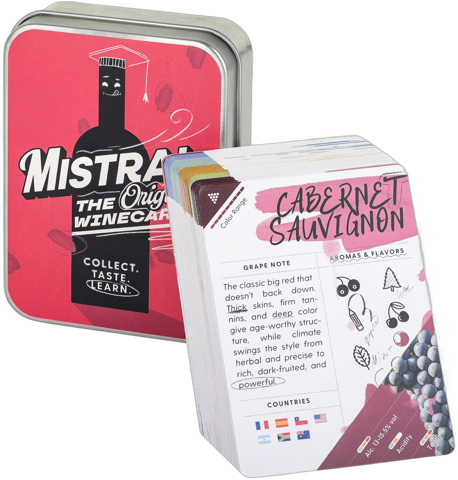
Every concept in this article fits on a card.
Mistral WineCards. Deck ONE: Global. 55 wine education cards covering grapes, regions, terroir, and winemaking. $35.
Get the DeckFull-bodied and robust, with firm tannins and dense minerality uncommon in Beaujolais. Fresh expressions show stone fruits, kirsch, violet, and a hint of eau-de-vie. With age, the wines develop earthy, savory, and floral complexity, reaching a silky texture and Pinot Noir-like depth.
- Jean-Marc Burgaud Morgon Côte du PyBurgaud's single-climat bottlings, Côte du Py among them, have slightly extended maceration, and Decanter's Charles Curtis MW (2024) lists the Côte du Py among his 20 top Morgon wines to try.
- Jean Foillard Morgon Côte du PyThe domaine's 8.6ha in Côte du Py, where the oldest vines are over a century old, is the pride of the domaine.
- Dominique Piron Morgon Côte du PyA 100% Gamay bottling from Côte du Py; the 2022 vintage was reviewed in a Decanter panel tasting.
New to Wine.com? $25 off $350+ with codeJOVIAL25
Wine with Seth may earn a commission on Wine.com purchases at no cost to you. Wine links are for adults 21 and over.
- Morgon is one of the 10 Beaujolais crus: AOC by the decree of 11 September 1936, still red wine only, from the single commune of Villié-Morgon
- Its production area is the second largest of the 10 crus; more than 1,100 ha in 2010
- Principal grape Gamay; accessory Aligoté, Chardonnay and Melon, interplanted, at most 15% per parcel; yield 56 hl/ha, rendement butoir 61 hl/ha
- Soils: manganese-rich Upper Devonian schists weathering to clay soils locally called 'morgon', porphyritic granites, and Quaternary colluvium and old terraces
- 'Morgonner' names the character of wines from schist soils, with the Py hill the best-known example; Morgon's climats include Les Charmes, Corcelette, Côte du Py, Douby, Grand Cras and Les Micouds
Drinking your way through Morgon AOC?
Track every bottle in your Tasting Journal in the Wine with Seth app.
Start your Journal