Mosel Sub-Regions: Saar (Steep Slate Riesling - Egon Müller Scharzhofberg, Van Volxem)
MOH-zel
The Saar, a tributary of the Mosel and somewhat cooler than it, grows Riesling on steep slate slopes in side valleys and is home to the Scharzhofberg and to estates such as Egon Müller and Van Volxem.
The Saar is one of the six Bereiche into which wine law divides the Mosel growing region, with viticulture between Serrig and Konz. It has 793 hectares of vines (undated figure, fetched 2026), 83 percent of them Riesling, and the vineyards often lie on the south slopes of side valleys, on predominantly dark Devonian slate with diabase, a rock of volcanic origin, in some sites. It is somewhat cooler on the Saar than on the Mosel, as the vineyards are higher on average and many lie in side valleys. Jancis Robinson writes that the Ruwer and particularly Saar valleys produce some of the world's finest low-alcohol wines, many reaching barely 8 or 9% alcohol yet capable of ageing extremely well. Moselwein e.V. calls the Scharzhofberger in Wiltingen one of the best-known Riesling sites in the world.
Drill Mosel Sub-Regions: Saar (Steep Slate Riesling - Egon Müller Scharzhofberg, Van Volxem). Flashcards and trivia on the region and its wines.
Open the appGeography and Climate
Wine law divides the Mosel growing region into six Bereiche, the Saar among them, and viticulture on the Saar runs between Serrig and Konz. The vineyards often lie on the south slopes of side valleys, and the soil is predominantly dark Devonian slate, with diabase, a rock of volcanic origin, in some sites. The Saar's rather small wine area is confined mainly to south-facing steep slate slopes in side valleys. It is somewhat cooler on the Saar and Ruwer than on the Mosel: the vineyards are higher on average, and because many sites lie in side valleys, the influence of the rivers is less. The Saar valley lies high upstream, just east of the Luxembourg border. At Egon Müller, the microclimate is characterised by the area's northwestern location, where south-facing slopes are still necessary for the grapes to ripen.
- 793 hectares of vines (undated figure, fetched 2026), 83 percent Riesling; the area has grown again in recent years through the recultivation of old steep sites
- The Saar's VDP.GROSSE LAGE sites include vineyards in Wiltingen, Kanzem, Saarburg, Ockfen, Ayl, Wawern, Serrig, Oberemmel and Schoden
- The Scharzhofberger lies in a wind-exposed side valley east of Wiltingen, with slopes facing south and southeast (slightly southwest in the west), 30 to 60 percent gradient, 190 to 310 metres, and a stone content of 70 percent
- Zilliken says that even in an age of global warming, with an increasing number of grand Saar vintages, the Saar keeps one of the longest fruit sets compared with southern regions
- The Saar is one of the six Bereiche of the Mosel growing region, with viticulture between Serrig and Konz; it has 793 hectares of vines (undated figure, fetched 2026), 83 percent of them Riesling
- Soils: predominantly dark Devonian slate, with diabase, a rock of volcanic origin, in some sites; the vineyards often lie on the south slopes of side valleys
- It is somewhat cooler on the Saar than on the Mosel, because the vineyards are higher on average and, with many sites in side valleys, the rivers' influence is less
- The Scharzhofberger east of Wiltingen covers 28 hectares of south- and southeast-facing slopes at 30 to 60 percent gradient, between 190 and 310 metres, on heavily weathered grey and reddish slate; until 1971 the site was limited to 18 hectares
- Jean-Jacques Koch acquired the Scharzhof in 1797 from the post-revolutionary French Republic; the Scharzhof owns 8.5 hectares in the Scharzhofberg
- Van Volxem in Wiltingen, run as a monastery estate by the Jesuit order from the 17th century, was taken over by Roman Niewodniczanski in 2000, and it holds ungrafted Riesling vines about 130 years old in the Wiltinger Gottesfuß
- Forstmeister Geltz-Zilliken in Saarburg traces its winegrowing tradition back to 1742 and farms 11 hectares in the Saarburger Rausch; Ferdinand Geltz co-founded the Grosser Ring, founded in 1908
Key Grapes and Wine Styles
Riesling dominates: its share is around 83 percent in the Saar Bereich (undated figure, fetched 2026), well above the 62 percent for Mosel, Saar and Ruwer as a whole. Moselwein e.V. says Saar Rieslings are marked by finesse and minerality, are considered especially age-worthy and often still surprise with their freshness after decades. Jancis Robinson writes that many Saar and Ruwer wines reach barely 8 or 9% alcohol yet are capable of ageing extremely well, and she points to their intensely fruity acidity and mineral-layered extract. Van Volxem's range includes Grosses Gewächs (GG) wines alongside Kabinett, Spätlese, Auslese and Trockenbeerenauslese from VDP.GROSSE LAGE sites. Egon Müller makes only Riesling, from Kabinett through Beerenauslese, Trockenbeerenauslese and Eiswein; the estate made some dry wines from 1980 to 1997, then halted production.
- Kabinett: Egon Müller's Kabinett wines usually carry only 7 to 10 percent alcohol and are analytically always fruit-sweet, though they can taste surprisingly dry
- Spätlese and Auslese: Egon Müller uses Spätlese for wines from emphatically ripe or overripe grapes, and describes its Auslese as sweet to very sweet but always with a balancing acidity
- Grosses Gewächs: Van Volxem's GG wines include ones from Scharzhofberger, Gottesfuß (Alte Reben), Volz, Bockstein, Goldberg and Altenberg
- BA, TBA and Eiswein: Egon Müller offers Scharzhofberg Beerenauslese and Trockenbeerenauslese from vintages including 1971, 1976, 1990, 2003 and 2015; a 2003 Scharzhofberg TBA from Egon Müller fetched 14,566 euros at the VDP.Mosel auction in 2015, which the VDP calls the highest price ever achieved for a bottle of wine
Pour one glass. Keep the bottle for months.
Coravin is how I drink the serious stuff on a Tuesday without committing to the whole bottle.
See CoravinNotable Producers
Egon Müller's Scharzhof traces its present form to Jean-Jacques Koch, who acquired the Scharzhof in 1797; Koch's daughter Elisabeth married Felix Müller, and today Egon Müller IV continues to write the history of the Scharzhof. The Scharzhof owns 8.5 hectares in the Scharzhofberg, and other proprietors include Kesselstatt, van Volxem and von Hövel. The estate's yields never exceed 60 hectoliters per hectare and are most of the time as low as 30. Van Volxem, in the historic centre of Wiltingen, traces its vineyards to Roman plantings in the 3rd century; the Jesuit order ran it as a monastery estate from the 17th century, and after secularisation it passed to the brewer Gustav van Volxem, who had come from Brussels. Roman Niewodniczanski took over the estate in 2000 and has since added top sites including Bockstein, Geisberg, Goldberg and Altenberg. Forstmeister Geltz-Zilliken in Saarburg traces its winegrowing tradition back to 1742; Royal Prussian Forest Superintendent Ferdinand Geltz (1851-1925) laid the groundwork for the estate, and the estate has labelled itself Forstmeister Geltz-Zilliken since Marianne, who inherited part of the property, married Fritz Zilliken in 1947.
- Egon Müller: Riesling only, from its own vineyards; Egon Müller Scharzhof is one of the twelve families that make up Primum Familiae Vini
- Van Volxem: ungrafted Riesling vines about 130 years old in the Wiltinger Gottesfuß and an average vine age of about 35 years; yields average about 40 hl/ha and no cultivated yeasts are used
- Forstmeister Geltz-Zilliken: 11 hectares in the Saarburger Rausch on Devonian slate and diabase, plus the Ockfener Bockstein; wines are vinified start to finish in wooden barrels in a three-storey cellar at around 11 degrees Celsius
- Reichsgraf von Kesselstatt and Stiftungsweingut Vereinigte Hospitien, alongside Egon Müller and Van Volxem, are among the VDP estates working the Scharzhofberger; Jancis Robinson's Mosel best-value list includes von Hövel, von Othegraven and Schloss Saarstein alongside Egon Müller, Van Volxem and Zilliken
Wine Laws and Classification
Mosel is listed as a bestimmtes Anbaugebiet for quality and Prädikat wines in § 3 of Germany's Weingesetz, and wine law divides it into six Bereiche, of which the Saar is one. The region's name changed from Mosel-Saar-Ruwer to Mosel, official on 1 August and applying to all wines from the 2007 vintage. VDP.GROSSE LAGE sites across the Saar include the Scharzhofberger in Wiltingen, Rausch in Saarburg, Bockstein and Geisberg in Ockfen, Kupp in Ayl and Altenberg in Kanzem. Scharzhofberg labels name only the site, Scharzhofberg or Scharzhofberger, and not the village. Under § 20 of the Weingesetz, a German wine may carry one of the Prädikate Kabinett, Spätlese, Auslese, Beerenauslese, Trockenbeerenauslese or Eiswein only once the Prädikat has been awarded with an official test number.
- Mosel-Saar-Ruwer became Mosel, applying from the 2007 vintage, after the growers' organisation won approval on 9 August 2006
- Scharzhofberg wines are labelled with the site name alone, without the village name Wiltingen
- Wiltingen has eight VDP.GROSSE LAGE entries: Braune Kupp, Braunfels, Gottesfuss, Hölle, Kupp, Scharzhofberger, Scharzhofberger Pergentsknopp and Volz
- The Grosser Ring was founded in 1908 on the initiative of Trier's Lord Mayor Albert von Bruchhausen; Ferdinand Geltz was a co-founder of the "Vereins der Naturweinversteigerer Großer Ring"
History and Heritage
The Scharzhofberg was donated to the St. Marien monastery in the year 700 and was then worked by the monastery; in 1797 it was auctioned in the course of Napoleonic secularisation, and in 1896 a parcel of 0.3 hectares cost 90,000 gold marks. Jean-Jacques Koch acquired the Scharzhof in 1797 from the post-revolutionary French Republic, after the church, which had held the Scharzhofberg for many centuries, was expropriated. Van Volxem traces its estate to a Roman villa complex whose fragments are still visible on the grounds, with vineyards laid out by the Romans in the 3rd century. According to Van Volxem, Saar wines fetched top prices at the Trier auctions by the end of the 19th century, on average clearly higher than those of the Mosel, and although the Saar accounted for only 10 percent of the Mosel area's volume, almost half of the best Mosel wines auctioned in Trier came from Saar estates. Egon Müller says the wines of the Scharzhofberg and the Müller family were celebrated at the Paris Exposition Universelle et Internationale in 1900.
- 700: the Scharzhofberg is donated to the St. Marien monastery; 1797: it is auctioned during Napoleonic secularisation
- Van Volxem: a Jesuit monastery estate from the 17th century, then owned by the brewer Gustav van Volxem after secularisation, and by Roman Niewodniczanski from 2000
- Ferdinand Geltz (1851-1925), a Royal Prussian Forest Superintendent, co-founded the Grosser Ring, founded in 1908
- Egon Müller III bought the neighbouring Le Gallais vineyard in 1954, and these acquisitions and leases completed the estate's Scharzhofberg vineyard
The map that explains this region.
The World Atlas of Wine, now in its 9th edition, is the book I open before any trip and after any bottle I could not place. Every region on this page has a map in it.$70.
See the AtlasVisiting and Culture
In a VDP interview, Roman Niewodniczanski calls Wiltingen the most important wine-growing community on the Saar. Van Volxem's new manufactory stands high above the Saar on the Wiltinger Schlossberg; its vinothek occupies the ground floor of a tower-like building, the Monolith, with a panoramic view over the estate's sites and the Saar's old river arm, and its visitor offers include wine tasting and guided tours of the cellar. Saarburg has a castle ruin, winding lanes, half-timbered houses, a bell foundry and a 20-metre waterfall in the middle of town, and near Kastel-Staadt a medieval hermitage and chapel are carved into the rock. Wines of Germany named the area around the Saar River Loop between Wiltingen and Kanzem the Mosel region's Best Vineyard View in 2012; from Konz, the Saar-Wein-Wanderweg trail leads through the Wiltinger Gottesfuß and Wiltinger Kupp vineyards to the lookout.
- Trails: the Grüner Lehrpfad between Saarburg and Ayl, the geological trail between Schoden and Ockfen, the wine trail in Wiltingen and the Saar-Riesling-Wanderroute
- The Saar River Loop walk: 9.1 km, about 2.5 hours, low difficulty, ending in Wiltingen, where a regional train runs hourly to Konz
- The Saar can also be explored by canoe or kayak, and herons, cormorants and, with luck, beavers can be seen in the nature reserve on the Saar's old arm between Schoden and Kanzem
- The Saar valley suits cycling, with a cycle path along the river
Sources and last verified
Primary sources (Moselwein e.V. at weinland-mosel.de, Deutsches Weininstitut / Wines of Germany, the Weingesetz on gesetze-im-internet.de, and the VDP at vdp.de): https://www.weinland-mosel.de/de/die-region/die-teilregionen/saar, https://www.weinland-mosel.de/de/die-region/die-teilregionen, https://www.weinland-mosel.de/de/wein-sekt/rebsorten, https://www.winesofgermany.com/our-regions/winesight/235/saar-river-loop-between-wiltingen-and-kanzem, https://www.gesetze-im-internet.de/weing_1994/BJNR146710994.html, https://www.vdp.de/de/die-weine/weinbergonline/lage/4109-scharzhofberger, https://www.vdp.de/en/the-wines/the-vdpregions/mosel, https://www.vdp.de/en/the-wines/vineyardonline/region/mosel-saar-ruwer, https://www.vdp.de/en/die-winzer/mosel/vdpweingut-van-volxem. Producers' own sites, for their own facts: https://www.egon-mueller.de/en_US/history, https://www.egon-mueller.de/en_US/vineyard, https://www.egon-mueller.de/en_US/pfv, https://www.egon-mueller.de/en_US/wines, https://www.zilliken-vdp.de/en/winery/history.html, https://www.zilliken-vdp.de/en/winery/cellar.html, https://www.zilliken-vdp.de/en/vineyards/saarburger-rausch.html, https://www.zilliken-vdp.de/en/vineyards.html, https://vanvolxem.com/manufaktur/geschichte/, https://vanvolxem.com/lagen/, https://vanvolxem.com/manufaktur/, https://vanvolxem.com/historie/, https://vanvolxem.com/weine/. Secondary sources: https://www.jancisrobinson.com/learn/wine-regions/germany/mosel, https://www.decanter.com/wine-news/mosel-saar-ruwer-shortens-name-to-mosel-88185/, https://www.decanter.com/learn/wine-legend-egon-muller-scharzhof-tba-1976-352334/. Last verified 2026-10-05
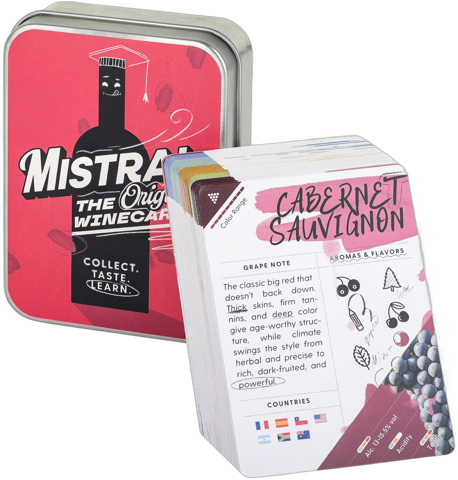
The glasses, tools, and cards I stand behind.
A short list. Nothing I would not recommend to a friend.
Browse the WineShopSaar Riesling tends to combine naturally high acidity with low alcohol, and many Saar and Ruwer wines reach barely 8 or 9% alcohol; Moselwein e.V. says Saar Rieslings are marked by finesse and minerality. The wines often show aromas of pale fruits such as apple and citrus, along with blossoms and herbs, and Moselwein e.V. says they are considered especially age-worthy, often still surprising with their freshness after decades. Egon Müller credits the slate that is omnipresent on the Saar, whose salts help shape the taste of Saar Rieslings, and says the mineral-intensive slate and the fine-grained acidity typical of the Saar dominate the fruit of its Kabinett wines without suppressing it. Egon Müller says Spätlese from the Wiltinger braune Kupp tends to be full-bodied and spicy-exotic, while Scharzhofberg Spätlese develops toward great elegance.
- Van Volxem Saar RieslingRoman Niewodniczanski names it in a VDP interview as the wine he would recommend to someone who does not yet know the estate.
- Forstmeister Geltz-Zilliken Rausch Riesling KabinettListed by the estate among its wines from the Saarburger Rausch, its most important site, on Devonian slate and diabase.
- Van Volxem Gottesfuß Alte Reben Riesling GGA Grosses Gewächs from the Wiltinger Gottesfuß, where the estate holds ungrafted Riesling vines about 130 years old.
- Forstmeister Geltz-Zilliken Rausch Riesling AusleseListed among the estate's Saarburger Rausch wines; its Spätlese and Auslese wines come from significantly lower yields.
- Egon Müller Scharzhofberger Riesling AusleseOne of the estate's Scharzhofberg Prädikat wines; its Auslese wines can be sweet to very sweet but always have a balancing acidity.
New to Wine.com? $25 off $350+ with codeJOVIAL25
Wine with Seth may earn a commission on Wine.com purchases at no cost to you. Wine links are for adults 21 and over.
- Saar: one of six Mosel Bereiche, with viticulture between Serrig and Konz; 793 ha, 83% Riesling (undated figure, fetched 2026); the region was renamed from Mosel-Saar-Ruwer to Mosel from the 2007 vintage.
- Soils and climate: predominantly dark Devonian slate with some diabase of volcanic origin, vineyards often on the south slopes of side valleys; the Saar is somewhat cooler than the Mosel, with higher vineyards and less river influence.
- Scharzhofberger (Wiltingen, VDP.GROSSE LAGE): 28 ha, south and southeast slopes of 30 to 60%, 190 to 310 m; labels name only the site, not the village. Limited to 18 ha until 1971; Egon Müller holds 8.5 ha.
- Van Volxem (Wiltingen): Jesuit monastery estate from the 17th century, taken over by Roman Niewodniczanski in 2000; about 130-year-old ungrafted Riesling vines in the Wiltinger Gottesfuß.
- Forstmeister Geltz-Zilliken (Saarburg): winegrowing tradition since 1742; Ferdinand Geltz co-founded the Grosser Ring (founded 1908); 11 ha in the Saarburger Rausch.
Drinking your way through Mosel Sub-Regions: Saar (Steep Slate Riesling - Egon Müller Scharzhofberg, Van Volxem)?
Track every bottle in your Tasting Journal in the Wine with Seth app.
Start your Journal