Aspect & Sun Angle at Different Latitudes
The direction a vineyard faces, and how its slope meets the sun, can make a monumental difference to the final wine.
Optimal grape-growing conditions are generally found between 30 and 50 degrees latitude on either side of the equator, and a vineyard facing towards the equator will be warmer and sunnier than one facing away from it. In Germany, slopes exposed to the south or south-west in protected valleys are the best prerequisites for viticulture. In the Southern Hemisphere the picture reverses: northern and western slopes are warmer than southern and eastern ones.
Take Aspect & Sun Angle at Different Latitudes into the app. Flashcards, trivia and label lookup.
Open the appWhat It Is: Aspect, Slope, and Sunlight
Altitude, aspect and inclination of the slope are the three most important topographic attributes affecting viticulture. Their effects can be direct, through the incidence of the sun's rays on the earth's surface, or indirect, through soil types and exposure to wind and ventilation. Most vineyards are located on at least a gentle slope, and the angle of that slope affects how much sunshine the vines have access to. Direction matters just as much: a vineyard facing towards the equator will be warmer and sunnier than one facing away from it. In site-selection terms, slope and aspect together determine a site's sunlight exposure patterns and duration, its heat accumulation, and its air and water drainage.
- Aspect: a vineyard facing towards the equator is warmer and sunnier than one facing away from it
- Slope angle: the angle of the slope affects how much sunshine the vines have access to
- Three attributes: altitude, aspect and inclination of the slope are the most important topographic attributes affecting viticulture
- Site selection: slope and aspect set sunlight exposure, heat accumulation, and air and water drainage
- Optimal conditions are generally found between 30 and 50 degrees latitude on either side of the equator; nearer the equator, cooling influences may be needed, and further away, factors that maximise warmth and sunlight may be needed to ripen the grapes
- A vineyard facing towards the equator will be warmer and sunnier than one facing away from it, and the angle of the slope affects how much sunshine the vines have access to
- Slope and aspect determine a site's sunlight exposure patterns and duration, heat accumulation, and air and water drainage
- Mosel: half of the vineyards are on steep and terraced sites with a slope of over 30 degrees, some planted at a 70-degree gradient; the Bremmer Calmont has a gradient of up to 60%
- The Mosel's own regional wine brochure names relatively low alcohol concentrations (7-12%) as the hallmark of its white wines
- Barolo DOCG rules: hillsides only; terrain at the bottom of a valley, or damp, flat or with insufficient exposure to the sun, is categorically excluded, and new plantings on north-facing slopes from -45° to +45° are excluded
- Temperature drops approximately 0.6 degrees Celsius for every 100 metres climbed above sea level, which can give some relief from the heat in warmer climates
How It Works: Latitude and Hemisphere
Optimal grape-growing conditions are generally found between 30 and 50 degrees latitude on either side of the equator. The closer a vineyard is to the equator, the warmer it becomes, and cooling influences such as sea breezes or mountain air may be needed to prevent it from getting too hot. Further from the equator the reverse is true, and factors that maximise warmth and sunlight may be necessary to help ripen the grapes. Latitude is only part of the story: alongside it, many other factors affect grape ripening, and the location and aspect of an individual vineyard can make a monumental difference to the final wine. In Germany, the best prerequisites for viticulture are slopes exposed to the south or south-west in protected valleys, because the sunshine on the slopes is much more intense than on the plain and south-facing slopes benefit from a longer sunshine duration overall. In the Southern Hemisphere, northern and western slopes are warmer than southern and eastern ones because they receive more sunlight, while eastern slopes warm up faster than western slopes and cool earlier.
- Latitude band: optimal conditions are generally found between 30 and 50 degrees either side of the equator
- Nearer the equator: cooling influences such as sea breezes or mountain air may be needed
- Further from the equator: factors that maximise warmth and sunlight may be needed to ripen the grapes
- Southern Hemisphere: northern and western slopes are warmer than southern and eastern ones
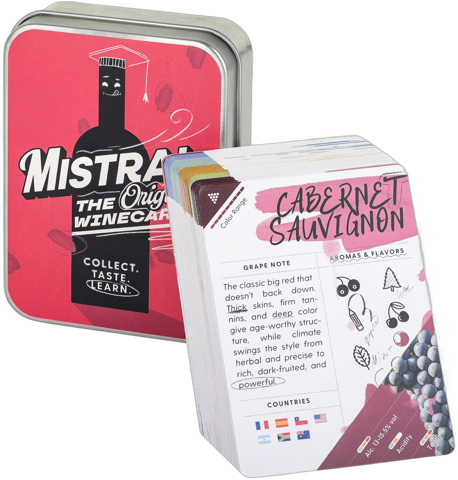
The glasses, tools, and cards I stand behind.
A short list. Nothing I would not recommend to a friend.
Browse the WineShopEffect on Wine: Ripeness, Frost, and Style
For growing table grapes in Oregon, the advice is to choose a sloping area, especially a south or southwest slope, because it generally has higher temperatures and is less likely to get frost. Slopes also help with frost in another way. Cool air tends to tumble down a hill and collect at the bottom, so vineyards on slopes are less affected by frost than those on the valley floor. Warmer is not always the goal: in the Southern Hemisphere, preference is given to the cooler southern and eastern slopes, especially for more delicate varieties like Sauvignon Blanc and Pinot Noir. Soil can magnify the effect of the climate, too; light-coloured soils reflect sunlight, whereas dark, stony soils store and radiate warmth.
- South or southwest slopes: generally higher temperatures and less likely to get frost, in advice for Oregon table grapes
- Cold-air drainage: cool air collects at the bottom of a hill, so sloped vineyards are less affected by frost than the valley floor
- Cooler exposures by choice: in the Southern Hemisphere, southern and eastern slopes are preferred for delicate varieties like Sauvignon Blanc and Pinot Noir
- Soil colour: light soils reflect sunlight; dark, stony soils store and radiate warmth
Where You See It: Regional Expression
In the Mosel, half of the vineyards are on steep and terraced sites with a slope of over 30 degrees, some planted at a 70-degree gradient, and the steep slate slopes above the rivers store the sun's heat during the day and release it again at night. Because of the river's meanders, south-facing slopes are found sometimes on the right bank and sometimes on the left, and thanks to favourable sunlight they offer ideal growing conditions for vines. The Bremmer Calmont, the steepest sloped vineyard in all of Europe, has a gradient of up to 60%, and its steep slope is credited with an ideal angle of sun radiation for Riesling. In Burgundy, Nuits-Saint-Georges exposures are mostly to the East or South-East, and Meursault's best soils lie at heights of 260 metres with exposures along an arc between East and South. In the Northern Rhône, most of the Hermitage slopes face south and enjoy good sun exposure, on granitic sand with a covering of mica-schists and gneiss. The Barolo DOCG production regulations allow hillside vineyards only, categorically exclude terrain at the bottom of a valley or that is damp, flat or with insufficient exposure to the sun, and exclude new plantings on north-facing slopes from -45° to +45°.
- Mosel: half of the vineyards are on slopes of over 30 degrees, some at a 70-degree gradient; the steep slate slopes store the sun's heat by day and release it at night
- Burgundy: Nuits-Saint-Georges exposures mostly East or South-East; Meursault's best soils face an arc between East and South
- Hermitage: most slopes face south; production area of 137 hectares in 2025
- Barolo: hillsides only, at 170 to 540 metres above sea level, with new plantings on north-facing slopes from -45° to +45° excluded
The Science: Radiation, Heat, and Altitude
Changes in altitude create different slopes and aspects, with resulting changes in solar radiation interception, temperature and wind exposure. Altitude also cools: temperature drops approximately 0.6 degrees Celsius for every 100 metres climbed above sea level, which in warmer climates can provide some relief from the heat. In the Cape, many farmers have extended their plantings upwards to benefit from better drainage and cooler temperatures, with vineyards located from 50 m above sea level to over 600 m in the mountains. Mountains can also cut sunlight: in the Cape's mountainous terrain, some vineyards only see the sun rising as late as 10:00 in the morning, and on the longest day of the year the prime Cape vineyards seldom receive more than 10 hours of sunlight. Soil stores heat as well; one major feature of slate is its ability to store heat, which is particularly advantageous on cool autumn nights.
- Radiation interception: changes in altitude alter slope and aspect, and with them solar radiation interception, temperature and wind exposure
- Altitude: approximately 0.6 degrees Celsius cooler for every 100 metres above sea level
- Mountain shade: some Cape vineyards only see the sun rising as late as 10:00 in the morning
- Thermal storage: slate's ability to store heat is particularly advantageous on cool autumn nights
The book I hand to someone starting out.
Wine Folly: Magnum Edition explains wine without reading like a textbook, and the charts do more teaching than most paragraphs.$35.
See Wine FollyTerroir Integration: Aspect Within Classification
Barolo's DOCG regulations make aspect a written vineyard requirement: exposure must be appropriate for ensuring suitable ripening of the grapes, and new plantings on north-facing slopes are excluded. In Burgundy, the Climats are plots of land for growing vines that have been delimited by winemakers from generation to generation; there are more than a thousand of them, and some were identified as far back as the 7th century. Clos de Vougeot shows how conditions change within one classified site. Founded around 1110 by the monks of nearby Cîteaux, its 50.59 ha have never been broken up. Its upper end, at about 255 metres, is gently sloping with soil only some 40 cm deep; the centre, at about 250 metres, has shallow (45 cm), more clayey soil; and the lower portion, at around 240 metres, has deeper (90 cm) brown soil on a layer of marl rich in clay and alluvium. In the Mosel, sundials were installed on sun-drenched southern slopes where grapes for premium wines also flourished, and many of them gave their names to the surrounding vineyard sites.
- Barolo: aspect is a written requirement, with new plantings on north-facing slopes excluded
- Burgundy: more than a thousand Climats, some identified as far back as the 7th century
- Clos de Vougeot: 50.59 ha, of which 49.43 ha under production in 2022; soil depth rises from about 40 cm at the upper end to 90 cm in the lower portion
- Mosel sundials: installed on sun-drenched southern slopes; many gave their names to the surrounding vineyard sites
Sources and last verified
Primary sources: https://www.wsetglobal.com/knowledge-centre/blog/2021/august/24/how-does-geography-affect-a-wine-s-style, https://www.winesofgermany.com/our-wine/viticulture/viticulture/178/soil-sites, https://www.winesofgermany.com/our-regions/growing-area/72/mosel, https://www.winesofgermany.com/our-regions/highlight-of-wine-culture/159/der-calmont, https://www.weinland-mosel.de/media/File/WeinbroschuereMosel2010GB.pdf, https://www.winesofgermany.com/our-regions/highlight-of-wine-culture/361/weinbergs-sonnenuhren, https://www.bourgogne-wines.com/wine-and-terroir/our-natural-assets/climatology/an-ideal-climate-for-producing-great-wines,2483,9268.html, https://www.bourgogne-wines.com/wine-and-terroir/bourgogne-and-its-appellations/nuits-saint-georges,2458,9253.html?args=Y29tcF9pZD0yMjc4JmFjdGlvbj12aWV3RmljaGUmaWQ9MzYxJnw%3D, https://www.bourgogne-wines.com/wine-and-terroir/bourgogne-and-its-appellations/meursault,2458,9253.html?args=Y29tcF9pZD0yMjc4JmFjdGlvbj12aWV3RmljaGUmaWQ9MzQ5Jnw%3D, https://www.bourgogne-wines.com/wine-and-terroir/bourgogne-and-its-appellations/clos-de-vougeot,2458,9253.html?args=Y29tcF9pZD0yMjc4JmFjdGlvbj12aWV3RmljaGUmaWQ9Mjg2Jnw%3D, https://www.vins-rhone.com/en/cotes-du-rhone-cru-aoc-hermitage, https://www.langhevini.it/wp-content/uploads/2019/05/Disciplinare-BAROLO-EN.pdf, https://www.wosa.co.za/The-Industry/Terrior/Topography/, https://extension.oregonstate.edu/catalog/em-8973-establishing-vineyard-oregon-quick-start-resource-guide, https://extension.oregonstate.edu/sites/extd8/files/catalog/auto/EC1639.pdf. Last verified 2026-10-04
The map is the lesson
The World Atlas of Wine next to any region article makes the geography click.
See the book- Optimal grape-growing conditions are generally found between 30 and 50 degrees latitude on either side of the equator, and a vineyard facing towards the equator is warmer and sunnier than one facing away from it.
- Northern Hemisphere: south- or south-west-facing slopes in protected valleys are the best prerequisites for German viticulture. Southern Hemisphere: northern and western slopes are warmer than southern and eastern ones, and southern and eastern slopes are preferred for delicate varieties like Sauvignon Blanc and Pinot Noir.
- Mosel: half of the vineyards sit on slopes of over 30 degrees, some at a 70-degree gradient; the Bremmer Calmont has a gradient of up to 60%; the region's own wine brochure gives relatively low alcohol concentrations (7-12%) as the hallmark of Mosel whites.
- Burgundy: Nuits-Saint-Georges exposures are mostly East or South-East, and Meursault's best soils face an arc between East and South. Clos de Vougeot covers 50.59 ha, with soils deepening from the upper end (about 255 m, some 40 cm of soil) to the lower portion (around 240 m, 90 cm).
- Barolo DOCG: hillsides only, 170 to 540 m above sea level, with new plantings on north-facing slopes from -45° to +45° excluded. Altitude: approximately 0.6 degrees Celsius cooler for every 100 metres above sea level.
Put this into practice
Blind tastings, flashcards, and trivia in the Wine with Seth app.
Try the app free