Château Pouget
sha-TOE poo-ZHAY
A Margaux Fourth Growth in Cantenac, in the hands of the Guillemet family since 1906.
Château Pouget is a Margaux estate in Cantenac, classified as a Fourth Growth in 1855. It takes its name from François-Antoine Pouget, who inherited the estate in 1748; his daughter Claire married Pierre-Antoine de Chavailles in 1771, and the Pouget de Chavailles family ran the estate for over a century and a half. Since 1906 the estate has been in the hands of the Guillemet family, who in 1932, already owners of Pouget, also entered the history of Château Boyd-Cantenac, a Third Growth. The 10 hectares of vineyard lie in the heart of the siliceous gravels of Margaux and are planted with 60% Cabernet Sauvignon, 30% Merlot and 10% Cabernet Franc.
Take Château Pouget into the app. Flashcards, trivia and label lookup.
Open the appHistory and Ownership
In 1650 the estate belonged to Etienne Monteil, a canon of Saint-Émilion, whose granddaughter made François-Antoine Pouget her universal legatee in 1748; the estate takes its name from him. Before the Pouget family, the vineyard had once been cultivated by the monks of Cantenac's ancient priory. Pouget's daughter Claire married Pierre-Antoine de Chavailles in 1771, and for over a century and a half the Pouget de Chavailles family ran the estate. Under the French Revolution the family's property was placed under sequestration; it was recovered only in 1798, when the Gironde administration lifted the sequestration, though part of the estate was confiscated and attached to the Domaine National. From 1748 to the early 20th century the estate changed hands through inheritance only. Since 1906 the estate has been in the hands of the Guillemet family. In 1932 the Guillemet family, already owners of Château Pouget, entered the history of Château Boyd-Cantenac, taking over and developing its production; that year Louis Guillemet bought the Boyd-Cantenac brand. For several decades the wines of the Guillemet holdings were handled together; as of 2015 they were produced separately.
- 1650: the estate belonged to Etienne Monteil, a canon of Saint-Émilion.
- 1748: François-Antoine Pouget inherited the estate, which takes his name.
- 1771: his daughter Claire married Pierre-Antoine de Chavailles; the Pouget de Chavailles family ran the estate for over a century and a half.
- 1798: the sequestration imposed under the Revolution was lifted, with part of the estate confiscated.
- 1906: the estate passed into the hands of the Guillemet family.
- 1932: the Guillemet family, already owners of Pouget, entered the history of Château Boyd-Cantenac.
- Classified a Fourth Growth (4ème Cru Classé) in the 1855 classification; the estate lies in Cantenac, within the Margaux appellation.
- 10 hectares of vineyard in the heart of the siliceous gravels of Margaux, planted with 60% Cabernet Sauvignon, 30% Merlot and 10% Cabernet Franc; the average age of the vines is over 35 years.
- Named after François-Antoine Pouget, who inherited the estate in 1748.
- In the hands of the Guillemet family since 1906; Lucien Guillemet is technical director.
- The Guillemet family, already owners of Château Pouget, entered the history of Third Growth Château Boyd-Cantenac in 1932.
- Second wine: Antoine Pouget.
People and Roles
The estate's site names Lucien Guillemet as technical director of Château Pouget. Lucien Guillemet is an oenologist and agronomic engineer; for several years he headed production at a neighbouring grand cru while his father ran Boyd-Cantenac. On the family's Boyd-Cantenac site, Lucien Guillemet and his nephew Olivier Salques represent the family's continuity today, with Olivier Salques becoming progressively involved in the management of Château Boyd-Cantenac.
- Owner: the Guillemet family, since 1906.
- Technical director: Lucien Guillemet, an oenologist and agronomic engineer.
- Olivier Salques, Lucien Guillemet's nephew, is progressively becoming involved in the management of Château Boyd-Cantenac.
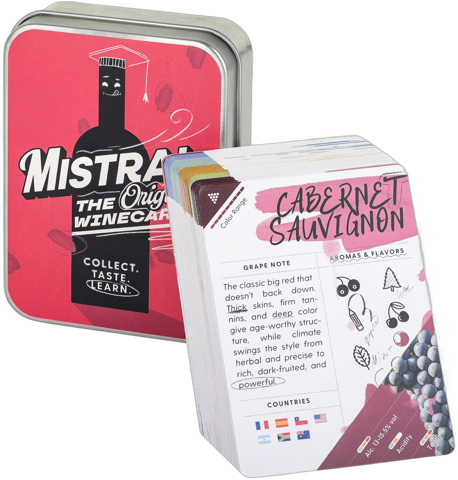
The glasses, tools, and cards I stand behind.
A short list. Nothing I would not recommend to a friend.
Browse the WineShopVineyard
Château Pouget's 10 hectares of vineyard lie in the very heart of the siliceous gravels of Margaux, in the commune of Cantenac. The vineyard is planted with 60% Cabernet Sauvignon, 30% Merlot and 10% Cabernet Franc, and the average age of the vines is over 35 years. Pruning is done by hand in winter. The number of workers at Château Pouget is doubled from May to July and quadrupled during the harvest, and chemical fertilisers are not used. The harvest begins with Merlot, the earliest-ripening variety, and is picked by hand to allow rigorous selection; it lasts between 10 and 25 days. The grapes are sorted both in the vineyard and at the winery.
- 10 hectares in the heart of the siliceous gravels of Margaux.
- Planted with 60% Cabernet Sauvignon, 30% Merlot and 10% Cabernet Franc; average vine age over 35 years.
- Hand pruning in winter; no chemical fertilisers.
- Hand harvest beginning with Merlot, lasting 10 to 25 days, with sorting in the vineyard and at the winery.
Winemaking and Élevage
Fermentation and maceration take place in both cement vats and stainless steel tanks, with numerous pump-overs; maceration lasts from around 8 to 35 days depending on the vintage. Fruit from young vines receives lighter extraction and becomes one of the components of the second wine. Malolactic fermentation takes place partly in barrel. The wines age for 12 to 24 months in barrels made from split oak rather than sawn staves. The grapes of each vineyard block are kept separate through harvest, vinification and barrel ageing; the lots are tasted periodically, and the most complementary are combined to make Château Pouget, while the other lots, with some of the young-vine wines, mostly go into the second wines.
- Cement vats and stainless steel tanks; maceration of around 8 to 35 days.
- Malolactic fermentation partly in barrel.
- 12 to 24 months in split-oak barrels.
- Each vineyard block kept separate until blending.
Classification
Château Pouget was classified as a Fourth Growth in the 1855 classification of the Médoc, listed in the commune of Cantenac-Margaux. In the Intendance classification of 1775, drawn up for tax purposes by the Bordeaux brokers and published and applied in 1776, the Cru de Pouget stood at the head of the fourth class of Margaux-Cantenac; around 1776 its wines traded on the Bordeaux market at 600 to 625 livres per tonneau. About ten years after the 1855 classification, the de Chavailles family converted part of the cellar into a residence and placed on its pediment two marble medallions that refer to different classifications.
- Fourth Growth (4ème Cru Classé), 1855.
- Head of the fourth class of Margaux-Cantenac in the 1775 Intendance classification.
- Two marble medallions on the building's pediment refer to different classifications.
Open one bottle, taste it for weeks.
The Coravin Pivot+ is the simpler Coravin, for wines you will finish inside a few weeks, which is how I taste a producer across vintages without finishing every bottle. It takes five seconds to use.$199.
See the Pivot+Wines
The grand vin, Château Pouget, is an AOC Margaux 4ème Grand Cru Classé 1855. The second wine, Antoine Pouget, takes its name from the founder of the vineyard, François-Antoine Pouget, a king's counsellor in the reign of Louis XV, and its label carries the estate's coat of arms, which the Maréchal-Duc de Richelieu gave to the château. For the 2018 vintage, the harvest ran from October 1 to October 23, and the primeur blend was 49% Merlot, 38% Cabernet Sauvignon, 6% Petit Verdot and 6% Cabernet Franc. The wines of Château Pouget and Château Boyd-Cantenac are sold through a shared estate e-shop. Visits are by appointment only.
- Château Pouget: AOC Margaux, 4ème Grand Cru Classé 1855.
- Antoine Pouget: second wine, named after François-Antoine Pouget.
- 2018: harvested October 1 to 23; primeur blend 49% Merlot, 38% Cabernet Sauvignon, 6% Petit Verdot, 6% Cabernet Franc.
House Style
The estate's own account of its recent vintages calls them 'dark and dense, with complex aromas of fruit and spices,' with a mouth-filling volume followed by 'the ripe tannins which assure excellent aging capability.' The estate calls the general balance 'always elegant, more aromatic than powerful.' Of the second wine, the estate writes that Antoine Pouget is 'a well rounded, accessible, gourmet and fruity wine.'
Sources and last verified
Primary sources (producer's own site): https://www.chateau-pouget.com/english/, https://www.chateau-pouget.com/english/history/, https://www.chateau-pouget.com/english/the-wines/, https://www.chateau-pouget.com/english/the-wines/culture/, https://www.chateau-pouget.com/english/the-wines/vinifications/, https://www.chateau-pouget.com/english/the-wines/the-second-wines/, https://www.chateau-pouget.com/english/contact-visits/, https://www.chateau-pouget.com/francais/histoire/, and the estate's 2018 technical sheet (PDF): https://www.chateau-pouget.com/app/download/31945079/Fiche+Pouget+2018+GB.pdf. Owner group sources: https://boyd-cantenac.fr/a-propos/ and the estate e-shop https://shop.boyd-cantenac.fr/fr/ and https://shop.boyd-cantenac.fr/fr/nos-vins/180-858-chateau-pouget.html. Secondary sources: Decanter (https://www.decanter.com/wine-travel/chateau-pouget-68298/, last updated 28 May 2015; https://www.decanter.com/learn/the-official-bordeaux-wine-classification-of-1855-41072/) and Wine Spectator (https://www.winespectator.com/articles/the-1855-bordeaux-classification-3491). Last verified 2026-10-20. Where the producer's site and a secondary source disagree, the producer's site governs.
Pour one glass. Keep the bottle for months.
Coravin is how I drink the serious stuff on a Tuesday without committing to the whole bottle.
See CoravinIn the estate's own account, recent vintages are dark and dense, with complex aromas of fruit and spices, a mouth-filling volume and ripe tannins, and a general balance that is elegant and more aromatic than powerful.
- Château PougetThe grand vin, an AOC Margaux 4ème Grand Cru Classé 1855, blended from the most complementary of the separately kept vineyard lots.
- Château Pouget 2018Harvested from October 1 to 23; the primeur blend was 49% Merlot, 38% Cabernet Sauvignon, 6% Petit Verdot and 6% Cabernet Franc.
- Antoine PougetThe second wine, named after the vineyard's founder François-Antoine Pouget and drawn partly from young-vine lots.
New to Wine.com? $25 off $350+ with codeJOVIAL25
Wine with Seth may earn a commission on Wine.com purchases at no cost to you. Wine links are for adults 21 and over.
- Fourth Growth (4ème Cru Classé) in the 1855 classification; located in Cantenac, Margaux AOC.
- 10 ha on the siliceous gravels of Margaux; planted with 60% Cabernet Sauvignon, 30% Merlot, 10% Cabernet Franc.
- Named after François-Antoine Pouget (inherited 1748); in the hands of the Guillemet family since 1906, who entered the history of Third Growth Château Boyd-Cantenac in 1932.
- Élevage of 12 to 24 months in split-oak barrels; maceration of around 8 to 35 days in cement vats and stainless steel tanks.
- Second wine: Antoine Pouget.
Tasted a Château Pouget wine?
Log it in your Tasting Journal and build your palate over time.
Start your Journal