Pinot Grigio Ramato: Friuli's Copper Skin-Contact Style
Pinot Grigio with a copper glow: Friuli's traditional short skin-contact style, older than the 'orange wine' label and now named in the Friuli Colli Orientali DOC rules.
Ramato, from the Italian word for copper, is a traditional Friulian style of Pinot Grigio in which the juice spends a short time with the grape's pigmented skins. That contact gives the wine a copper to pink colour and more texture than the familiar dry, untinted Pinot Grigio. The Friuli Colli Orientali DOC rules, as amended in July 2025, list Pinot grigio ramato as a named wine, and the style has been known as 'Ramato' since the time of the Serenissima Republic of Venice.
Start WineSchool Level 1. Free, in the app, under a minute a lesson.
Open WineSchoolWhat Ramato Is: The Name and the Colour
Ramato comes from the Italian word 'rame', meaning copper, and names Pinot Grigio made by letting the crushed grapes' skins spend time with the juice. Wine Spectator's glossary defines it as a typically pale, copper-hued rosato (rosé) made from Pinot Grigio in Friuli-Venezia Giulia. The colour is possible because Pinot Grigio is not a white-skinned grape: its skins have a rosy-grey tone, which is where the names grigio and gris, meaning grey, come from. Under the Friuli Colli Orientali DOC production rules, a Pinot grigio ramato may range from copper and/or pink, of lighter or deeper intensity, up to light ruby. The same rules group it with rosé wines because of the colouring matter naturally present in the berry.
- Grape: at least 85% Pinot Grigio under the Friuli Colli Orientali DOC rules, with up to 15% of other white grape varieties suited to cultivation in the Province of Udine
- Category: grouped with rosé wines under those rules, because of the grape's natural colouring matter
- Ramato comes from the Italian 'rame', meaning copper, and names a skin-contact style of Pinot Grigio from Friuli-Venezia Giulia
- The Friuli Colli Orientali DOC rules, as amended by ministerial decree of 7 July 2025 (Gazzetta Ufficiale, 28 July 2025), list Pinot grigio ramato as a named wine
- In the Friuli Colli Orientali DOC, Pinot grigio ramato must be at least 85% Pinot Grigio and is made through a light pre-fermentation maceration on the skins
- Permitted colour runs from copper and/or pink up to light ruby; minimum total acidity is 4.5 g/l, against 4.0 g/l for standard Pinot grigio
- Traditional skin contact ran from four to 24 hours
- The style has been known as 'Ramato' since the time of the Serenissima Republic of Venice
How Ramato Is Made: Brief Skin Contact
The heart of ramato is skin contact. In the Friuli Colli Orientali DOC, the ramato type is obtained through a light pre-fermentation maceration (soaking the juice with the skins before fermentation starts). The area's white wines, by contrast, are made from softly pressed grapes fermented at controlled temperature without their skins, to bring out each variety's typical aromas. Traditionally, the skins macerated in the must (the unfermented juice) for anything from four to 24 hours. Shorter macerations tend to give fresher, lighter wines, often with a slight peach tinge, while longer ones lean toward richer, autumnal shades. Friulian producer Scarbolo shows both ends: one ramato spends 24 hours on the skins before fermentation, while its Ramato XL is fermented on the skins for two weeks and aged two years in French oak.
- Traditional contact time: from four to 24 hours of skin maceration in the must
- What skin contact adds: colour and structure, sometimes even light tannins
- Friuli Colli Orientali minimums for Pinot grigio ramato: 11% alcohol, 4.5 g/l total acidity and 16 g/l non-reducing extract, against 4.0 g/l and 15 g/l for standard Pinot grigio

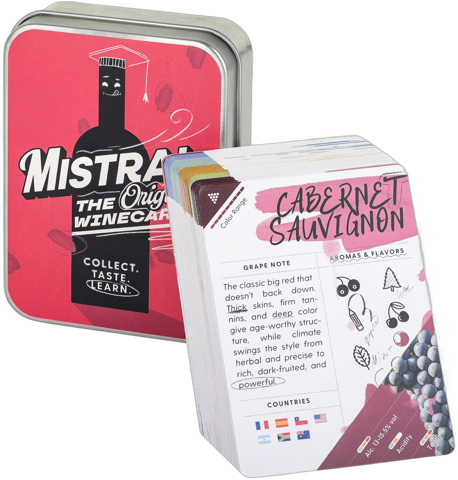
Every concept in this article fits on a card.
Mistral WineCards. Deck ONE: Global. 55 wine education cards covering grapes, regions, terroir, and winemaking. $35.
Get the DeckA Friulian Tradition Older Than the 'Orange Wine' Label
Pinot grigio ramato is a rooted Friulian tradition, known under the name 'Ramato' since the time of the Serenissima Republic of Venice. Pinot Grigio was made in this style until the 1960s, when producer Santa Margherita began exporting Pinot Grigio in the style most drinkers know today. It was first bottled in the 1950s but did not become popular until the 1980s, when the fashion was for very clear, light white wines. Any colour was removed by fining (a clarifying step), which also removed flavour, and the ramato style fell out of fashion. A few producers stuck with it, including Specogna, La Fattoria and Livio Felluga. Skin contact for white grapes has deep roots here: in Decanter's words, in Friuli and neighbouring Slovenian Brda 'maceration of white grapes is as old as the Collio hills'. An 1844 manual by Matija Vertovec, a priest from the nearby Vipava valley, recommended skin macerations from 24 hours to 30 days. The term 'orange wine' was coined only in 2004, by David Harvey of UK importer Raeburn Fine Wines. The two are not the same: orange wines are made from white grapes throughout the world, while ramato is a historical Friulian style made from Pinot Grigio.
- The Friuli Colli Orientali DOC rules, as amended by ministerial decree of 7 July 2025 and published in the Gazzetta Ufficiale on 28 July 2025, list Pinot grigio ramato as a named wine
One glass for everything, Champagne to Barolo.
The Gabriel-Glas StandArt is the one I name when someone asks which single stem to buy. Light, wide bowl, dishwasher safe, and it flatters this grape as much as any other.$67 a pair.
See the StandArtSensory Profile and Where Ramato Is Made Today
Skin contact gives ramato its tactile texture and coppery hue, and the maceration adds to its flavours, aromas, structural complexity and tannin. Typical notes run to orchard fruit skin and acacia flowers, with a mineral, tactile finish. The Friuli Colli Orientali rules call for a dry, full, harmonious taste. Friuli remains the style's historic heartland. Besides Scarbolo, Friulian producers of ramato include Le Vigne di Zamò, Specogna, Radikon, Stocco, Attems and Damijan. In Collio, Pinot Grigio arrived in the mid-1800s thanks to Count Teodoro De La Tour; it accounts for almost 30% of total production, and its colour can show copper reflections. Ramato is also made in other parts of Italy and has recently emerged in the New World.
- Aromas and flavours: orchard fruit skin and acacia flowers
- Food: a good match for Prosciutto di San Daniele, crustaceans, white meats, Friulian frico and a diverse array of Asian cuisines
Sources and last verified
Primary sources: Friuli Colli Orientali DOC production rules (Gazzetta Ufficiale text hosted by the Consorzio Tutela Vini Friuli Colli Orientali e Ramandolo): https://www.colliorientali.com/wp-content/uploads/2026/02/Friuli_Colli_Orientali_DOC__DM_7.07.25_Mod.Ordinaria_GU28.07.2025.pdf; Gazzetta Ufficiale decree record: https://www.gazzettaufficiale.it/atto/serie_generale/caricaDettaglioAtto/originario?atto.dataPubblicazioneGazzetta=2025-07-28&atto.codiceRedazionale=25A03925&elenco30giorni=false; Consorzio Tutela Vini Collio: https://www.collio.it/en/vino/pinot-grigio/. Reference sources: Decanter: https://www.decanter.com/learn/ramato-wine-ask-decanter-426324/, https://www.decanter.com/learn/advice/pink-pinot-grigio-ask-decanter-354771/, https://www.decanter.com/features/orange-wines-it-s-time-to-get-in-touch-245524/; Wine Spectator: https://www.winespectator.com/glossary/show/id/ramato. Last verified 2026-10-05
Copper to pink in the glass, with orchard fruit skin and acacia flower notes, a dry, full palate, added texture and sometimes light tannins, and a mineral, tactile finish.
- Ramato = 'copper' (from Italian 'rame'): the traditional Friulian style of Pinot Grigio made with brief skin contact, giving a copper to pink colour.
- Friuli Colli Orientali DOC (rules amended by decree of 7 July 2025): Pinot grigio ramato is at least 85% Pinot Grigio, made by light pre-fermentation maceration on the skins, and grouped with rosé wines.
- DOC minimums for Pinot grigio ramato: 11% alcohol, 4.5 g/l total acidity, 16 g/l non-reducing extract; colour copper and/or pink up to light ruby.
- Traditional maceration: four to 24 hours; the pale, untinted export style took over from the 1960s (Santa Margherita), and the term 'orange wine' dates only from 2004.