Château Pesquié
shah-TOH peh-KYAY
A Chaudière family estate at Mormoiron in the Ventoux appellation, farmed organically and with biodynamic preparations on the southern slope of Mont Ventoux at 250 to 400 metres.
Château Pesquié is a family wine estate at Mormoiron, at the foot of Mont Ventoux in the southeastern Rhône Valley, owned by the Chaudière family. René and Odette Bastide renovated the château and restructured its vineyard from the early 1970s. Their daughter Édith and her husband Paul Chaudière took over in the mid-1980s, left the local cooperative in 1989 and made their first wines in the estate's own cellar in 1990. Their sons Alexandre and Frédéric have run Château Pesquié since 2003; the vineyard is certified organic by Ecocert and the brothers tend their vines on biodynamic principles.
Take Château Pesquié into the app. Flashcards, trivia and label lookup.
Open the appHistory and Ownership
Over the centuries the château passed through the hands of the Counts of Mormoiron, the Marquis de Reilhanette and the Lords of Maubec. The Provençal word pesquié refers to a vivarium or pond, and the château is built over two springs, with more than a dozen fountains in its grounds. René and Odette Bastide, grandparents of the current generation, renovated Château Pesquié and restructured the vineyard from the early 1970s. The Ventoux appellation gained AOC status in 1973 under the name Côtes du Ventoux and took its current name, AOC Ventoux, in 2009. Édith Bastide and her husband Paul Chaudière took over the family estate in the mid-1980s, left the local cooperative in 1989 and created the Château Pesquié cellar, producing their first wines in 1990. Since 2003 their two sons, Alexandre and Frédéric, have run the estate, which the Chaudière family owns.
- Earlier owners of the château included the Counts of Mormoiron, the Marquis de Reilhanette and the Lords of Maubec.
- René and Odette Bastide renovated the château and restructured the vineyard from the early 1970s.
- Édith and Paul Chaudière left the local cooperative in 1989 and made their first wines in their own cellar with the 1990 vintage.
- Alexandre and Frédéric Chaudière have run the estate since 2003.
- In 2017 frost cost the estate 60% of its grapes.
- Owned by the Chaudière family; the winery sits between the villages of Mormoiron, Blauvac and Ville-sur-Auzon, at 1365 bis Route de Flassan, Mormoiron.
- Vineyards lie at an average altitude of 250 to 400 metres on the southern slope of Mont Ventoux, on soils dominated by Urgonian limestone with clays, marls and some sands.
- Around a dozen varieties are grown, led by Grenache on almost 40% of the surface area and Syrah on over 30%; the vines are 40 years old on average.
- The first wines from the estate's own cellar came with the 1990 vintage, the first vintage of the Quintessence cuvée.
- The vineyard is certified organic by Ecocert, with the first parcels certified in 2007, and is tended with the main biodynamic preparations.
- The three red single-vineyard cuvées are Artemia (Syrah-led, at around 400 metres), Silica (Grenache on sand) and Ascensio (Grenache on clay-limestone).
- The family also makes Le Paradou, a Provence range of varietal wines in three colours plus an AOP Provence rosé.
People and Roles
The estate is run by brothers Alexandre and Frédéric Chaudière. Alexandre manages the family wine production: after a diploma in winegrowing and winemaking he travelled for almost seven years to regions including Burgundy, Beaujolais, Moselle, Côte-Rôtie, Australia and Châteauneuf-du-Pape, returned to Mont Ventoux in 2006 and progressively took over from his father. Frédéric followed literary studies focused on history and philosophy between Paris and Rome and returned to the family vineyard in 2003. Together the brothers developed the Paradou wines and converted the vineyard to organic and biodynamic agriculture, having learnt biodynamics from Vincent Masson. In 2018 Frédéric was also vice president of AOC Ventoux. Paul Chaudière is the son of Marcelle and Charles Chaudière; Charles, an agricultural engineer, finished his career teaching viticulture and oenology at the Agricultural College of Orange. Before turning to wine, Édith and Paul had careers as a physiotherapist and a speech therapist respectively.
- Alexandre Chaudière: manages the family wine production; returned to Mont Ventoux in 2006.
- Frédéric Chaudière: studied history and philosophy; returned to the family vineyard in 2003; vice president of AOC Ventoux in 2018.
- The brothers learnt biodynamics from Vincent Masson.
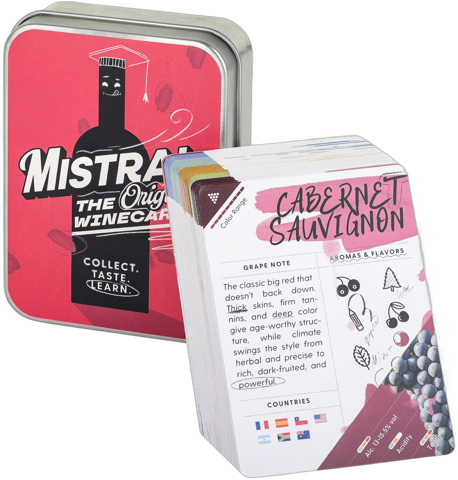
The glasses, tools, and cards I stand behind.
A short list. Nothing I would not recommend to a friend.
Browse the WineShopVineyards and Terroir
The winery is nestled between the villages of Mormoiron, Blauvac and Ville-sur-Auzon on the southern slope of Mont Ventoux, which peaks at 1,912 metres. The vineyard's average altitude is between 250 and 400 metres, and the Mistral almost immediately dries the rare rains. The vines grow on fine gravel and clay-limestone hillsides, with a predominance of Urgonian limestone alongside different types of clays, marls and some sands. Around a dozen varieties are planted: Grenache covers almost 40% of the surface area and Syrah over 30%, with Cinsault, Carignan, Mourvèdre, Marselan, Roussanne, Viognier, Clairette, Grenache Blanc, Bourboulenc and Chardonnay. The vines are 40 years old on average. The estate lies within the Mont Ventoux Regional Natural Park and a UNESCO biosphere reserve. In 2018 Decanter's Matt Walls put Pesquié at more than 100 ha, the largest of Ventoux's independent wineries.
- Average vineyard altitude of 250 to 400 metres on the southern slope of Mont Ventoux.
- Soils: predominantly Urgonian limestone, with clays, marls and some sands.
- Grenache on almost 40% of the surface area, Syrah on over 30%.
- Alexandre and Frédéric reintroduced Bourboulenc and have focused on developing Cinsault, especially for red wines.
Farming and Cellar
In 1993 Château Pesquié was the first cellar selected by the FARRE network (Forum de l'Agriculture Raisonnée et Respectueuse de l'Environnement). The vineyard then switched gradually to organic agriculture, with the first parcels certified organic in 2007, and it is certified organic by Ecocert. The brothers tend the entire vineyard with the main biodynamic preparations, including horn manure, horn silica, organic composts and infusions of horsetail, nettle, yarrow and valerian, and adapt the grass cover and green fertilizers to each soil type and variety. The cellar is built as a continuation of the hillside under a layer of planted earth; because the facilities are partly underground, the harvest arrives at a higher level and is transferred into the vats by gravity. Solar panels cover the buildings not under planted earth, and the estate produces much more electricity than it uses. Rosés and the lightest whites are mostly vinified in stainless steel, reds are generally fermented and aged in concrete, Syrah often goes into barrels while for Grenache the family prefers not to use them, and the most complex parcels are vinified and aged in concrete eggs.
- First cellar selected by the FARRE network, in 1993.
- First parcels certified organic in 2007; the vineyard is certified organic by Ecocert.
- Cellar under planted earth with gravity transfer of the harvest into the vats.
- Solar panels produce much more electricity than the estate uses.
Wines
The estate's wines page groups the range into single-vineyard cuvées, Quintessence, Terrasses, Édition 1912M and varietal wines. Artemia, one of three red single-vineyard cuvées, is 80% Syrah and 20% Grenache from limestone gravels at around 400 metres, one of the highest plots on the estate, with vines 60 years old; it is aged 12 to 15 months in concrete and in 225-litre and 600-litre barrels. Silica is 90% Grenache and 10% Cinsault from sand with a slight presence of limestone gravels at about 350 metres, from 85-year-old vines; it is fermented in eggs and concrete and aged 12 to 18 months in 600-litre demi-muids and concrete eggs, and its name recalls the sand and pays tribute to silica in biodynamic farming. Ascensio is made mostly from Grenache grown in clay-limestone scattered with boulders; the estate's sheet for the 2016 vintage records 95% Grenache, 30% whole bunches, 24 months in concrete and fewer than 3,000 bottles. Juliette is a white of Clairette and Grenache Blanc vinified in a concrete egg, and Tandem blends black and white Grenache. Quintessence, made since the 1990 vintage, is 80% Syrah and 20% Grenache from clay-limestone at 300 to 350 metres, aged 12 to 15 months in concrete and in 225- and 228-litre barrels; there is also a white Quintessence led by Roussanne and a rosé born from a collaboration with Olivier Poussier and Emmanuel Gagnepain. The Terrasses red blends 60% Grenache and 40% Syrah from plots between 250 and 350 metres and has a short ageing in concrete with no oak. The varietal wines include a Chardonnay and a Syrah, and the family also highlights a Muscat Petit Grain grown in AOC Muscat de Beaumes-de-Venise.
- Artemia: 80% Syrah, 20% Grenache from limestone gravels at around 400 metres.
- Silica: 90% Grenache, 10% Cinsault from sand at about 350 metres; vines 85 years old.
- Ascensio: mostly Grenache from clay-limestone with boulders; fewer than 3,000 bottles of the 2016.
- Quintessence Rouge: 80% Syrah, 20% Grenache, made since the 1990 vintage.
- Le Paradou: the family's Provence range of varietal wines in three colours plus an AOP Provence rosé.
Open one bottle, taste it for weeks.
The Coravin Pivot+ is the simpler Coravin, for wines you will finish inside a few weeks, which is how I taste a producer across vintages without finishing every bottle. It takes five seconds to use.$199.
See the Pivot+House Style
Château Pesquié describes its style as 'elegant and fresh, taking its force from the unique, elevated terroir of Mont Ventoux.' The estate places its terroir among the coolest micro-climates in the southern Rhône Valley, in the latest-ripening part of one of its highest and latest-ripening terroirs. The family prefers gentle infusion to an overly aggressive extraction of structure and tannins, and in the cellar focuses on preserving elegance and minerality. In Wine Spectator in 2018, Robert Camuto reported the brothers' move to a fresher style, with gentler extractions and ageing in neutral large barrels and cement tanks, and counted more than a dozen 90-plus-point scores for the estate. Decanter's Matt Walls named Château Pesquié in 2018 among the best exponents of Ventoux white wine.
Sources and last verified
Primary sources (producer's own site and the Chaudière family site): https://chateaupesquie.com/en/welcome/, https://chateaupesquie.com/en/the-chateau/, https://chateaupesquie.com/en/the-wines/, https://famillechaudiere.com/en/our-story/, https://famillechaudiere.com/en/le-paradou-2/, and the estate's technical sheets (PDF): https://chateaupesquie.com/wp-content/uploads/2026/01/Chateau-Pesquie-ARTEMIA-Rouge-2023.pdf, https://chateaupesquie.com/wp-content/uploads/2025/01/Chateau-Pesquie-ASCENSIO-Rouge-2020.pdf, https://chateaupesquie.com/wp-content/uploads/2025/01/Chateau-Pesquie-SILICA-Rouge-2022-1.pdf, https://chateaupesquie.com/wp-content/uploads/2025/01/Chateau-Pesquie-QUINTESSENCE-Rouge-2022.pdf, https://chateaupesquie.com/wp-content/uploads/2025/01/Chateau-Pesquie-TERRASSES-Rouge-2023.pdf. Secondary sources: Wine Spectator (Robert Camuto, 19 September 2018), Decanter (Matt Walls, last updated 21 February 2019) and Inter Rhône (https://www.vins-rhone.com/en/aoc-ventoux). Last verified 2026-10-20. Where the producer's site and a secondary source disagree, the producer's site governs.
Wine experiences for your team
Private blind tastings and corporate wine events led by a WSET-certified educator. Seattle and beyond.
Book an event- Château Pesquié Terrasses RougeA blend of the estate's terroirs, 60% Grenache and 40% Syrah, given a short ageing in concrete with no oak.
- Château Pesquié Quintessence RougeMade since the 1990 vintage: 80% Syrah and 20% Grenache from clay-limestone at 300 to 350 metres.
- Château Pesquié ArtemiaSingle-vineyard red of 80% Syrah and 20% Grenache from one of the estate's highest plots, at around 400 metres.
New to Wine.com? $25 off $350+ with codeJOVIAL25
Wine with Seth may earn a commission on Wine.com purchases at no cost to you. Wine links are for adults 21 and over.
- Château Pesquié is at Mormoiron in AOC Ventoux, which gained AOC status in 1973 as Côtes du Ventoux and was renamed AOC Ventoux in 2009.
- Édith and Paul Chaudière left the local cooperative in 1989 and made their first estate wines in 1990; Quintessence dates from that vintage.
- Vineyards at an average altitude of 250 to 400 metres on Mont Ventoux's southern slope; Grenache covers almost 40% of the surface area and Syrah over 30%.
- Red single-vineyard cuvées: Artemia (80% Syrah, around 400 metres), Silica (Grenache on sand) and Ascensio (Grenache on clay-limestone).
- Certified organic by Ecocert (first parcels certified in 2007) and tended with biodynamic preparations by brothers Alexandre and Frédéric Chaudière, in charge since 2003.
Tasted a Château Pesquié wine?
Log it in your Tasting Journal and build your palate over time.
Start your Journal