Carbonation (Injected CO2 Sparkling Wine)
The soda-fountain route to fizz: carbon dioxide pumped into a still wine instead of being created by a second fermentation, and the cheapest way to make a wine sparkle.
Carbonation makes a wine fizzy by injecting carbon dioxide into a still base wine. It is the cheapest sparkling method, the same one used for fizzy canned drinks, and its bubbles are large and disappear quickly. Because some or all of the gas is added rather than produced by fermentation, both EU law and the OIV's International Code of Oenological Practices put these wines in their own category, separate from sparkling wines whose bubbles are made by a second fermentation in tank or bottle.
Start WineSchool Level 1. Free, in the app, under a minute a lesson.
Open WineSchoolWhat Carbonation Is and How It Works
Carbonation, also called the bicycle pump method, takes a base wine and injects carbon dioxide into it, the same method used for fizzy canned drinks. In practice it is the simple pumping of carbon dioxide into a tank, which the Oxford Companion to Wine calls the cheapest and least effective method of sparkling winemaking. The OIV's Code defines carbonated wines as special wines produced from wines, so the starting point is wine. Temperature matters: carbon dioxide is more soluble in a well-chilled liquid, and as the temperature goes up the gas becomes less soluble and wants to escape rapidly. The OIV Code also lists membrane contactors, a physical technique using hydrophobic membranes, as a way to increase dissolved carbon dioxide to obtain carbonated wines; the technique can replace the use of bubbling devices or venturi-type systems.
- Starting point: a base wine, with carbon dioxide injected into it
- Same basic method as fizzy canned drinks
- Cold liquid holds more dissolved carbon dioxide than warm liquid
- Membrane contactors can replace bubbling devices or venturi-type systems for adding the gas
- EU law defines 'aerated sparkling wine' as wine that, when opened, releases carbon dioxide derived wholly or partially from an addition of that gas, with an excess pressure of at least 3 bar at 20 °C
- EU 'sparkling wine' and 'quality sparkling wine' must release carbon dioxide derived exclusively from fermentation
- In the EU, aerated sparkling wine must be obtained from wine without a protected designation of origin (PDO) or protected geographical indication (PGI)
- EU labels must supplement the aerated category term with 'obtained by adding carbon dioxide' or 'obtained by adding carbon anhydride', in characters of the same type and size
- The OIV defines 'carbonated wines' as special wines whose carbon dioxide is partially or totally of exogenous (outside) origin
- In the United States, 'carbonated grape wine' is a separate class from 'sparkling grape wine', whose carbon dioxide must result solely from fermentation within a closed container, tank or bottle
- Carbonation is the cheapest sparkling method, and its bubbles are large and disappear quickly
Why the Bubbles Are Different
In fermentation-based sparkling wine the gas is made inside the wine. In the traditional method, yeast and sugar are added to a still base wine sealed in bottle, and the second fermentation produces carbon dioxide that becomes trapped and forms the bubbles. The dead yeast cells form lees, which break down in a process known as autolysis, releasing aromas such as brioche, toast, pastry and cream. Tank method wines also get their gas from fermentation but spend little or no time ageing on lees, and they tend to show softer bubbles. Carbonation skips the second fermentation: the gas is injected into a base wine. The difference shows in the glass. Carbonated bubbles are large and disappear quickly, and a sparkling wine made by an inexpensive, soda-pop style method will probably go flat quickly, while one made by true secondary fermentation will retain its carbonation a bit longer.
- Traditional method: gas from a second fermentation in bottle, then lees ageing and autolysis aromas
- Tank method: gas from fermentation, little or no lees ageing, softer bubbles
- Carbonation: gas injected into a base wine; bubbles large and quick to disappear
- Serving tip: a well-chilled sparkling wine releases its gas slowly, in a gentle stream of tiny bubbles

The glasses, tools, and cards I stand behind.
A short list. Nothing I would not recommend to a friend.
Browse the WineShopWhere and Why It Is Used
Carbonation is the cheapest sparkling method. In the European Union, aerated sparkling wine must be obtained from wine without a protected designation of origin or a protected geographical indication. A lighter category, aerated semi-sparkling wine, covers wines with an excess pressure of 1 to 2.5 bar at 20 °C due to carbon dioxide that has been wholly or partially added. For comparison, tank method wines, whose gas does come from fermentation, are generally more affordable due to faster production and lower labour requirements.
- The cheapest sparkling method
- EU aerated sparkling wine cannot be made from PDO or PGI wine
- EU aerated semi-sparkling wine: 1 to 2.5 bar at 20 °C, gas wholly or partially added
- Tank method wines are generally more affordable due to faster production and lower labour requirements
One glass for everything, Champagne to Barolo.
The Gabriel-Glas StandArt is the one I name when someone asks which single stem to buy. Light, wide bowl, dishwasher safe, and it flatters this grape as much as any other.$67 a pair.
See the StandArtLabeling and Regulation
Regulators draw the line at the source of the gas. The OIV's International Code of Oenological Practices defines sparkling wines by an effervescence resulting from the release of carbon dioxide of exclusively endogenous origin, meaning produced within the wine, with an excess pressure of at least 3.5 bars at 20°C. It names two production techniques: secondary fermentation in bottle and secondary fermentation in closed tank. Carbonated wines sit in a separate OIV category, showing physical characteristics analogous to sparkling wines but with carbon dioxide partially or totally of exogenous origin. EU law follows the same logic. Sparkling wine and quality sparkling wine must release carbon dioxide derived exclusively from fermentation, with minimum excess pressures of 3 bar and 3.5 bar respectively. Because consumers are not always aware of how aerated wines are produced, the EU label must state 'obtained by adding carbon dioxide' or 'obtained by adding carbon anhydride'. Method terms are protected too: 'traditional method' and 'classical method' may only describe sparkling wines bearing a PDO (or a third-country geographical indication) or quality sparkling wines that were made sparkling by a second alcoholic fermentation in the bottle, stayed on the lees for at least nine months and were separated from the lees by disgorging. In the United States, federal standards of identity separate 'sparkling grape wine', made effervescent with carbon dioxide resulting solely from fermentation within a closed container, tank or bottle, from 'carbonated grape wine', made effervescent with carbon dioxide other than that resulting solely from secondary fermentation.
- OIV sparkling wine: carbon dioxide of exclusively endogenous origin, at least 3.5 bars at 20°C
- OIV carbonated wine: carbon dioxide partially or totally of exogenous origin
- EU: the 'obtained by adding carbon dioxide' wording is not needed when the language used already indicates that carbon dioxide has been added
- US: carbonated grape wine is Class 3; sparkling grape wine is Class 2
Sources and last verified
Facts in this article were checked against the regulatory texts and reference pages listed below. Last verified 2026-10-05.
- https://eur-lex.europa.eu/legal-content/EN/TXT/HTML/?uri=CELEX:32013R1308
- https://eur-lex.europa.eu/legal-content/EN/TXT/HTML/?uri=CELEX:32019R0033
- https://www.oiv.int/node/2172/download/pdf
- https://www.oiv.int/public/medias/7713/en-oiv-code-2021.pdf
- https://www.ecfr.gov/api/renderer/v1/content/enhanced/current/title-27?part=4§ion=4.21
- https://www.wsetglobal.com/knowledge-centre/blog/2026/a-guide-to-sparkling-wine-production-methods-and-regional-styles
- https://www.decanter.com/learn/winemaking-the-facts-2-54064/7/
- https://www.jancisrobinson.com/ocw/detail/carbonation
- https://www.winespectator.com/articles/ask-dr-vinny-2879
- https://www.winespectator.com/articles/dr-vinny-s-valentines-day-tips-bubbly-basics-and-beyond-51202
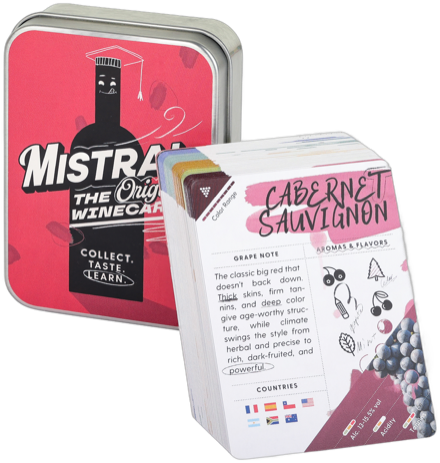
Every concept in this article fits on a card.
Mistral WineCards. Deck ONE: Global. 55 wine education cards covering grapes, regions, terroir, and winemaking. $35.
Get the Deck- Carbonation = carbon dioxide injected into a base wine (the 'bicycle pump method'); the cheapest sparkling method, with large bubbles that disappear quickly.
- OIV: sparkling wine gas is of exclusively endogenous origin (at least 3.5 bars at 20°C); carbonated wine gas is partially or totally of exogenous origin.
- EU 'aerated sparkling wine': at least 3 bar at 20 °C, gas wholly or partially added, made from wine without a PDO or PGI; label adds 'obtained by adding carbon dioxide' (or 'carbon anhydride').
- EU 'traditional method' wording requires a second alcoholic fermentation in the bottle, at least nine months on the lees, and disgorging.
- US 27 CFR 4.21: Class 2 sparkling grape wine (gas solely from fermentation in a closed container, tank or bottle) vs Class 3 carbonated grape wine.