Opening Sparkling Wine — Wire Cage Removal; Rotating Bottle Not Cork; Controlled Pressure Release; Angle at 45°
Opening sparkling wine quietly means a cold bottle, the bottle pointed away from people, a thumb kept on the cork, and turning the bottle rather than the cork so it eases out with a gentle sigh, not a loud pop.
A bottle of Champagne holds 5 to 6 bar of pressure, about three times the pressure of a car tyre, so the cork has to be handled with care. The usual way to open sparkling wine is quietly and safely: chill the bottle first, remove the foil, point the bottle away from anyone or anything breakable, put a thumb on the cork and keep it there while you loosen the wire cage, then hold the cork steady and slowly turn the bottle until the cork comes out with a soft sigh.
Serving and Storing: Opening Sparkling Wine
WineSchool Level 1 · free in the app
Take Opening Sparkling Wine - Wire Cage Removal; Rotating Bottle Not Cork; Controlled Pressure Release; Angle at 45° into the app. Flashcards, trivia and label lookup.
Open the appWhat Is Holding the Cork In
Sparkling wine under cork must be handled carefully, because the contents are under pressure and a flying cork could cause injury. The pressure inside a Champagne bottle is 5 to 6 bar, about three times the pressure of a car tyre. Decanter notes that most quality sparkling wines, such as Franciacorta, champagne or crémant, are sold with a pressure of between 5 and 6 atmospheres. The cork is held in place by a wire cage, the muselet, also called the wire muzzle.
- The muselet has three parts: a lower ring (ceinture) of soft galvanised wire, a cage of four separate wires (the legs) with a wire top, and a round metal cap of tinplate, the plaque
- On 5 July 1844, Châlons-en-Champagne merchant Adolphe Jacquesson filed a patent for placing a piece of tinplate (the plaque) between the top of the cork and its ties, which kept the hemp string or steel wire from becoming embedded in the cork under pressure
- The first wire cages were made around 1880
- Lower-pressure styles exist: frizzante wines have between 1 and 2.5 bars of pressure at 20°C, while spumante wines have at least 3 bars and must be released to market under cork and cage for safety
- The pressure inside a Champagne bottle is 5 to 6 bar, about three times the pressure of a car tyre
- Chilling the bottle lessens the pressure inside, and a cold bottle's cork is less prone to popping out before you want it to
- The foil comes off first, often with a pull-tab or tear strip; then the bottle is pointed away from anyone or anything breakable and a thumb goes on the cork while the wire cage is loosened
- The cage loop usually takes several twists, usually six, counterclockwise, but check: on some Champagne brands it unwinds in the opposite direction
- Point the bottle away from anyone or anything breakable, and hold it at a 30 to 45 degree angle
- Hold the cork steady and turn the bottle; turning the cork instead gives less grip, less control and a strong possibility that the cork will break
- Aim for a gentle sigh, not a loud pop: a pop drops the pressure suddenly at the expense of the bubbles and can waste wine
Before You Open
Start with a really cold bottle. Carbon dioxide is more soluble at lower temperatures, so a cold bottle is less likely to fizz and its cork is less prone to popping out before you want it to. Chilling the bottle lessens the pressure inside, and overheated bottles of sparkling wine have been known to pop on their own. Wine Spectator advises chilling the bottle to about 40 to 45°F before opening. The ideal temperature for a bottle of Champagne is about 8 to 10°C (46 to 50°F). To get there, put the bottle in an ice bucket half filled with water and ice for 20 to 30 minutes before serving, or in the bottom of the fridge a few hours before you open it.
- Don't open a bottle right after carrying it home, and don't shake it, so the wine doesn't froth out the top
- Hold the bottle by its body, not the neck, which would warm the wine
- Wipe the bottle dry with a cloth or napkin if needed before you start

Every concept in this article fits on a card.
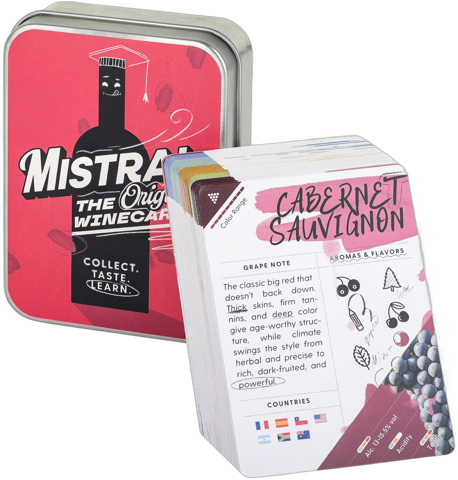
Mistral WineCards. Deck ONE: Global. 55 wine education cards covering grapes, regions, terroir, and winemaking. $35.
Get the DeckStep-by-Step Technique
Remove the foil first, using the pull-tab or tear strip if there is one. Point the bottle away from yourself, anyone else and anything breakable. Put a thumb over the top of the cork to keep it from ejecting, and keep it there. With your other hand, untwist the loop to loosen the wire cage. It usually takes several twists, usually six, counterclockwise, but check, because on some Champagne brands the loop unwinds in the opposite direction. Wine Spectator guidance loosens the cage but leaves it on, while champagne.fr describes removing the cage with its foil cap while keeping a firm grip on the cork. A Wine Spectator columnist likes to use a napkin, cloth or even paper towel to grab hold of the cork and cage, for traction and to protect the hand from any excited bubbles. Hold the bottle at a 30 to 45 degree angle. Grip the bottle firmly about two-thirds of the way down, hold the cork and cage steady, and slowly turn the bottle. The same columnist describes offering some resistance by gently pressing down as soon as the cork starts to move upward. Let the cork ease out with a quiet sigh.
- Keep the bottle at a 30 to 45 degree angle, pointed away from yourself and any bystanders
- If the cork needs help getting moving, rock it gently with your thumb and forefinger as you turn the bottle
- If the cork won't budge, turn the bottle while holding it by the base
- Pour a little wine, wait a few seconds for the froth to settle, then continue pouring to about two-thirds full
Why a Gentle Opening Matters
If you are not fully in control of the cork as it comes out of the bottle, it can go flying and seriously injure someone or break something valuable. Wine Spectator, citing the American Academy of Ophthalmology, reports that a flying Champagne cork can reach 50 mph, powerful enough to cause bleeding, abrasions or glaucoma if it hits someone in the eye, and that a direct hit, while quite rare, can even result in loss of sight. A loud pop also triggers a sudden drop in pressure at the expense of the bubbles, and it can cost a considerable amount of wine if the bottle has been shaken or not chilled enough. Wine Spectator sums it up: being gentle is more about safety and not wasting wine than about etiquette.
- A warm or agitated bottle may pop its cork as soon as the cage is loosened
- You can never rule out the risk of the cork flying out of the bottle when the wire muzzle comes off
- Opening a bottle quietly takes skill and practice
One glass for everything, Champagne to Barolo.
The Gabriel-Glas StandArt is the one I name when someone asks which single stem to buy. Light, wide bowl, dishwasher safe, and it flatters this grape as much as any other.$67 a pair.
See the StandArtCommon Mistakes and How to Avoid Them
The Union des Maisons de Champagne describes controlling the cork with your thumb, while steadying the bottle with your other fingers, as "the only way to open a bottle of Champagne safely." It adds that holding the cork down with the palm of your hand "may be popular but it doesn't work," and nor does turning the cork instead of the bottle, which gives less grip, less control and a strong possibility that the cork will break.
- Never point the cork toward your face, anyone else's, or anything of value
- Keep one hand on top of the cork
- Turn the bottle slowly
Sources and last verified
Primary sources: https://www.champagne.fr/en/enjoying-champagne/prepare-to-enjoy-champagne/opening-a-bottle-of-champagne https://www.champagne.fr/en/champagne-frequently-asked-questions Secondary sources: https://maisons-champagne.com/en/houses/the-art-of-tasting/serving-etiquette/article/uncorking-a-bottle-of-champagne https://maisons-champagne.com/en/appellation/stages-in-winemaking/article/the-history-of-the-muselet-and-its-collectable https://www.winespectator.com/articles/dr-vinny-how-to-open-a-bottle-of-champagne-sparkling-wine https://www.winespectator.com/articles/whats-the-safest-way-to-open-a-bottle-of-champagne-57559 https://www.winespectator.com/articles/how-to-open-a-bottle-champagne-sparkling-wine https://www.winespectator.com/articles/how-to-serve-wine-opening-a-bottle https://www.winespectator.com/articles/dr-vinny-s-valentines-day-tips-bubbly-basics-and-beyond-51202 https://www.decanter.com/learn/frizzante-it-44392/ Last verified 2026-11-02
The glasses, tools, and cards I stand behind.
A short list. Nothing I would not recommend to a friend.
Browse the WineShop- Pressure: a Champagne bottle holds 5 to 6 bar, about three times the pressure of a car tyre; frizzante wines have between 1 and 2.5 bars at 20°C and spumante wines at least 3 bars.
- Order of steps: chill, remove the foil, point the bottle away from people and anything breakable, thumb on the cork, loosen the cage, angle the bottle at 30 to 45 degrees, hold the cork and turn the bottle, ease the cork out to a sigh. A Wine Spectator columnist also likes to use a napkin or cloth on the cork and cage.
- The cage loop usually takes several twists, usually six, counterclockwise; check first, because on some Champagne brands it unwinds in the opposite direction.
- Cold matters: carbon dioxide is more soluble at lower temperatures, so a cold bottle fizzes less and its cork is less prone to popping out early; the ideal temperature for a bottle of Champagne is about 8 to 10°C.
- The muselet's tinplate plaque goes back to the patent Adolphe Jacquesson filed on 5 July 1844; the first wire cages were made around 1880.
Put this into practice
Blind tastings, flashcards, and trivia in the Wine with Seth app.
Try the app free