Domaine Pellé
Pellé family estate in Morogues, Menetou-Salon, where Henry Pellé obtained permission after the 1959 AOC for the village name Morogues to appear on the label; run in the vineyards and winery by his grandson Paul-Henry Pellé since 2007.
Domaine Pellé is a Pellé family estate in the village of Morogues, in the Menetou-Salon appellation, with Sancerre vineyards in the village of Montigny. Paul Pellé was selling barrels of wine to brasseries in Bourges at the turn of the 20th century; his son Ernest Pellé added a vine nursery, and Ernest's son Henry Pellé, after the creation of the Menetou-Salon AOC in 1959, obtained permission for the village name to appear on the label. Paul-Henry Pellé, Henry's grandson, took over the management of the vineyards and winery in 2007. The Pellé vineyards are planted exclusively with Sauvignon Blanc and Pinot Noir on clay-limestone soils, mainly Kimmeridgian marl, and are certified biodynamic.
Take Domaine Pellé into the app. Flashcards, trivia and label lookup.
Open the appHistory and Family
The first Pellé winemakers made wine for their own consumption before selling it to friends and to local cafes and taverns. The family's earliest written commercial records show Paul Pellé transporting and selling barrels of wine to brasseries in Bourges at the turn of the 20th century. His son, Ernest Pellé, added a vine nursery that supplied young vines to winegrowers across the Menetou-Salon and Sancerre appellations until the early 1990s. After the creation of the Menetou-Salon AOC in 1959, Ernest's son Henry Pellé obtained permission for the village name Morogues to appear on the label, and through the 1960s and 1970s he acquired additional vineyard land in Morogues whenever he could. In the 1970s Henry commissioned a semi-buried winery on the Les Cris plot, designed by the architect Christian Gimonet, which uses gravity to move the grape juice through the winemaking process. Henry's wife, Alberte Pellé, handled the administrative side of the business until 2001. Their son Éric Pellé joined in 1980, and the estate grew to its present size. Following Éric Pellé (d. 1995), Anne and Henry Pellé brought in Julien Zernott, then a young oenology graduate, who guided the estate until 2007, when he passed the reins to Paul-Henry Pellé, the son of Anne and Éric. Julien Zernott also created his own estate, Le Pas de l'Escalette, in the Terrasses du Larzac in the Languedoc.
- Turn of the 20th century: Paul Pellé selling barrels of wine to brasseries in Bourges
- Ernest Pellé's vine nursery supplied young vines to Menetou-Salon and Sancerre growers until the early 1990s
- 1959: Menetou-Salon AOC created; Henry Pellé obtained permission for the village name Morogues on the label
- 1970s: semi-buried, gravity-flow winery on the Les Cris plot, designed by Christian Gimonet
- 1980: Éric Pellé joined Henry and Alberte Pellé
- 2007: Julien Zernott passed the reins to Paul-Henry Pellé, who produced his first vintage that year
- Domaine Pellé is based at 6 route d'Aubinges in Morogues, in the Menetou-Salon appellation.
- Paul Pellé was transporting and selling barrels of wine to brasseries in Bourges at the turn of the 20th century, the family's earliest written commercial record.
- After the Menetou-Salon AOC was created in 1959, Henry Pellé obtained permission for the village name Morogues to appear on the label; the Menetou-Salon Morogues has remained the Pellé flagship wine.
- Éric Pellé first vinified the Les Blanchais plot separately in 1981, creating Domaine Pellé's first single-vineyard wine.
- Paul-Henry Pellé took over the management of the vineyards and winery in 2007 and produced his first vintage that year.
- Pellé organic growing began in 2006; the estate reapplied for organic certification in 2016, 2021 was the first year of its Biodyvin conversion, and its vineyards are certified biodynamic.
- Pellé vineyards lie at around 250 metres in the commune of Menetou-Salon, rising to 300 metres on the Morogues hillsides.
- In 2019 Paul-Henry Pellé oversaw 40 hectares of vines, two-thirds Sauvignon Blanc and one-third Pinot Noir.
People and Roles
Domaine Pellé has been in the hands of the Pellé family for several generations. Paul-Henry Pellé has managed the vineyards and winery since 2007, when he took over at 21 years of age. Anne Pellé continues the work in the administrative office that she began in the 1980s. Two team members joined in 2020: Marie, Paul-Henry's partner, works in the vineyard team and leads the hundred or so seasonal grape pickers at harvest, while Pauline joined the office team and represents Domaine Pellé to customers and agents in France and abroad. In the winery, Nelson watches over the wines. Domaine Pellé employs 15 people full time throughout the year.
- Paul-Henry Pellé: management of the vineyards and winery since 2007
- Anne Pellé: administrative office, work she began in the 1980s
- Marie: vineyard team since 2020; leads the seasonal pickers at harvest
- Pauline: office team since 2020; represents the estate to customers and agents
- Nelson: watches over the wines in the winery
- 15 full-time staff throughout the year
Vineyards and Terroir
All Pellé vineyards are planted on clay-limestone soils, mainly Kimmeridgian marl, with one exception: Le Carroir, which Domaine Pellé describes as the only vineyard in the appellation on flint. The vineyards lie at around 250 metres in the commune of Menetou-Salon, rising to 300 metres on the Morogues hillsides, and are planted exclusively with Sauvignon Blanc and Pinot Noir. Henry Pellé chose the hillsides of Morogues over the clay plains, and with his expertise as a nurseryman he refined the family's massal selection and planted the Les Blanchais, Le Carroir and Les Cris vineyards. Those three vineyards are still planted with vines from his selections, and new plantings are propagated from them using canes from vines chosen for balanced yields and later ripening. In Sancerre, Domaine Pellé has farmed the caillottes (dry, stony limestone) of the village of Montigny for more than 40 years. The vineyards are harvested by hand, with around one hundred people working for two to three weeks.
- Clay-limestone soils, mainly Kimmeridgian marl; Le Carroir on flint
- Around 250 metres in the commune of Menetou-Salon, up to 300 metres on the Morogues hillsides
- Planted exclusively with Sauvignon Blanc and Pinot Noir
- Les Blanchais, Le Carroir and Les Cris still planted with Henry Pellé's massal selections
- Sancerre: caillottes in the village of Montigny, farmed for more than 40 years
- Hand harvest by around one hundred people over two to three weeks
Organic and Biodynamic Farming
Pellé organic growing began in 2006, and on his return to the estate Paul-Henry Pellé set about converting the vineyards to organic growing. In 2009 three hailstorms struck, and that year the estate suspended the organic certification process while continuing herbicide-free farming. Domaine Pellé reapplied for organic certification in 2016, followed by biodynamic certification; 2021 was the first year of its Biodyvin conversion, and the Pellé wines now come from certified biodynamic vineyards. Sheep were introduced in 2020: a flock of around 30 Valais Blacknose sheep grazes among the vines from the end of harvest until early spring, from a sheepfold on the Les Cris plot, and around 20 geese joined the flock in May 2025. The estate acquired around 20 hectares of meadows for hay and grazing, and uses Preparations 500 and 501 along with compost made from manure from Thierry Courcel's neighbouring farm. Trees and hedgerows have been planted around and within the vineyards, and in the winter of 2024 the estate began planting acacia and timber trees across approximately 10 hectares with the aim of producing its own vineyard stakes by 2040.
- 2006: start of organic growing
- 2009: three hailstorms; organic certification process suspended, herbicide-free farming kept
- 2016: reapplication for organic certification
- 2021: first year of Biodyvin conversion; vineyards now certified biodynamic
- 2020: sheep introduced; around 20 geese joined in May 2025
- Agroforestry within and around the vineyards
Winemaking
Pellé Sauvignon Blanc is sorted as needed and pressed immediately in pneumatic presses; after overnight settling the musts ferment and age in foudres, barrels and stainless-steel vats of various sizes. In 2016, a year in which frost destroyed 90% of the harvest, Domaine Pellé renovated its white wine vat house, tripling the number of fermentation vats at the same overall capacity so that each parcel could be vinified individually; the same approach was introduced in the red wine cellar in 2007. The Pinot Noir is mostly destemmed and fed into the vats by gravity, with the berries kept intact for infusion-style macerations of three to four weeks in small, truncated cone-shaped wooden vats, followed by spontaneous fermentation with indigenous yeasts. White wines are aged on the lees in wooden vats, stainless-steel tanks or barrels, and reds mainly in wooden vats, with ageing that rarely exceeds 12 months. Total SO2 is below 50 mg/L for the whites and below 40 mg/L for the reds. Bottling takes place at the estate, and the wax seals are applied by hand in a colour chosen for each terroir.
- Whites: direct pressing, light settling, natural fermentation, 8 months on the fine and gross lees
- Reds: partial whole-cluster depending on the vintage, 3 to 4 weeks' infusion in wooden vats, indigenous yeasts, vertical press
- 2016: white vat house renovated after frost destroyed 90% of the harvest
- Total SO2 below 50 mg/L (whites) and 40 mg/L (reds)
- Hand-applied wax seals, colour by terroir
Open one bottle, taste it for weeks.
The Coravin Pivot+ is the simpler Coravin, for wines you will finish inside a few weeks, which is how I taste a producer across vintages without finishing every bottle. It takes five seconds to use.$199.
See the Pivot+Wines
The Pellé range lists village wines, single-vineyard wines and Sancerre. The village wines are a Menetou-Salon white, from three plots in the village of Menetou-Salon, and a Menetou-Salon red from one plot, listed as available in 2026; and the Menetou-Salon Morogues white, a blend of seven plots on the hills above Morogues, and red, a blend of four plots on Kimmeridgian marl and Portlandian limestone that the estate calls its signature wine. The single-vineyard wines are Les Blanchais (Sauvignon Blanc, a 2.63-hectare plot first vinified separately in 1981), Vignes de Ratier (Sauvignon Blanc, a 4.5-hectare southwest-facing plot in Morogues) and Les Cris (Pinot Noir, a 5-hectare plot with a massal selection from 1967), both first made in 1996, and Le Carroir (from 2010), now made as a white from 1.25 hectares and a red from 0.75 hectares of flint planted in 1976. From Sancerre come the Cuvée La Croix au Garde white, from a 4-hectare plot in Montigny, and red, from a 1.10-hectare plot in Montigny.
- Village: Menetou-Salon white and red; Menetou-Salon Morogues white (seven plots) and red (four plots)
- Les Blanchais: Sauvignon Blanc, 2.63 hectares, first single-vineyard wine (1981)
- Vignes de Ratier: Sauvignon Blanc, 4.5 hectares, southwest-facing (from 1996)
- Les Cris: Pinot Noir, 5 hectares, massal selection 1967 (from 1996)
- Le Carroir: white (1.25 hectares) and red (0.75 hectares) on flint planted in 1976 (from 2010)
- Sancerre Cuvée La Croix au Garde: white (4 hectares) and red (1.10 hectares) in Montigny
House Style
For its Pinot Noir, the stated goal of Domaine Pellé is 'to bring out the radiance and vibrancy of the fruit, while striving for depth and structure on the palate, underpinned by fine tannins.' The estate calls its Menetou-Salon Morogues white 'Trim, mineral and refined on the palate' and Les Blanchais 'a wine of power and remarkable length, built for cellaring.' In its 2019 update The Wine Doctor found the wines 'serious, especially the whites', approachable young but able to age well, with top cuvées such as Les Blanchais and Le Carroir showing remarkably well in maturity.
- Reds: the estate aims for radiant, vibrant fruit with depth, structure and fine tannins
- Whites: the estate calls the Morogues white trim, mineral and refined
- The Wine Doctor (2019): serious wines, especially the whites, that age well
Sources and last verified
Primary sources (producer's own site): https://www.domainepelle.com/en/yesterday/, https://www.domainepelle.com/en/today/, https://www.domainepelle.com/en/tomorrow/, https://www.domainepelle.com/en/the-vines/, https://www.domainepelle.com/en/the-winery/, https://www.domainepelle.com/en/the-team/, https://www.domainepelle.com/en/our-wines/, https://www.domainepelle.com/en/meet-us/, and the wine pages https://www.domainepelle.com/en/bouteille/menetou-salon-our-villages-sauvignon-blanc/, https://www.domainepelle.com/en/bouteille/menetou-salon-village-pinot-noir/, https://www.domainepelle.com/en/bouteille/menetou-salon-morogues-sauvignon-blanc/, https://www.domainepelle.com/en/bouteille/menetou-salon-morogues-pinot-noir/, https://www.domainepelle.com/en/bouteille/menetou-salon-morogues-vignes-de-ratier-sauvignon-blanc/, https://www.domainepelle.com/en/bouteille/menetou-salon-morogues-le-carroir-sauvignon-blanc/, https://www.domainepelle.com/en/bouteille/menetou-salon-les-blanchais-sauvignon-blanc/, https://www.domainepelle.com/en/bouteille/menetou-salon-morogues-les-cris-pinot-noir/, https://www.domainepelle.com/en/bouteille/menetou-salon-morogues-le-carroir-pinot-noir/, https://www.domainepelle.com/en/bouteille/sancerre-cuvee-la-croix-au-garde-sauvignon-blanc/, https://www.domainepelle.com/en/bouteille/sancerre-cuvee-la-croix-au-garde-pinot-noir/. Secondary source: The Wine Doctor, Domaine Pellé, 2019 Update, https://www.thewinedoctor.com/tastingsformal/pelle2019.shtml. Last verified 2026-10-20. Where the producer's site and a secondary source disagree, the producer's site governs.
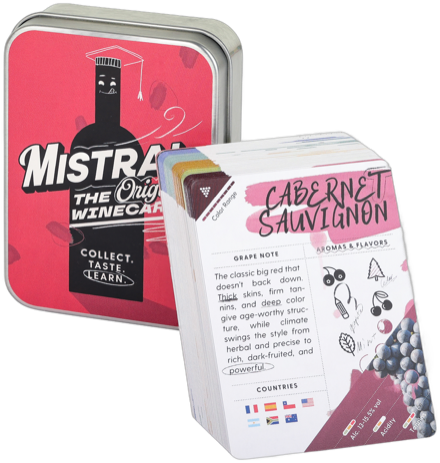
Every concept in this article fits on a card.
Mistral WineCards. Deck ONE: Global. 55 wine education cards covering grapes, regions, terroir, and winemaking. $35.
Get the Deck- Domaine Pellé Menetou-Salon Morogues Sauvignon BlancThe estate's historic cuvée, a blend of seven plots on the hills above Morogues, fermented in stainless-steel and wooden vats and aged 8 months on the lees.
- Domaine Pellé Menetou-Salon Morogues Pinot NoirA blend of four plots on Kimmeridgian marl and Portlandian limestone above Morogues, macerated for 3 to 4 weeks in wooden vats.
- Domaine Pellé Menetou-Salon Les BlanchaisSauvignon Blanc from a 2.63-hectare east-facing Kimmeridgian plot with veins of flint, first vinified separately by Éric Pellé in 1981.
- Domaine Pellé Sancerre Cuvée La Croix au Garde Sauvignon BlancFrom a 4-hectare plot on the caillottes of Montigny, fermented in stainless-steel vats and aged 8 months on the lees.
New to Wine.com? $25 off $350+ with codeJOVIAL25
Wine with Seth may earn a commission on Wine.com purchases at no cost to you. Wine links are for adults 21 and over.
- Domaine Pellé is in Morogues, Menetou-Salon; Menetou-Salon AOC created 1959.
- Henry Pellé obtained permission for the village name Morogues to appear on the label; Menetou-Salon Morogues is the Pellé flagship.
- Les Blanchais (1981, Éric Pellé) was the estate's first single-vineyard wine; Le Carroir is a flint vineyard.
- Paul-Henry Pellé has managed vineyards and winery since 2007; organic growing from 2006, Biodyvin conversion from 2021, vineyards certified biodynamic.
- Pellé vineyards: Sauvignon Blanc and Pinot Noir only, on clay-limestone, mainly Kimmeridgian marl; Sancerre holdings on caillottes in Montigny.
Tasted a Domaine Pellé wine?
Log it in your Tasting Journal and build your palate over time.
Start your Journal