Château Cantemerle
Fifth GrowthBordeaux 1855 ClassificationFrench pronunciation guide
A Haut-Médoc Fifth Growth at the southern tip of the Médoc peninsula, added to the 1855 classification on September 16, 1855, and owned by the SMABTP group since 1981.
Château Cantemerle is a Haut-Médoc estate in Macau-en-Médoc, classified as a Fifth Growth in 1855, at the southern tip of the Médoc peninsula. The first traces of its vineyard date to 1354. The Villeneuve-Durfort family held it from 1579 to 1892 and the Dubos family from 1892; the SMABTP group, a mutual insurance group in the building and public works sector, bought it in 1981. The estate covers 200 hectares, including a 98-hectare vineyard on deep gravel soils where Cabernet Sauvignon represents 71% of plantings. A new gravity-flow vat room and an underground barrel cellar were completed in time for the 2025 vintage.
Take Château Cantemerle into the app. Flashcards, trivia and label lookup.
Open the appHistory and Classification
Cantemerle began in the Middle Ages as a fortified house built on a mound surrounded by wide moats; it controlled the trade routes connecting Macau to the Garonne River and served as a defensive point and toll point. Its lords appear in feudal records from the 13th century onwards, and the first traces of the vineyard date to 1354, when the lord of Cantemerle paid his tithe with a barrel of clairet wine. In 1579 the lordship was bought by Jehan de Villeneuve, president of the Parliament of Bordeaux. With the marriage of Jean de Villeneuve and Antoinette de Durfort, the family, known from then on as the Villeneuve-Durforts, made viticulture the main activity of the estate. In the 1840s the Villeneuves sued Pierre Chadeuil, owner of neighbouring Château Pibran, over his use of the word Cantemerle on his labels, and his claim was thrown out. Baroness Caroline de Villeneuve took over the estate in 1834 and modernised the château, its grounds and the winemaking facilities. For generations the estate had exported its barrels directly to Holland without going through the Bordeaux marketplace, so its sales prices rarely appeared in the brokers' records; in 1854 Caroline brought it into the Bordeaux trade. The Chamber of Wine Brokers drew up the 1855 classification from nearly a century of sales prices, and the list was made public on April 18, 1855 without Cantemerle. Caroline gathered evidence of the wine's value, including past prices, archives and testimonials, and on September 16, 1855 Château Cantemerle was officially added to the list as a Fifth Growth.
- 1354: first traces of the vineyard; 1579: the lordship was bought by Jehan de Villeneuve.
- 1855: omitted from the classification made public on April 18 and added as a Fifth Growth on September 16.
- 1892: Théophile-Jean Dubos took over the estate; 1981: bought by the SMABTP group.
- Fifth Growth (Cinquième Cru Classé) in the 1855 classification: omitted from the list made public on April 18, 1855, and added on September 16, 1855.
- 98-hectare vineyard on siliceous gravel soils, planted to 71% Cabernet Sauvignon, 18% Merlot, 7% Petit Verdot and 4% Cabernet Franc; average vine age around 40 years.
- Owned by the Villeneuve-Durfort family from 1579 to 1892, the Dubos family from 1892, and the SMABTP group since 1981.
- The grand vin is aged 12 months in French oak barrels, 35% of them new, then rests four months in vat before bottling.
- Gravity-flow vat room with 114 stainless-steel vats of 30 to 170 hectolitres, unveiled in 2025; underground barrel cellar with capacity for up to 2,000 barrels.
- Les Allées de Cantemerle comes from the estate's younger vines, with a strong dominance of Cabernet Sauvignon.
Ownership and People
The phylloxera and mildew crises between 1879 and 1887 brought an end to the Villeneuve-Durfort dynasty, and in 1892 Théophile-Jean Dubos took over the estate with his wife and their two sons. The crises and wars of the 20th century weakened the estate: a large part of the vineyard was uprooted, and after 1945 only about 20 hectares remained under cultivation. Pierre Dubos (d. 1962) maintained the château's reputation; his daughters Bernadette and Pia inherited the estate, and their husbands, Henri Binaud and Bertrand Clauzel, managed it until the end of the 1970s. In 1981 the mutual insurance group SMABTP, headed by Albert Parment, bought Cantemerle for 25 million francs; the vines were replanted, the cellars modernised and the château restored. Laure Canu, who came from Château Angelus, has led the estate since 2021. Éric Boissenot has been consultant oenologist at Cantemerle since 2005, and Gregory Thibault was the estate's winemaker.
- 1879 to 1887: phylloxera and mildew crises; after 1945 only about 20 hectares remained under cultivation.
- 1981: bought by SMABTP for 25 million francs; the vines were replanted, the cellars modernised and the château restored.
- Laure Canu has led the estate since 2021; Éric Boissenot has been consultant oenologist since 2005; Gregory Thibault was winemaker.
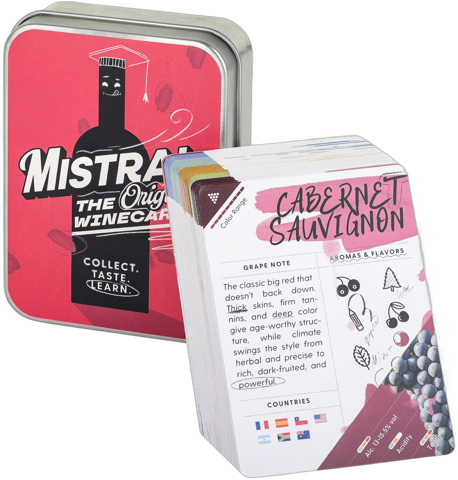
The glasses, tools, and cards I stand behind.
A short list. Nothing I would not recommend to a friend.
Browse the WineShopVineyard and Terroir
The estate covers 200 hectares at the southern tip of the Médoc peninsula, including nearly 100 hectares of preserved nature: woodland, parkland and meadows. Its 98-hectare vineyard, grouped around the château, lies on siliceous gravel soils formed by the ancient erosion of the Pyrenees by the Garonne River. The average vine age is around 40 years. Cabernet Sauvignon represents 71% of plantings, with Merlot at 18%, Petit Verdot at 7% and Cabernet Franc at 4%. The replanting after 1981 doubled the share of Cabernet Sauvignon to nearly 70% by grafting over much of the Cabernet Franc.
- 200-hectare estate, including nearly 100 hectares of woodland, parkland and meadows.
- 98 hectares of vines on siliceous gravel; average vine age around 40 years.
- Plantings: 71% Cabernet Sauvignon, 18% Merlot, 7% Petit Verdot, 4% Cabernet Franc.
Winemaking and Facilities
Grapes are picked by hand and sorted after destemming. In 2025 the estate unveiled new technical facilities designed by Bordeaux architect Arnaud Boulain (BPM) after three years of work, restructuring 10,000 m² of buildings. The gravity-flow vat room covers 3,500 m² and holds 114 stainless-steel vats of 30 to 170 hectolitres, so each plot, and sometimes each sub-plot, is vinified separately. Fermentations take place at moderate temperatures with light pumping-over adapted to each vat. The grand vin is aged for 12 months in French oak barrels, 35% of them new, then blended and returned to vat for four months before bottling. Press wine represents around 12% and is selected barrel by barrel. The underground barrel cellar covers 2,500 m², holds up to 2,000 barrels and is filled by gravity, and a geothermal loop fed by water from the estate's pond supplies the buildings with hot and cold water.
- 2025: new vat room and underground barrel cellar, designed by Arnaud Boulain (BPM).
- 114 stainless-steel vats for plot-by-plot vinification, with gravity-flow handling.
- Grand vin: 12 months in French oak, 35% new, then four months in vat.
The Wines
The estate's lineup comprises two wines, Château Cantemerle and Les Allées de Cantemerle. Château Cantemerle, the grand vin, is driven by Cabernet Sauvignon from vines often over 60 years old; its blend varies by vintage, from 59% Cabernet Sauvignon in 2015 and 67% in 2018 to 70% in 2022 and 71% in 2025. Les Allées de Cantemerle comes from the estate's younger vines, with a strong dominance of Cabernet Sauvignon and roundness and softness from Merlot. The 2025 vintage was the first harvest in the renovated vat room and carried a new label.
- Château Cantemerle: the grand vin, Haut-Médoc.
- Les Allées de Cantemerle: from the estate's younger vines, with a strong dominance of Cabernet Sauvignon.
Open one bottle, taste it for weeks.
The Coravin Pivot+ is the simpler Coravin, for wines you will finish inside a few weeks, which is how I taste a producer across vintages without finishing every bottle. It takes five seconds to use.$199.
See the Pivot+House Style
The estate describes its wines as 'always more refined than demonstrative,' expressing 'the subtle diversity of their gravel terroirs with precision.' In youth, its notes cite 'aromas of cherry, black fruits, rose petals and violet,' with Petit Verdot adding 'delicate spicy notes'; over time the bouquet 'evolves toward notes of undergrowth, blond tobacco and black tea.' The estate calls its approach to vinification 'a gentle philosophy focused on infusion rather than extraction.' Consultant Éric Boissenot says the estate's Cabernet Sauvignons 'bring tension, energy and form the backbone of the wine.' Writing in Decanter in 2026, Elin McCoy placed the wines 'always at the top of the list of best value-for-money Bordeaux.'
The Park and the Name
The name Cantemerle comes from the old French 'Canta Merla,' meaning 'the blackbird sings.' The estate's park, designed in the 18th century and enhanced by botanist Louis-Bernard Fischer, who also designed Bordeaux's Jardin Public, has winding paths, water features, giant ferns and century-old trees. An inventory of the park's fauna and flora recorded more than 150 species, including the royal fern, a protected species. Each year the estate collects seeds of local species from the park's paths and replants the resulting young trees and shrubs across the vineyard to create hedgerows and ecological corridors.
- Name from the old French 'Canta Merla,' 'the blackbird sings.'
- Park designed in the 18th century and enhanced by botanist Louis-Bernard Fischer.
- More than 150 species recorded in the park inventory.
Sources and last verified
Primary sources (producer's own site): https://www.cantemerle.com/en/, https://www.cantemerle.com/en/our-origins/, https://www.cantemerle.com/en/the-wines/, https://www.cantemerle.com/en/biodiversite/, https://www.cantemerle.com/en/the-visits/, and the estate's technical sheets (PDF): https://www.cantemerle.com/wp-content/uploads/2026/08/Chateau-Cantemerle-2022-FR-EN.pdf, https://www.cantemerle.com/wp-content/uploads/2026/05/FT-Cantemerle-2025-FREN.pdf, https://www.cantemerle.com/wp-content/uploads/2026/05/FT-Cantemerle-2018-FR-EN-1.pdf, https://www.cantemerle.com/wp-content/uploads/2026/05/FT-Cantemerle-2015-FR-EN-2.pdf. Secondary sources: Decanter (Elin McCoy, published 3 August 2026; Decanter travel listing for Château Cantemerle). Last verified 2026-10-18. Where the producer's site and a secondary source disagree, the producer's site governs.
Pour one glass. Keep the bottle for months.
Coravin is how I drink the serious stuff on a Tuesday without committing to the whole bottle.
See CoravinIn the estate's description, young Château Cantemerle shows cherry, black fruits, rose petals and violet, with delicate spicy notes from Petit Verdot and silky, enveloping tannins; with time the bouquet moves toward undergrowth, blond tobacco and black tea.
- Château Cantemerle 2025The first harvest in the renovated vat room, under a new label; a blend of 71% Cabernet Sauvignon, 18% Merlot, 7% Cabernet Franc and 4% Petit Verdot, harvested from September 4 to 20.
- Château Cantemerle 2022A blend of 70% Cabernet Sauvignon, 20% Merlot, 5% Cabernet Franc and 5% Petit Verdot, hand-harvested from September 12 to September 27 and aged 12 months in French oak, 35% new.
- Château Cantemerle 2018Harvested from September 17 to October 6 after a hot, dry and very sunny summer; 67% Cabernet Sauvignon, 20% Merlot, 7% Cabernet Franc and 6% Petit Verdot.
- Château Cantemerle 2015Harvested from September 14 to October 8; 59% Cabernet Sauvignon, 27% Merlot, 8% Cabernet Franc and 7% Petit Verdot, aged 12 months in French oak, 40% new.
- Les Allées de CantemerleFrom the estate's younger vines, with a strong dominance of Cabernet Sauvignon.
New to Wine.com? $25 off $350+ with codeJOVIAL25
Wine with Seth may earn a commission on Wine.com purchases at no cost to you. Wine links are for adults 21 and over.
- Haut-Médoc Fifth Growth (1855): omitted from the list made public on April 18, 1855, and added on September 16, 1855 after Caroline de Villeneuve-Durfort gathered evidence of the wine's value.
- Owners: the Villeneuve-Durfort family (1579 to 1892), the Dubos family (from 1892) and the SMABTP group (since 1981).
- 98 ha of vines on siliceous gravel; plantings of 71% Cabernet Sauvignon, 18% Merlot, 7% Petit Verdot and 4% Cabernet Franc.
- Grand vin aged 12 months in French oak (35% new); Les Allées de Cantemerle comes from younger vines.
- Gravity-flow vat room with 114 stainless-steel vats and an underground barrel cellar, completed in time for the 2025 vintage.
Tasted a Château Cantemerle wine?
Log it in your Tasting Journal and build your palate over time.
Start your Journal