Abacela
How to say it
A family-owned Umpqua Valley estate founded by Earl and Hilda Jones, who planted its first vines in 1995 and made Tempranillo from the 1997 harvest.
Abacela is a family-owned winery in Oregon's Umpqua Valley, founded by Earl and Hilda Jones, scientists who moved west to test whether fine Tempranillo could be grown and produced there. They bought 463 acres of oak savannah in autumn 1992 and planted the first vines on Memorial Day 1995; the estate, Fault Line Vineyards, now has 76 acres of vines. The 1997 harvest made 243 cases of Tempranillo, which the winery counts as the first varietal Tempranillo produced in the Pacific Northwest. Their son Greg Jones, a wine climatologist, has been CEO since August 2021, and Andrew Wenzl has been head winemaker since 2008.
Take Abacela into the app. Flashcards, trivia and label lookup.
Open the appFounding and Ownership
Earl and Hilda Jones were scientists with no winemaking experience who left secure careers and moved 2,700 miles west to determine whether fine Tempranillo could be grown and produced in Oregon's Umpqua Valley. Earl Jones, a dermatologist, was introduced to Spanish red wines in the late 1960s while a resident physician at UCSF. The couple chose the southern Umpqua Valley for three reasons: its meso-climate matched Spain's Rioja and Ribera del Duero regions, Roseburg weather records showed the Umpqua basin to have the warmest winters in Southern Oregon, and the records showed the lowest risk of spring and autumn frost. In autumn 1992 they bought 463 acres of oak savannah south of Roseburg. In 1994 they trademarked Abacela, from abacelar, a verb meaning 'to plant a grape vine', and registered it in Oregon as their business name. The family arrived in the Umpqua Valley on July 29, 1994, built a 7,000 square-foot gravity flow winery, and began planting on Memorial Day 1995; the first planting, one-third of it Tempranillo, put 10,000 vines into 12 acres. In 1996 Earl Jones made 36 cases of Cabernet Franc, Abacela's first commercial wine, and Abacela became Oregon Bonded Winery number 206. The 1997 harvest of 22 tons from 12 acres made 974 cases of wine, including 243 cases of Tempranillo. Decanter has called Earl Jones the first in America to grow and produce wine from Tempranillo. Abacela is family owned.
- Autumn 1992: purchase of 463 acres of oak savannah south of Roseburg.
- 1994: Abacela trademarked and registered in Oregon as the business name; the family arrived on July 29, 1994.
- Memorial Day 1995: first vines planted; the first planting was one-third Tempranillo and put 10,000 vines into 12 acres.
- 1996: 36 cases of Cabernet Franc, the first commercial wine; Abacela became Oregon Bonded Winery number 206.
- 1997: 974 cases from 22 tons, including 243 cases of Tempranillo.
- Founded by Earl and Hilda Jones; the first vines were planted on Memorial Day 1995, one-third of them Tempranillo.
- Fault Line Vineyards covers 76 acres at 526 to 816 feet above sea level, bisected east-west by the Wildlife Safari Fault.
- Five soil types: Sutherlin silt loam, Philomath-Dixonville complex, Dickerson loam, Nonpareil loam and Coburg silt loam.
- First commercial wine: 36 cases of Cabernet Franc from 1996; the 1997 harvest made 243 cases of Tempranillo.
- Earl Jones was founding winemaker from 1996 until 2008; Andrew Wenzl has been winemaker since.
- Greg Jones joined Abacela as CEO in August 2021.
- Albariño was first planted in 2000, and the first cold, stainless steel fermented Albariño was made in 2001.
People and Roles
As of October 2026, Earl Jones is Founder and President and Hilda Jones is Founder and Vice President. Their son Greg Jones joined Abacela as CEO in August 2021, after a 25-year career as a wine climatologist and professor; he earned a Ph.D. in environmental sciences from the University of Virginia with a dissertation on viticulture in Bordeaux, and his roles have included professor at Southern Oregon University. Earl Jones was the founding winemaker from 1996 until 2008. Andrew Wenzl joined Abacela in August 2003 and became head winemaker in 2008. Jason Farmer, who joined in 2006, is vineyard manager, and Paula Caudill, who joined in September 2002, is national sales manager. Daughter Hanna's illustration of the vineyards, drawn when she was 13, became Abacela's label.
- Founders: Earl Jones (President) and Hilda Jones (Vice President), as of October 2026.
- CEO: Greg Jones, since August 2021.
- Winemaker: Andrew Wenzl, at Abacela since August 2003 and head winemaker since 2008; Earl Jones was founding winemaker from 1996 until 2008.
- Vineyard manager: Jason Farmer, since joining in 2006.
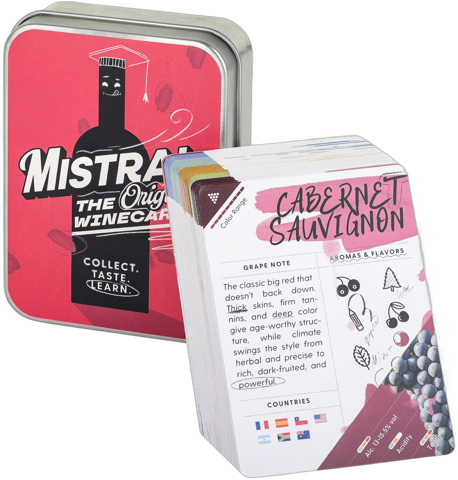
The glasses, tools, and cards I stand behind.
A short list. Nothing I would not recommend to a friend.
Browse the WineShopFault Line Vineyards
Established in 1995, the vineyards cover 76 acres of the estate. Slopes range from flat to 43%, with an average grade of 13%, and elevation runs from 526 to 816 feet above sea level. A 2001 U.S. Geological Survey report by R. E. Wells and colleagues described and named the Wildlife Safari Fault, a thrust fault with the Klamath terrane overriding the Oregon coastal range and Roseburg volcanics; the fault line runs east-west, bisecting the vineyards into two geological provinces. To the south, Klamath-derived soils carry boulders of serpentine, quartz, jasper, blue schist, sandstone and conglomerate; to the north, the Oregon Coastal terrane holds cobble and other sea-floor sediments. With this understanding the Joneses named the property Fault Line Vineyards. Five soils have been identified, Sutherlin silt loam, Philomath-Dixonville complex, Dickerson loam, Nonpareil loam and Coburg silt loam, each needing its own irrigation and fertility management. The parcels are Cox's Rock (1995), named for James and Elizabeth Cox, who settled the property in 1849; Cobblestone Hill (2000), whose Grand Hill portion was completed in 2009 and holds the peak elevation of 816 feet; Chaotic Ridge (2004 to 2005); and The Middles (2009), the smallest. The estate has a 213-day growing season, and its onsite weather station records average precipitation of 28 inches a year, 8.1 inches of it in the growing season. Monitoring runs through three weather stations, 23 additional temperature sensors and 40 soil moisture sensors. The principal rootstocks are 44-53, 101-14 and 420-A, with a small percentage of each variety kept on its own roots.
- 76 acres of vines at 526 to 816 feet; slopes from flat to 43%, averaging 13%.
- Crossed east-west by the Wildlife Safari Fault, named in a 2001 U.S. Geological Survey report.
- Parcels: Cox's Rock (1995), Cobblestone Hill (2000, Grand Hill completed 2009), Chaotic Ridge (2004 to 2005) and The Middles (2009).
- 213-day growing season; 28 inches of precipitation a year, 8.1 inches in the growing season.
Varieties and Wines
Tempranillo budwood of Clone 1 came in November 1993 from Porter Lombard at the Southern Oregon Regional Experimental Center in Jacksonville, and the University of California Davis sold the Joneses its entire supply of two additional clones. Abacela has tried nine Tempranillo clones; as of 2020 it grew six on about 23 acres. Other plantings include Grenache (five clones, over eleven acres, with cooler blocks farmed for rosé), Albariño (two clones, 11.3 acres in north-sloping blocks), Syrah (three clones, about seven acres), Malbec (two clones, seven acres) and Tannat (two clones, 1.8 acres, first commercial release 2008). Five Portuguese varieties, Bastardo, Tinta Amarela, Tinta Cão, Tinta Roriz and Touriga Nacional, are co-fermented for Port; a 2008 tawny was released half after five years in barrel and half in 2018 as a 10-year tawny. By the winery's own account, it is thought to have been the first in the Pacific Northwest to grow, produce and/or bottle 100% single varietal wines from Cabernet Franc (1996), Tempranillo (1997), Malbec (1997), Tannat (2008), Tinta Amarela (2010), Touriga Nacional (2012) and Graciano (2013). In April 2022 Greg Jones told Wine Spectator: 'We’ve gone from 27 different varieties down to 15 now.' As of October 2026, current releases include Albarino, Dolcetto, Graciano, Grenache, Grenache Reserve, Malbec, Malbec Reserve, Muscat, the sparkling Grenache Pachanga, Paramour, Port, a 10-Year Tawny Port, Angelica, Syrah Reserve, Tannat, Tempranillo Barrel Select, Tempranillo Fiesta, Tempranillo Reserve, Tempranillo-Malbec, Tinta Amarela, Touriga Nacional and Viognier. In a 2020 Decanter selection of Tempranillos from outside Spain, Sarah Jane Evans MW included the 2016 Fiesta, writing that Earl and Hilda Jones 'have done so much to drive Tempranillo in the USA, sharing clonal material'.
- Tempranillo: six clones on about 23 acres as of 2020, from nine tried.
- Albariño: two clones, 11.3 acres; first planted in 2000, first wine in 2001.
- Port from Bastardo, Tinta Amarela, Tinta Cão, Tinta Roriz and Touriga Nacional, co-fermented.
- Current Tempranillo releases: Tempranillo Fiesta, Tempranillo Barrel Select, Tempranillo Reserve and Tempranillo-Malbec.
Winemaking and House Style
Abacela's stated philosophy is that 'Winemaking begins in the vineyard', and its foremost goal is 'to preserve the fruit’s character and quality all the way into the bottle.' All fruit is processed in small one-ton batches through a gravity flow system across three floor elevations, and the winery does not own a must pump. Its principles include picking only ripe fruit, gentle extraction of skin-bound components, using new oak in moderation, and filtering only when necessary. Gravity flow lets the winemaker ferment whole clusters, whole berries or crushed berries, and makes four-to-seven-day cold soaks practical. In 2001 Abacela established an intern program, which has more than forty alumni.
- Small one-ton batches; gravity flow across three floor elevations; no must pump.
- New oak used in moderation; wines filtered only when necessary.
- Intern program since 2001, with more than forty alumni.
Open one bottle, taste it for weeks.
The Coravin Pivot+ is the simpler Coravin, for wines you will finish inside a few weeks, which is how I taste a producer across vintages without finishing every bottle. It takes five seconds to use.$199.
See the Pivot+Sustainability
Abacela was a member of Salmon Safe and LIVE and one of 14 Oregon wineries to be a charter member of Governor Kulongoski's Carbon Neutral Challenge; the practices continue, although the winery is no longer certified. The vines are managed with minimum inputs, mostly organic sulfur sprays, and without insecticides. Since 1997 Abacela has supplied hay from its unplanted acreage to the adjoining Wildlife Safari, which returns elephant dung and bedding hay that the winery composts with grape seeds, stems and skins into 'zoil'. The Joneses have set aside 300 acres as wildlife conservation habitat, and a geothermal system heats and cools the Vine & Wine Center, which houses the tasting room. A pioneer orchard and vineyard on the property was planted sometime between 1849 and 1871; UC Davis DNA analysis identified one of its vines as Listan Prieto.
- Former Salmon Safe and LIVE member; charter member of the Carbon Neutral Challenge, one of 14 Oregon wineries.
- Hay to Wildlife Safari since 1997, composted back as 'zoil'.
- 300 acres set aside as wildlife conservation habitat.
Sources and last verified
Primary sources (producer's own site): https://www.abacela.com/the-abacela-story/, https://www.abacela.com/the-abacela-story/vineyard-site-selection/, https://www.abacela.com/the-abacela-story/where-science-led-luck-began/, https://www.abacela.com/the-abacela-story/the-vineyards/, https://www.abacela.com/the-abacela-story/planting-the-vineyards/, https://www.abacela.com/the-abacela-story/sustainability/, https://www.abacela.com/the-abacela-story/winemaking/, https://www.abacela.com/the-abacela-story/25-years-of-change/, https://www.abacela.com/the-abacela-story/the-legacy/, https://www.abacela.com/our-team/, https://www.abacela.com/collection/current-releases. Secondary sources: Wine Spectator (Aaron Romano, Apr 22, 2022) and Decanter (Stacy Slinkard, last updated 14 January 2022; Sarah Jane Evans MW, published 6 June 2020). Last verified 2026-10-14. Where the producer's site and a secondary source disagree, the producer's site governs.
Pour one glass. Keep the bottle for months.
Coravin is how I drink the serious stuff on a Tuesday without committing to the whole bottle.
See CoravinIn its variety notes, Abacela characterises Tempranillo as medium to very full-bodied, with low to moderate acidity and medium- to long-term aging capacity, and Albariño as light to medium-bodied, with relatively high acidity, a floral and sometimes fruity note and a distinct minerality.
- Abacela Tempranillo Reserve 2021$58Tempranillo is the variety the estate was planted to test; one-third of the first 1995 planting was Tempranillo.
- Abacela Tempranillo Barrel Select 2022$40One of four current Tempranillo releases, alongside Tempranillo Fiesta, Tempranillo Reserve and Tempranillo-Malbec.
- Abacela Tempranillo Fiesta 2022$27A 2016 Fiesta was included in Sarah Jane Evans MW's 2020 Decanter selection of Tempranillos from outside Spain.
- Abacela Albarino 2025$22From the variety Abacela first planted in 2000 and first made into wine in 2001.
- Abacela Tinta Amarela 2022$34One of the five Portuguese varieties Abacela grows for Port, also made as a red table wine.
New to Wine.com? $15 off $250+ with codeLEAF15
Wine with Seth may earn a commission on Wine.com purchases at no cost to you. Wine links are for adults 21 and over.
- Abacela, Umpqua Valley, Oregon: founded by Earl and Hilda Jones; first vines planted on Memorial Day 1995, one-third Tempranillo.
- First commercial wine was 36 cases of Cabernet Franc in 1996; the 1997 harvest made 243 cases of Tempranillo.
- Fault Line Vineyards: 76 acres at 526 to 816 feet, five soil types, bisected by the Wildlife Safari thrust fault (U.S. Geological Survey, 2001).
- Site chosen by matching climate to Rioja and Ribera del Duero; 213-day growing season with 8.1 inches of growing-season precipitation.
- Albariño first planted in 2000 and first made in 2001; Port from five Portuguese varieties, co-fermented.
Tasted a Abacela wine?
Log it in your Tasting Journal and build your palate over time.
Start your Journal