Wine 101 · Chapter 1
How to Taste
A repeatable method and a shared vocabulary.
Tonight
The plan
- Learn the method
- Taste four wines, top to bottom on the sheet
- Sort the cards
- Take it to the table
Tasting is a skill, not a gift.
Everyone in this room can learn this. The method does the work, not the palate you were born with.
The method
The order never changes
- See: how clear, how deep, what color
- Nose: does it smell clean? How strong? What do you smell?
- Palate: sweetness, acidity, tannin, alcohol, body, flavor
- Score: the WWS 10. Can Love Be Complex?
- Call: your best guess at what it is, and how good it is
This is the Flight of Four sheet, top to bottom. Same order every wine, every session.
Score it
Can Love Be Complex?
- Concentration: fully expressed, or dilute? (1 point)
- Length: does the flavor stay? (2 points)
- Balance: does anything stick out? (3 points)
- Complexity: how many layers, and do they change? (4 points)
Intensity is still something you describe. It just isn't scored. A light, delicate wine and a big one can both earn the Concentration point.
The flight · Poured open
Light to full, white and red
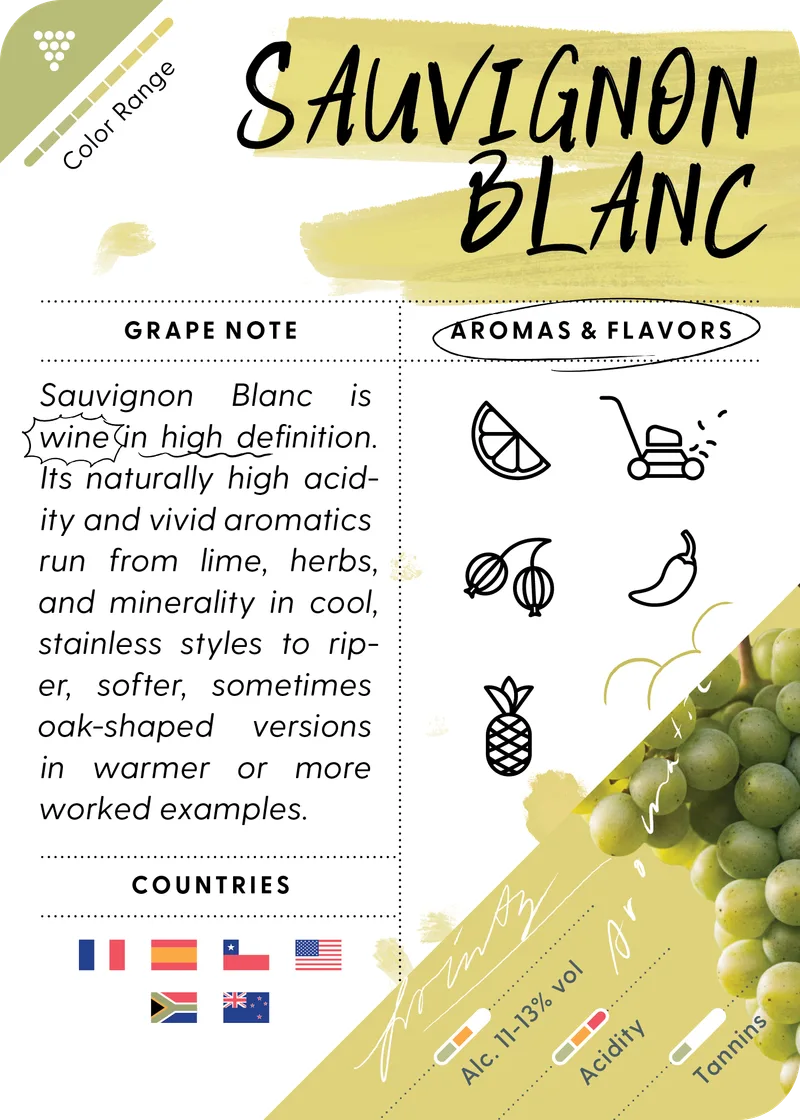
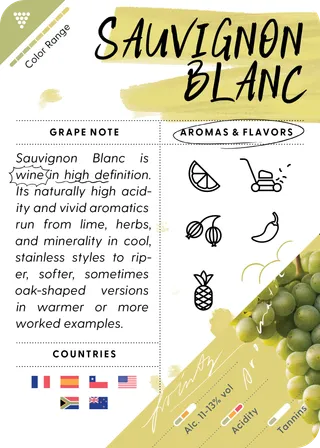
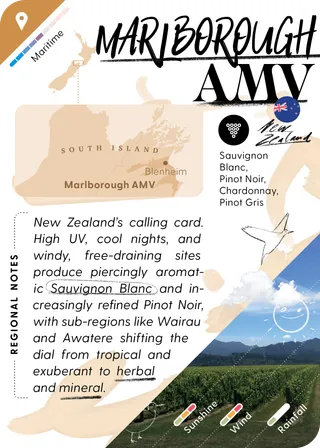
- 1 Sauvignon Blanc Marlborough Light white: loud smell, mouthwatering, made in steel tanks (no oak)
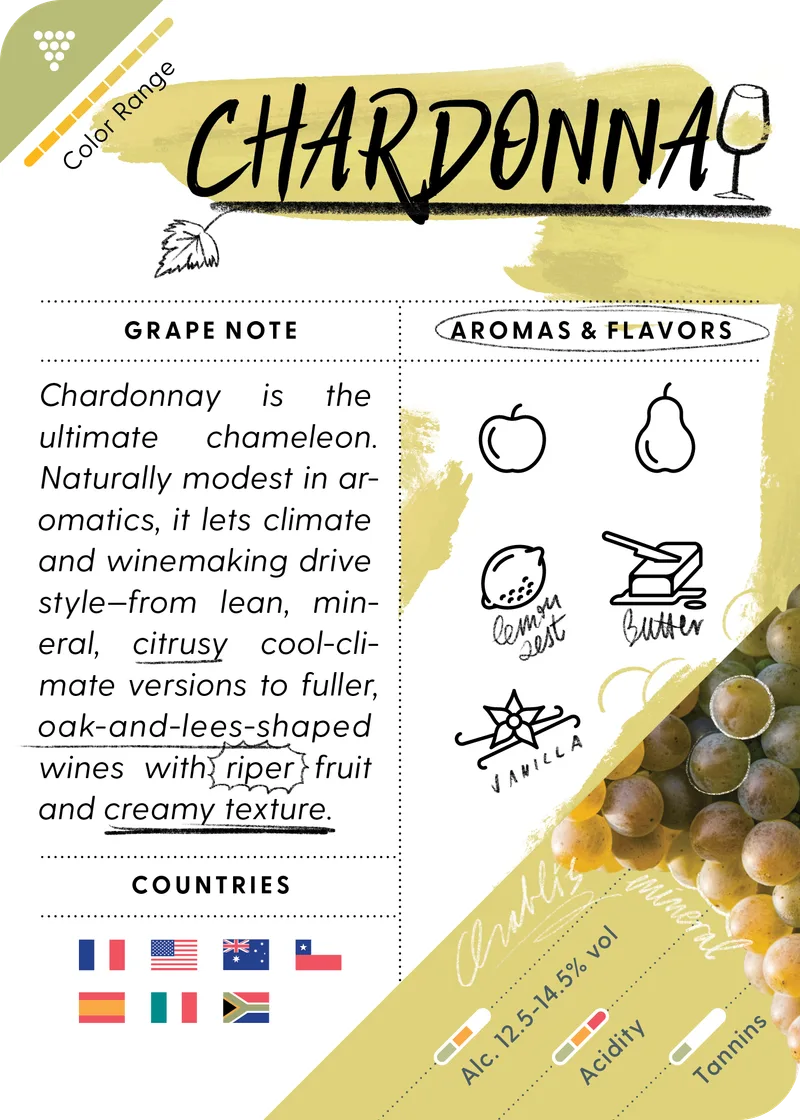
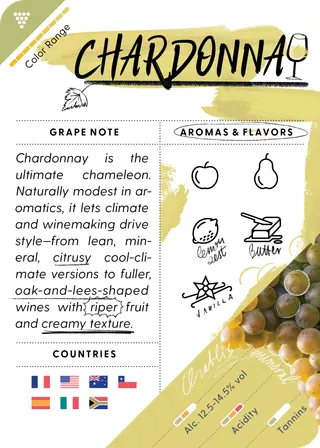
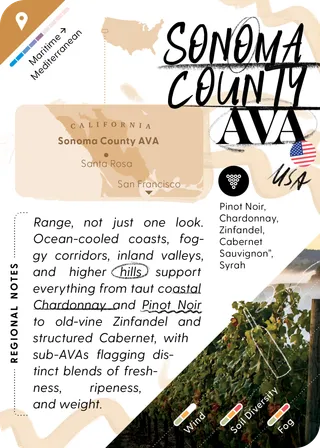
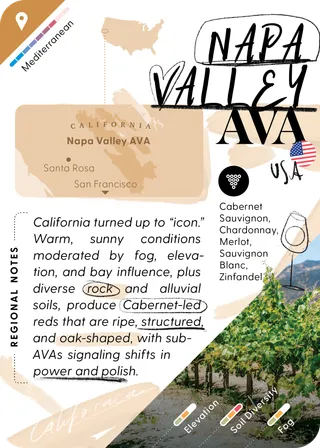
- 2 Chardonnay Sonoma or Napa Full white: rich and round, oak (vanilla, toast), buttery
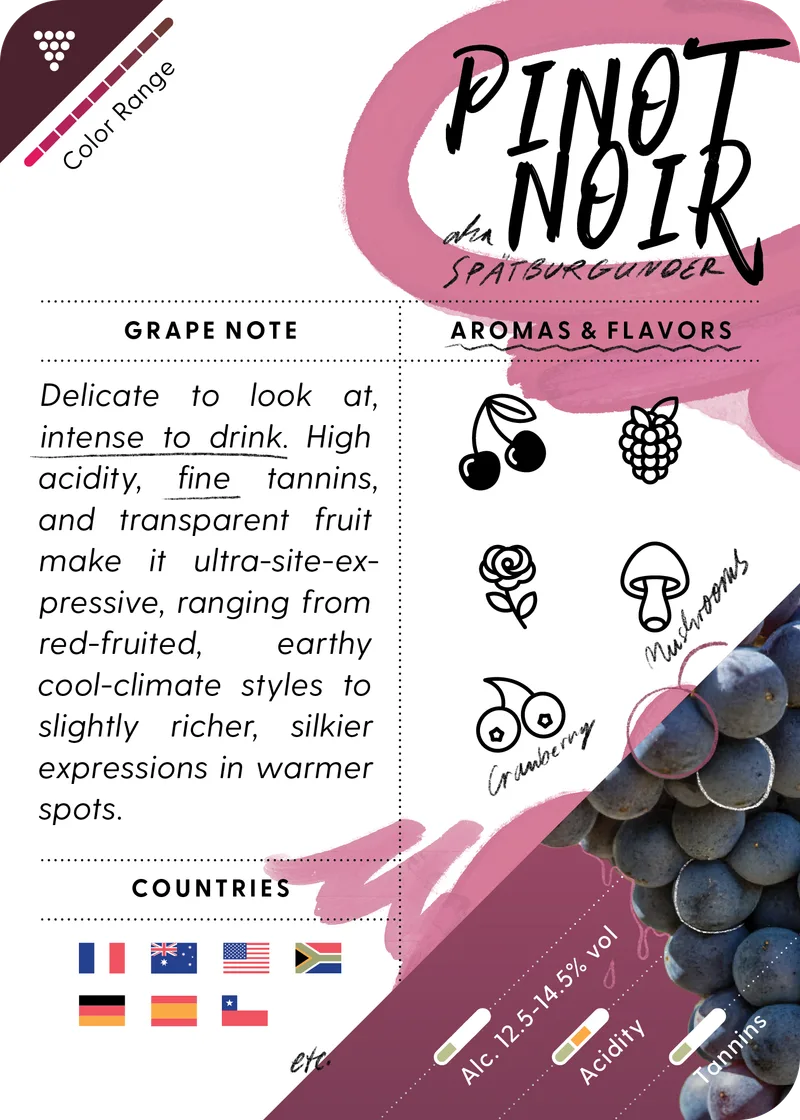
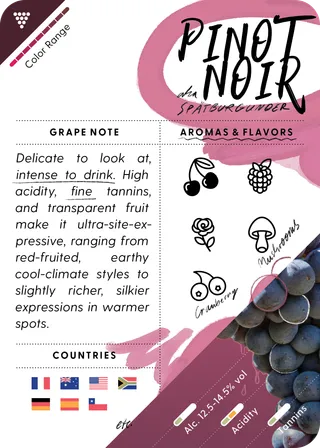
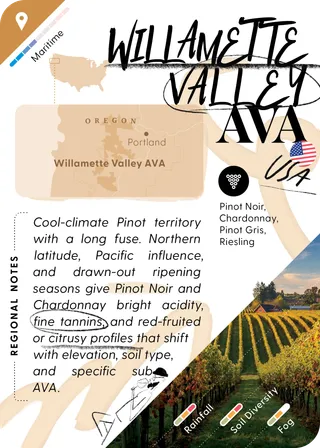
- 3 Pinot Noir Willamette Valley Light red: pale, soft tannin, mouthwatering
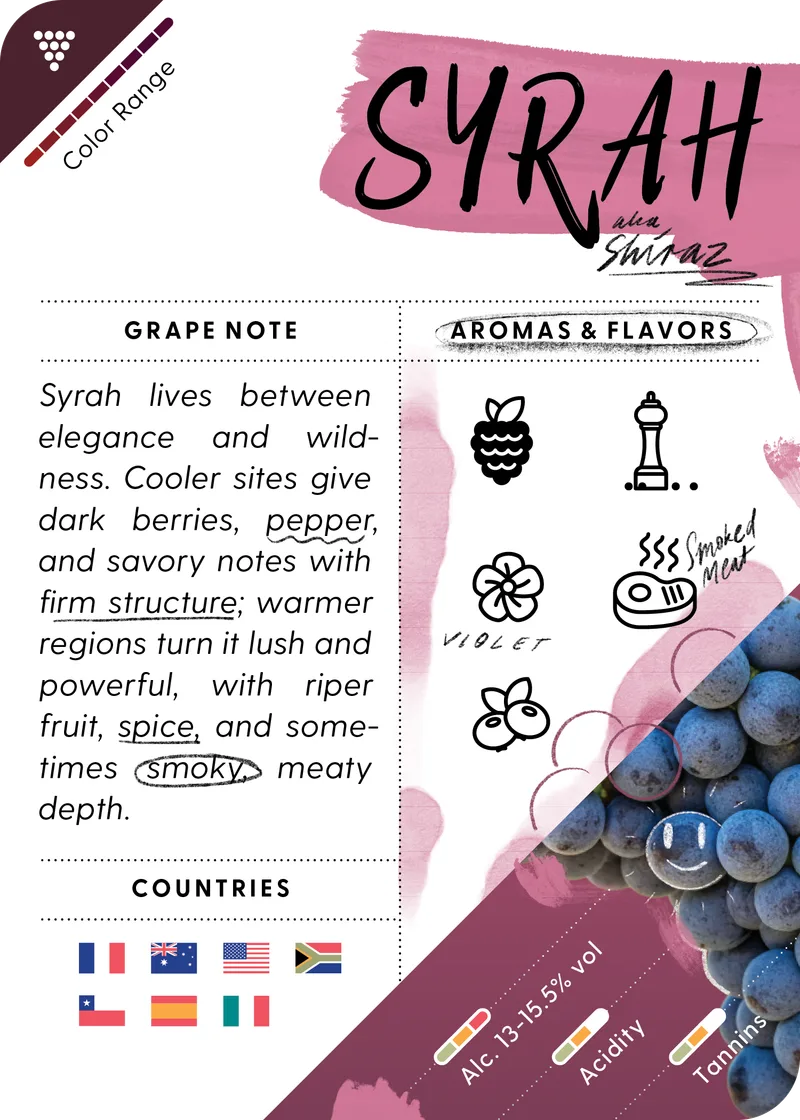
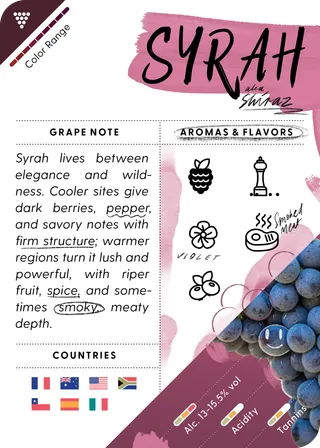
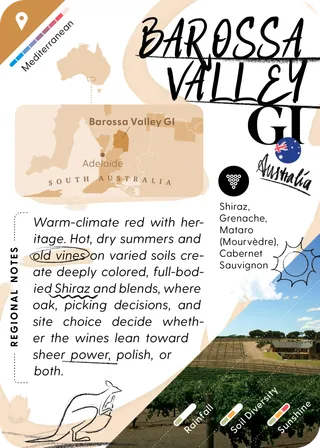
- 4 Shiraz (Syrah) Barossa Valley Full red: deep color, ripe black fruit, big but soft tannin, high alcohol
These four set the ends of the scale: a light and a full white, a light and a full red. Every wine you pour sits somewhere between them. Shiraz and Syrah are the same grape. Pour open tonight. Discuss after each wine.
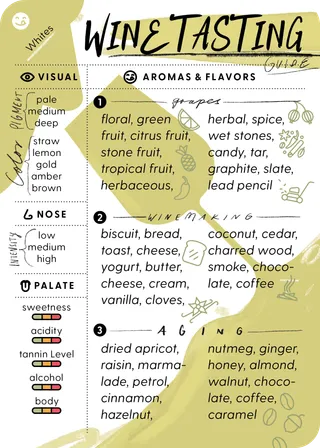
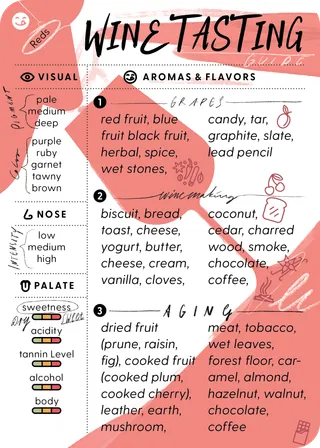
Aroma
Three layers
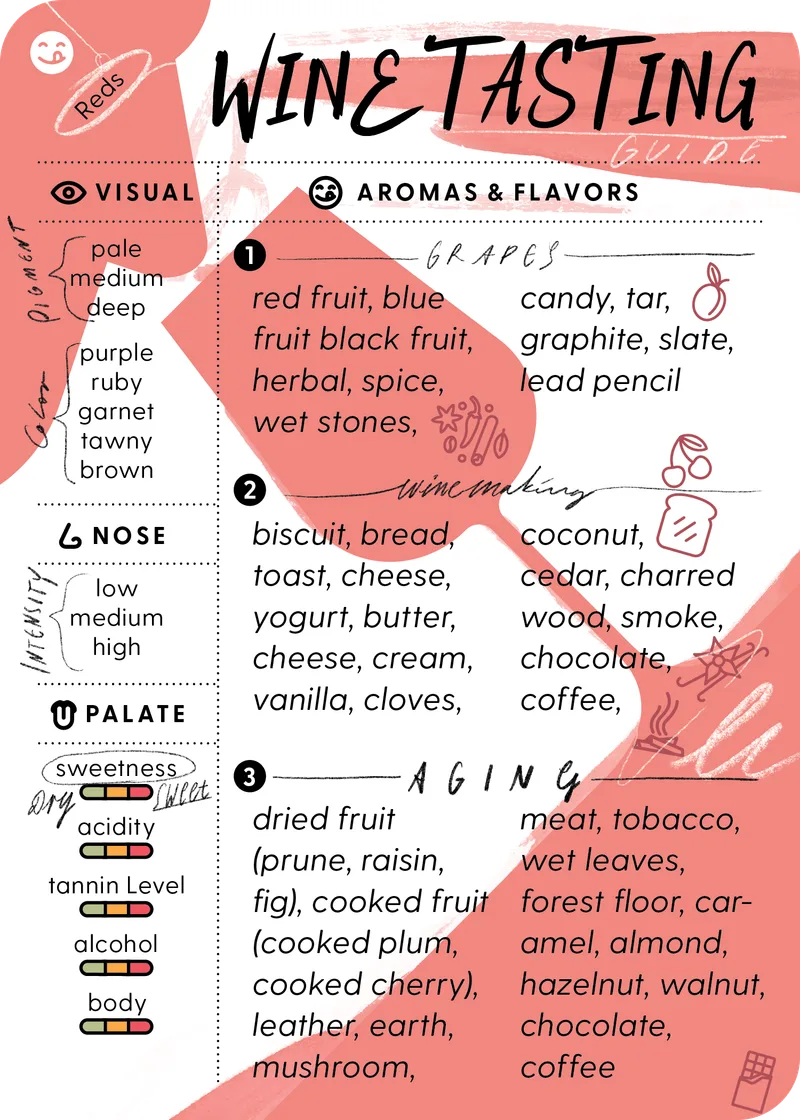
- Primary: from the grape. Fruit, flowers, herbs
- Secondary: from winemaking. Oak, butter, bread, vanilla
- Tertiary: from age. Leather, earth, nuts, dried fruit
![Red Wine Tasting Guide]()
Aroma
Name the fruit family first
- Whites: citrus (lemon), orchard (apple, pear), stone (peach), tropical (pineapple)
- Reds: red (cherry), black (blackberry), blue (blueberry), dried (raisin)
- Then get specific: lime, not just citrus
Family first keeps people from freezing. 'Some kind of red fruit' is a real answer. Then narrow it.
Structure
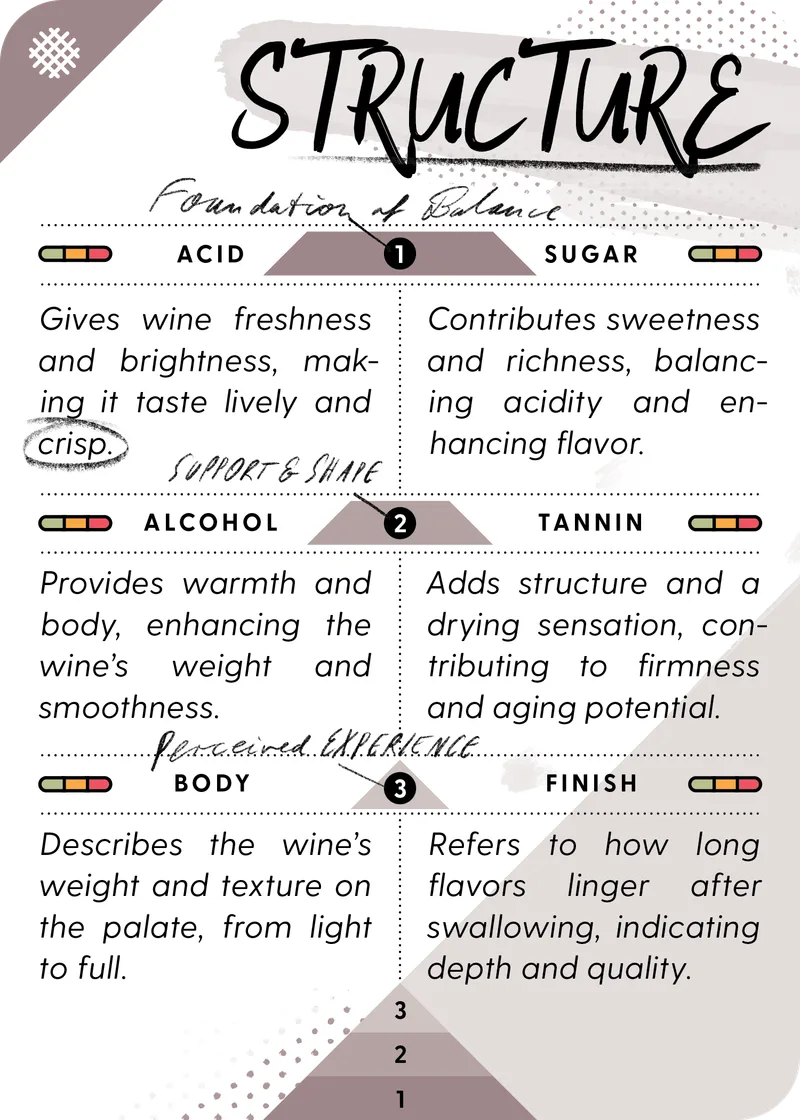
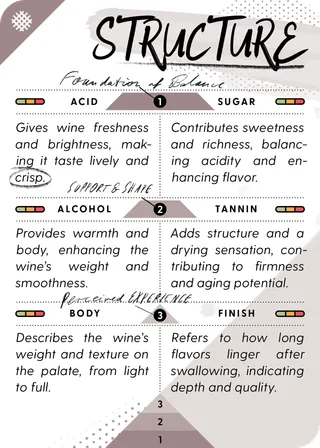
What you feel, not what you smell
- Sweetness: dry means not sweet
- Acidity: makes your mouth water
- Tannin: dries your gums, like strong black tea
- Alcohol: warmth at the back of the throat
- Body: weight, like skim milk to whole milk
- Finish: how long the taste lasts. Count the seconds.
![Structure]()
Cards · The Sort
Read the gauges
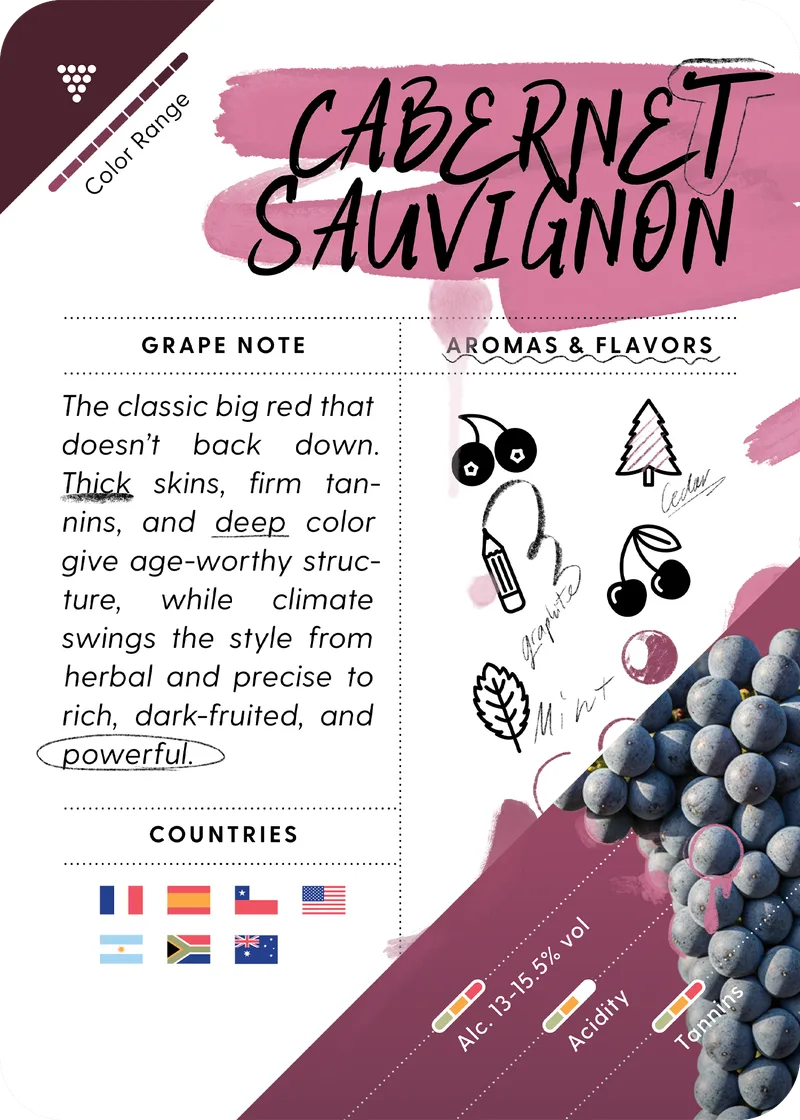
- Take any eight grape cards
- Find the strip at the bottom: alcohol, acidity, tannins
- Line them up from lowest to highest alcohol. The % range is printed.
- Re-sort by the Tannins gauge: one, two, or three bars
- Which grapes moved the most?
![Cabernet Sauvignon]()
Take it to the table
Which one is it like?
Think of a wine you pour every day. Is it most like the light white, the full white, the light red, or the full red?
Guest: "I just know I like it." You: "Is it more like a light white, a full white, a light red, or a full red?"
Tonight's four wines are reference points. When a guest can't describe what they like, ask which of the four it's closest to, then pour from there.
The goal is not to sound smart. The goal is to help the guest understand what is in their glass.
Study this week
Tonight's cards
Wine 101
Next: Chapter 2 · The Red Grapes
winewithseth.com/wine-101
1 / 15